


A busy practice may receive two requests that look nothing alike. One patient wants a referral for a nonsurgical brow lift. Another family needs help bringing a relative home from a hospital overseas. One service is elective and low acuity. The other may involve critical care at altitude.
Both are described as specialized services, and both present the same practical problem: the information you find first is often marketing. A service page can show what a provider says it offers, but it is not evidence of quality.
The following evaluation method applies to both situations, despite their significant clinical and logistical differences.
Key Takeaways
- Use one framework for every service. Structure, process, and outcome questions apply to both an aesthetic device service and an air ambulance.
- Regulatory clearance defines scope, not results. For aesthetic focused ultrasound, the 510(k) indications identify what the device is cleared to do and where it may be used.
- Accreditation is a point-in-time signal. CAMTS states that accreditation reflects substantial compliance at the time of its survey. It does not replace ongoing quality control.
- Financial exposure is part of clinical planning. Medicare and Medicaid generally do not cover care outside the United States, while emergency transportation can cost more than $100,000.
- Provider pages are starting points. Verify credentials, protocols, accreditation, and documentation independently before making a referral or arranging a transfer.
One Playbook for Two Different Services
Donabedian’s structure, process, and outcome model provides a useful framework across service lines:
- Structure: regulatory status, accreditation, staffing, professional credentials, and equipment.
- Process: written protocols, patient selection, monitoring or imaging, documentation, handoffs, and escalation procedures.
- Outcome: whether the service matches the patient’s needs, how results are measured, and how adverse events are tracked.
This framework helps distinguish useful service information from unsupported claims. Pages from providers such as Redefine and Amber Medical can clarify available services, but the details still need to be checked against regulatory records, credentials, and written protocols.
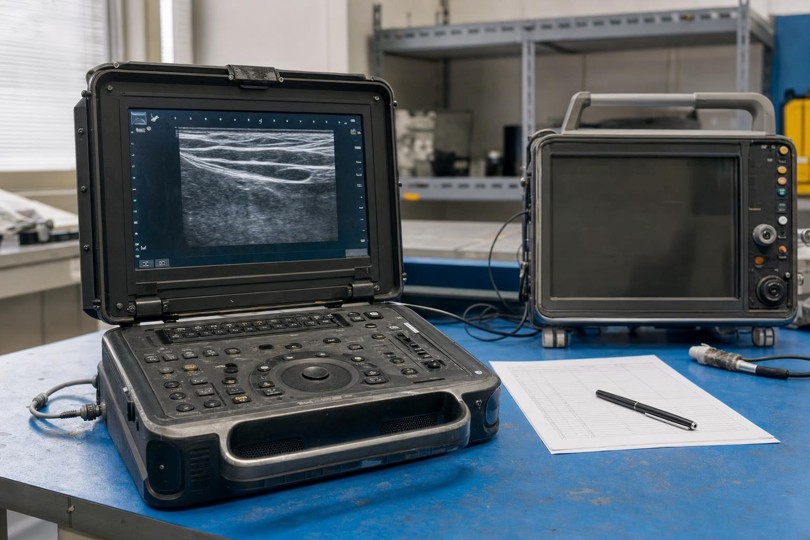
Device-Based Care: Read the Clearance, Not the Brochure
In the United States, focused ultrasound systems for aesthetic use are regulated as Class II devices with special controls. Manufacturers must receive a 510(k) substantial equivalence determination before marketing these devices. The FDA clearance and current labeling, rather than promotional copy, should be the main references for scope of use.
For the Ulthera System, the indications listed in its May 9, 2025 clearance include lifting the brow, lifting submental and neck tissue, improving lines on the décolleté, and addressing skin laxity on the abdomen and arms. The update also added wireless connectivity and a treatment-planning mode called SEE.PLAN.TREAT. A separate 2024 clearance describes DeepSEE imaging, which provides ultrasound visualization to a depth of 8 mm. This helps an operator confirm tissue contact and identify bone. Published clinical guidance describes treatment at depths of 1.5, 3.0, and 4.5 mm.
Two cautions follow. First, cleared indications are specific to particular treatment areas. Use outside those indications is off-label and requires appropriate documentation and informed consent. Second, the procedure should be presented as a nonsurgical option, not as an equivalent replacement for facelift surgery.
Clinic pages can help identify the equipment and treatment approach a provider uses. Redefine’s page for Ultherapy, for example, lists transducer depths of 1.5 mm, 3 mm, and 4.5 mm and explains pricing by the number of treatment lines. That information can guide initial questions, but it does not replace verification of current labeling, operator credentials, or clinical protocols.
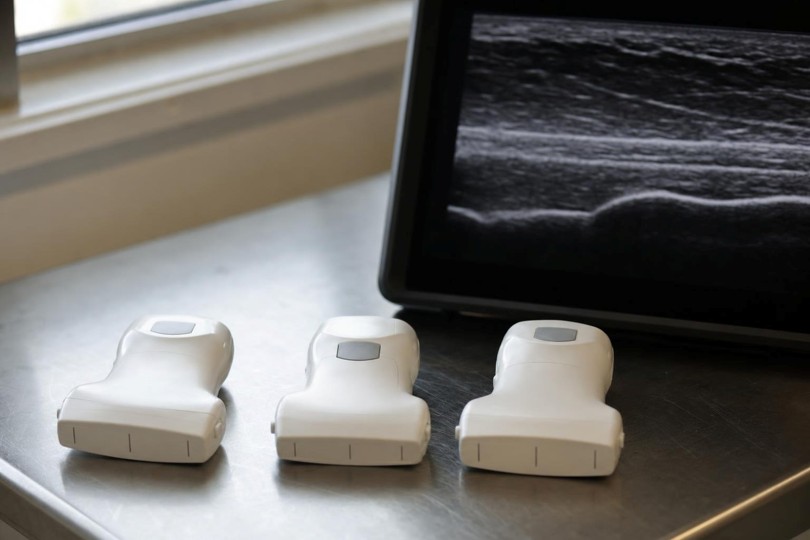
What to Verify Before a Referral
- The cleared indication matches the area the patient wants treated.
- Operator training, supervision arrangements, and credentials are documented.
- Imaging is used to confirm tissue depth and contact when required by the device labeling.
- Written patient-selection criteria address expectations, discomfort, contraindications, and possible adverse effects.
- Adverse events are recorded and reported through a defined process.
- Baseline photographs, consent forms, and outcome measures are collected consistently.
- Financial consent explains package limits, touch-up policies, and possible additional costs. Information published by Redefine can help patients and referring clinicians ask more precise questions about these details.
Transport Partners: Accreditation as a Signal, Not a Guarantee
Medically supported transport sits at the other end of the acuity spectrum. Here, accreditation is an important structural signal. In North America, CAMTS accredits air and ground critical care transport programs. The Joint Commission’s Medical Transport Program covers nonemergency transport and certain ground, air, and water services.
Accreditation timelines and limits matter when building a provider list. CAMTS indicates that site visits are usually scheduled within four to six weeks after it receives a completed program information file, although preparation may take months. CAMTS also states that accreditation reflects substantial compliance at the time of the survey. A current certificate is useful, but it should not end the review.
Start by confirming which services a provider says it offers. Amber Medical’s service page describes nonemergency ambulance services, cross-border transport, medical escorts, and international medical evacuation and repatriation. This establishes the provider’s stated scope. Accreditation, crew qualifications, equipment, and protocol reviews provide stronger evidence of how that work is performed.
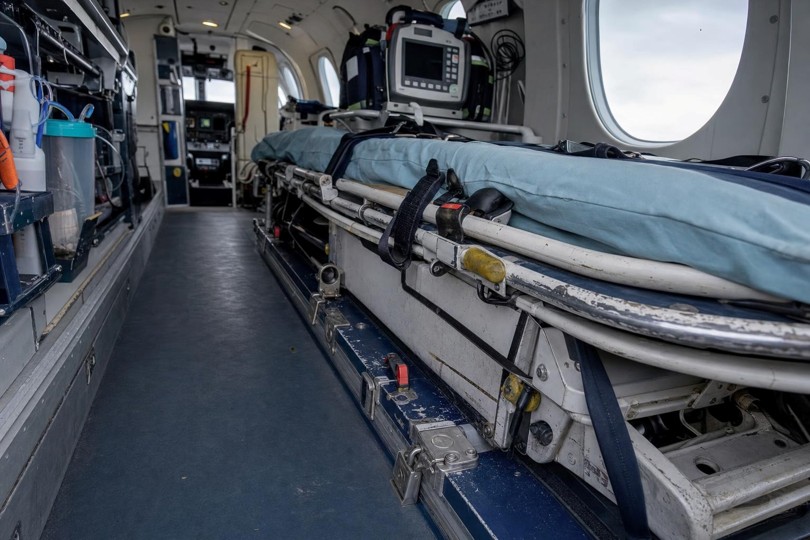
What to Verify Before a Transfer
- Current accreditation and its exact scope, such as ground, rotor-wing, fixed-wing, escort, or nonemergency transport.
- Crew qualifications appropriate to the patient’s condition, along with written airway, medication, sedation, and advance-directive policies.
- Equipment suited to the patient’s needs, including monitoring, oxygen reserves, stretcher configuration, and backup power.
- Bed-to-bed coordination, receiving-facility acceptance, and an in-transit escalation plan.
- Cross-border logistics, including landing permissions, border clearance, visas, and travel documents. A provider such as Amber Medical should be able to explain each step and identify who is responsible for it.
- Documentation requirements and a structured clinical handoff at every transition.
- Insurance authorization, payment terms, cancellation conditions, and procedures for changes during the transfer.
Financial Exposure and Coverage Checks
Coverage gaps can create major delays and unexpected costs. The State Department advises travelers that Medicare and Medicaid generally do not pay for medical care outside the United States and recommends considering medical evacuation insurance. CDC travel guidance notes that emergency transport can otherwise cost more than $100,000.
Care coordinators should confirm the policy’s geographic limits, whether emergency transportation and repatriation are named benefits, and whether the insurer requires an approved provider. They should also verify who can authorize care outside regular business hours. When a company such as Amber Medical is being considered, obtain a written estimate that separates transportation, medical staffing, ground transfers, permits, and possible delay-related charges.

Data Handling Across Borders
Both services involve health information moving between people or organizations. Share only the information needed for the task, use secure transfer methods, and complete business associate agreements where required. Document consent when records will cross national borders.
For aesthetic referrals, confirm how photographs and treatment records are stored and accessed. A clinic such as Redefine should be able to explain its consent and record-handling procedures. For transport providers, request a documented chain of custody for clinical summaries, imaging, medication records, and monitoring data.
Red Flags Worth Slowing Down For
For device-based aesthetic care, warning signs include guaranteed results, no reference to cleared indications, vague answers about operator training, silence on imaging or patient selection, and no clear adverse-event process.
For medical transport, warning signs include accreditation that cannot be verified, unclear crew qualifications, no equipment list, fixed response-time promises that ignore weather or geography, and an unwillingness to provide written clinical protocols.

The Takeaway
Specialized services differ greatly in acuity, but the review process can remain consistent. Ask what a regulator or accreditor has confirmed and when. Identify who performs the work, which protocols apply, and how outcomes and adverse events are documented. Confirm how health information is protected and how costs are authorized.
Applied consistently, this approach can support both an aesthetic referral and an international transfer. It also gives patients and families a clear, defensible reason for the provider selected.
