


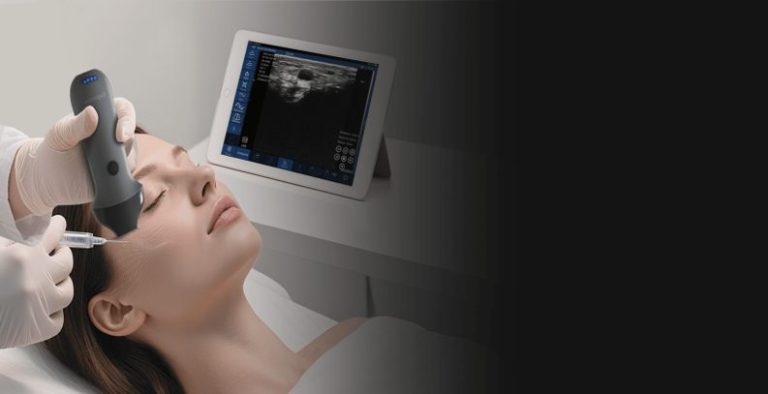
Aesthetic medicine has changed. In 2026, ultrasound is becoming a more practical part of facial aesthetics, especially in filler work, where clinicians increasingly use it for vessel mapping, filler localization, complication assessment, and image-guided intervention.[1][2][3]
That shift is changing what clinics want from an ultrasound system. Most aesthetic practices do not need a general-purpose handheld designed mainly for deeper abdominal or cardiac imaging. They need a device that can show superficial structures clearly, fit naturally into treatment flow, and remain practical in both setup and cost. Within this category, EagleView represents a more value-oriented approach: a high-frequency linear wireless scanner with a one-time purchase model. This article looks at why ultrasound matters more in aesthetics, what buyers should prioritize, how EagleView performs in real use, and how it compares with current handheld options.
Why aesthetic clinics are adopting ultrasound
The main reason is not novelty. It is visibility. Facial filler work depends on anatomy, and anatomy varies from patient to patient. Vessel position, filler plane, and tissue thickness are not always where the injector expects them to be. Ultrasound helps turn assumptions into visible information. In current literature, it is increasingly discussed as a practical tool for identifying vessels before injection, confirming filler location, and supporting complication assessment when a patient presents with swelling, vascular concern, or uncertain prior treatment history[1][4][5].
That makes ultrasound useful before, during, and after treatment. Before injection, it can support vascular mapping in high-risk areas such as the tear trough, nose, lips, temple, and glabella. After treatment, it can help locate filler, distinguish it from surrounding tissue, and guide more targeted correction or dissolution. As clinics move toward a more image-assisted workflow, ultrasound is becoming less of a niche add-on and more of a quality-control tool. A 2025 quality-improvement study published in JAAD linked preprocedural ultrasound scanning with reduced bruising in dermal filler procedures.[6]
What Actually Matters When Choosing an Aesthetic Ultrasound
The biggest mistake is to shop for aesthetics the same way people shop for general POCUS. In facial aesthetics, the question is not whether a device covers the widest range of organs. It is whether it can show superficial anatomy clearly enough to be clinically useful.
Superficial imaging ability
This is the first filter.
If the near field is not crisp, the rest of the feature list matters less. In facial aesthetics, the target is often within a few millimeters to a few centimeters from the skin surface. That is where high-frequency linear imaging becomes important. Reviews and recommendations in this area consistently emphasize high-frequency ultrasound for superficial facial work.
Probe type and frequency
For aesthetics, the most important probe is usually a linear probe.
That is the probe type most associated with shallow structures, vessel visualization, and fine tissue detail. A dedicated high-frequency linear handheld can make more sense than a broader all-in-one device if the clinic’s primary goal is facial scanning rather than general diagnostic coverage.
This is where some devices begin to separate.
Clarius L20 HD3 is positioned as an ultra-high-frequency linear scanner with an 8–20 MHz range and 4 cm max depth for superficial applications. EagleView high-frequency linear wireless handheld ultrasound is a 16/20 MHz linear probe with 10, 20, 30, and 40 mm depth settings. By contrast, systems such as Philips Lumify L12-4 and GE Vscan Air SL remain useful handheld platforms, but their published linear ranges are broader and lower-frequency, making them less specialized for ultra-superficial facial work.
Workflow and portability
In aesthetic practice, wireless design can make a real difference to daily workflow. A wireless handheld system gives clinicians more freedom to place the screen where it is easiest to see, instead of working around a fixed cable connection. It also makes it easier to move around the patient smoothly during scanning, without cable drag or snagging interrupting the exam.
This matters beyond convenience. In busy treatment settings, fewer cable surfaces can make cleanup and disinfection simpler between patients. Wireless charging and scanning may also reduce long-term wear caused by repeated plugging and unplugging. That is why wireless systems such as EagleView, Clarius, and Vscan Air SL may feel more natural in a modern aesthetic clinic. Cable-based systems can still deliver strong imaging, but they may fit less smoothly into rooms where flexibility, presentation, and fast turnover matter.
4. Software and user experience
Software matters because small usability issues get repeated hundreds of times. Color Doppler, PW Doppler, cine storage, measurement tools, presets, image optimization, and app responsiveness all affect whether a device feels efficient or frustrating. Premium brands currently have an advantage in software polish, but many aesthetic buyers do not need the broadest ecosystem if the essential imaging tools are already there.
5. Ultrasound Device Price and Long-Term Cost
Price matters, but the more useful question is long-term ownership cost rather than sticker price alone. In handheld ultrasound, the real expense may also include annual memberships, software access, accessories, and ecosystem-related costs over time. That is one reason EagleView stands out in this discussion. Its positioning is not only about a lower entry point than some premium systems, but also about a simpler ownership model. For aesthetic clinics that want a dedicated superficial imaging device without adding recurring platform costs, this can be a meaningful advantage.
Table 1. What matters most when choosing an ultrasound for aesthetics
| Priority | Buying factor | Why it matters | What to look for |
| 1 | Superficial image quality | Facial vessels, filler planes, and soft tissue are shallow | Strong near-field clarity |
| 2 | Probe type | Most aesthetic scanning is superficial | Linear probe first |
| 3 | Frequency and depth | The scanner should match facial anatomy | High-frequency imaging for shallow
structures |
| 4 | Treatment-room usability | The device should fit naturally into routine practice | Wireless setup, fast pairing, easy mobility |
| 5 | Doppler and measurements | Helpful for vascular mapping and assessment | Color Doppler, preferably PW Doppler,cine, measurements |
| 6 | App usability | Repeated daily use quickly exposes weak software | Stable app, easy controls, reliable image
review/storage |
| 7 | Long-term cost | Ongoing fees can change real value | Consider subscriptions and accessories,
not just upfront price |
| 8 | Support and ecosystem |
Training and support can affect adoption |
Balance brand maturity against budget
and actual need |
Table framework based on current expert recommendations for high-frequency aesthetic ultrasound use and current official product positioning from major handheld ultrasound vendors.
EagleView Handheld Ultrasound Review: Where It Fits in Aesthetic Practice
EagleView high-frequency linear wireless handheld ultrasound is easiest to understand when viewed as a purpose-leaning superficial scanner, not as a do-everything handheld. That distinction matters.
Hardware and portability
From a hardware perspective, EagleView gets the fundamentals right for aesthetic use.
It is wireless. It connects to a phone or tablet over Wi-Fi. It is built around a 192-element 16/20 MHz linear probe and offers four shallow depth settings: 10, 20, 30, and 40 mm. The scanner supports B-mode, M-mode, Color Doppler, Power Doppler, and PW Doppler. Battery life is listed as 1.5 hours of continuous scanning. The official store lists it at $3,199, and the company states it is a one-time purchase with no subscription required.
That setup makes sense for aesthetics.
The device is not trying to compete as a broad hospital platform. It is a portable, superficial scanner that can enter a treatment room without friction. In that role, the wireless design is one of its strongest practical advantages.

Image performance and suitability for superficial work
The most relevant spec here is not just “wireless.”
It is the combination of high frequency + shallow depth + Doppler.
EagleView’s 16/20 MHz profile places it in the kind of frequency range that aesthetic users care about for superficial structure work. The official positioning also makes this explicit: the device is described as built for superficial organs and shallow structures, not for cardiac imaging. That limitation is actually useful, because it clarifies what this scanner is for and what it is not for.
If your goal is to map vessels, inspect filler location, or scan facial soft tissue in a treatment room, that specialization is a strength.
If your goal is one handheld for cardiology, lung, deep abdomen, vascular, and facial aesthetics all at once, it is not.
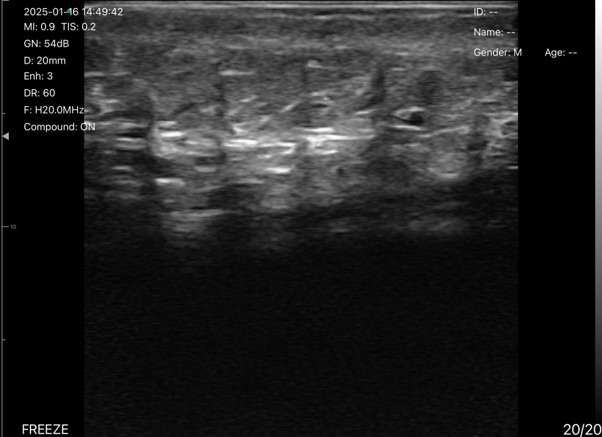
Case: Skin and Subcutaneous Tissue
The images show the skin and subcutaneous tissue in ultrasound mode.

Strengths and Limits
EagleView looks strongest when it is judged for the job it is actually meant to do: focused superficial imaging in a wireless handheld format with a simpler ownership model than many premium systems. That makes it especially relevant for clinics that care about portability, facial scanning, and cost control.
Its limitations are also clear. It is not a one-device solution for every clinical scenario, and it does not yet offer the same ecosystem maturity or premium market presence as the most established handheld brands. For many buyers, that is a trade-off rather than a deal-breaker.
EagleView vs Handheld Ultrasound Options for Aesthetic Clinics
Among current handheld competitors, Clarius L20 HD3 is the closest premium reference point for facial aesthetics. It is explicitly positioned for superficial imaging and is better aligned with aesthetic use than broader handheld platforms designed for general multi-area scanning. Devices such as GE Vscan Air SL remain important in the market, but they are often more relevant to buyers who want wider clinical coverage rather than a more focused aesthetics-oriented workflow. For that reason, Clarius is the more meaningful comparison when judging where EagleView sits in this category.
Table 2. Portable Handheld Ultrasound Device Price and Feature Comparison for Aesthetic Clinics
| Feature | 
|
 Clarius L20 HD3 |
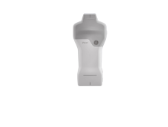 GE Vscan Air SL |
| Probe Type | Linear | Linear | Dual probe: sector + linear |
| Frequency | 16/20 MHz | 8–20 MHz | Linear: 3–12 MHz; Sector: 1.6–3.7 MHz |
| Max Depth | Up to 4 cm | Up to 4 cm | Linear up to 8 cm; sector up to 24 cm |
| Field of View | 24 mm | 25 mm | Linear footprint: 40 mm × 7 mm |
| Weight | 160 g | 290 g | About 205 g |
| Connectivity | Wi-Fi | Wi-Fi & Bluetooth | Wi-Fi |
| Subscription Fees | None | $595/year membership listed with scanner | No mandatory basic subscription; Digital Tools/AI features may be add-ons |
| Imaging Modes | B-mode, M-mode, Color/Power Doppler, PW Doppler | B-mode, M-mode, Color/Power Doppler, PW Doppler, Needle Enhance, Split Mode | B-mode, M-mode, Color Doppler, PW Doppler, Harmonic Imaging |
| Puncture Assist | In-plane & out-plane guidance, needle guidance, grid view | needle guidance | Procedural guidance supported, but not aesthetics-focused |
| Skin Imaging Presets | Yes (standard) | Yes (available at separate “Advanced aesthetic package” at $2500) | No |
| Exported Still Image Formats | JPEG, PNG, DICOM | JPEG, PNG, BMP, DICOM | JPG, DICOM |
| Exported Video Clip Formats | DICOM, MP4 | DICOM, MP4 | DICOM, MP4 |
| DICOM | Free | On membership | On membership |
| Storage | Save images/videos in the app; no subscription required | Local/cloud storage and DICOM with membership | DICOM and cloud/collaboration tools depend on workflow/tools |
| Mobile Platforms | iOS and Android | iOS and Android | iOS and Android |
| Ease of Use | Simple, no-login app | The app requires login | |
| Battery Life | 1.5 hours continuous scanning | 1 hour | Up to 50 minutes |
| Setup | Wireless, app-based | Wireless | Wireless dual-probe |
| Charging | Wireless & wired charging | Wired charging; optional accessories | Rechargeable battery; about 75 min charging |
| Price | From $3,199 | $5,395 + $595/year membership | Around $5,490–$5,685 retail listings |
| Warranty | 18/36 months (optional) | 3 years, Clarius Care optional | 3-year |
| Best Fit | Aesthetic clinics prioritizing shallow imaging, portability, and no subscription cost | Premium aesthetics users who want advanced AI/preset workflow | Clinics needing a broader cardiac + vascular handheld device, not only aesthetics |
Comparison based on current official product pages and published comparative literature; this table emphasizes aesthetic relevance for buying rather than general hospital use alone.
Budget Alternatives: Lower-Cost Portable Ultrasound Options
Budget alternatives deserve attention, but in aesthetics, the cheapest option is not always the most practical one. Lower-cost choices often come from two directions: older cart-based systems with lower resale prices, or broader general handheld devices that are not optimized for facial superficial imaging. The first may reduce upfront cost but fit less naturally into a treatment room workflow. The second may offer wider clinical coverage but less specialization for fine near-field facial anatomy.
For many aesthetic clinics, the better budget strategy is not simply to buy the lowest-cost ultrasound available. It is to choose a device that keeps superficial imaging practical in daily use without pushing the buyer into a premium price tier or recurring subscription structure. From that perspective, EagleView stands out as a more value-oriented option in this category.
Final buying advice for 2026
If your highest priority is value, superficial imaging focus, and a wireless workflow that fits naturally into an aesthetic clinic, EagleView is one of the more rational options in this category.
If your highest priority is premium software maturity and a more developed ecosystem for superficial imaging, Clarius L20 HD3 remains the clear premium reference point.
If your highest priority is broader handheld use beyond aesthetics, GE Vscan Air SL may be more logical, especially if you want greater versatility across different scanning scenarios.
For aesthetic clinics, the best ultrasound is not the one with the longest feature list. It is the one that fits the actual clinical job. In 2026, that increasingly means seeing superficial anatomy clearly, integrating imaging into routine treatment flow, and keeping ownership practical over time. On those terms, EagleView makes a strong case as a focused, portable, and more cost-manageable option.
References
- Almushayt SJ, et al. The role of ultrasound in facial hyaluronic acid dermal filler procedures: Enhancing safety and accuracy. 2025. PMID: 39884168.
- Vasconcelos-Berg R, et al. Best Practices for the Use of High-Frequency Ultrasound to Guide Dermal Filler Procedures. 2025. PMID: 40218271.
- Jung JY, et al. Recommendations on Ultrasound-Guided Hyaluronic Acid Soft Tissue Augmentation of the Upper Face in Asians. 2025 / online record based on 2024 publication trail. PMID: 39740068.
- Zhang Z, et al. Application of High-frequency Ultrasound for Detection and Characterization of Dermal Fillers in the Periorbital Region. 2025.
- Azizi N, et al. Ultrasound-Guided Hyaluronidase Injections for the Management of Aesthetic Filler Complications. 2025. PMID: 41200269.
- Naylor D, Velthuis P. Integrating facial ultrasound into medical esthetics practice. J Am Acad Dermatol. 2025;93(6):1526-1528. doi:10.1016/j.jaad.2025.05.1428.
