


Modern healthcare facilities rely on lasers for clinical and research procedures, making rigorous safety programs a necessity. A designated Laser Safety Officer (LSO) helps lead compliance with regulatory standards while minimizing the risk of staff and patient injuries. Developing a robust laser safety program means clearly defining roles, responsibilities, and practical audit processes for ongoing adherence to Laser Standards.
The Laser Safety Officer (LSO) plays a central role in healthcare environments where lasers are present, from surgical suites to laboratories. Tasked with both compliance oversight and practical hazard mitigation, the LSO ensures that all users follow protocols designed to prevent accidents and meet industry regulations such as ANSI Z136. Building a cohesive laser safety program involves regular audits, proper facility controls, staff training, and detailed documentation. This article examines when an LSO is required, outlines the main responsibilities of the role, and provides actionable guidance for developing a comprehensive laser safety program in clinics and labs.
Determining when an LSO is required
Healthcare facilities that use Class 3B or Class 4 lasers for clinical, research, or training purposes are generally mandated to appoint an LSO under ANSI Z136 standards. The LSO’s presence is vital whenever lasers with significant hazard potential are in operation, as they are responsible for managing all aspects of the safety program. Clinics and laboratories should identify every location where lasers are stored or operated, including operating rooms, research labs, and storage areas, to map out where oversight is necessary.
Not assigning an LSO in these environments often results in responsibility gaps, missed hazards, and increased regulatory risk. For example, undiscovered laser devices in auxiliary storage or unclear device ownership can be detected only when a designated LSO initiates a structured audit and accountability plan. Maintaining up-to-date records of all devices and their designated responsible parties helps lay the foundation for a safer workplace while aligning expectations with Laser Standards.
Core LSO duties and audit checklist essentials
The primary duties of an LSO include conducting hazard evaluations, overseeing the setup of Nominal Hazard Zones (NHZ), and implementing layered controls that protect staff and patients. The LSO should regularly review documentation, inspect signage, and confirm that laser classifications are properly displayed through compliant labels and area markings. For instance, they should ensure all access points to controlled areas are restricted and use appropriate barriers or door interlocks for additional safety.
Regular audits help reveal common areas of non-compliance, such as missing warning signage, broken interlock systems, or outdated equipment labels. LSOs must use detailed audit checklists that address equipment marking, administrative policies, staff authorization, and documentation for hazard evaluations. These audits often uncover lapses like non-authorized access, faded hazard labels, or failures to maintain updated hazard maps, all of which require prompt corrective action.
Implementing engineering, administrative, and PPE controls
A successful laser safety program is based on integrating three main types of controls. Engineering controls refer to physical safeguards like beam barriers, interlocks, and emergency stops, which are tested regularly to ensure they perform as designed. Administrative controls involve written operating procedures, clear signage, staff training records, and access restriction protocols that must align with the facility’s workflow and current standards.

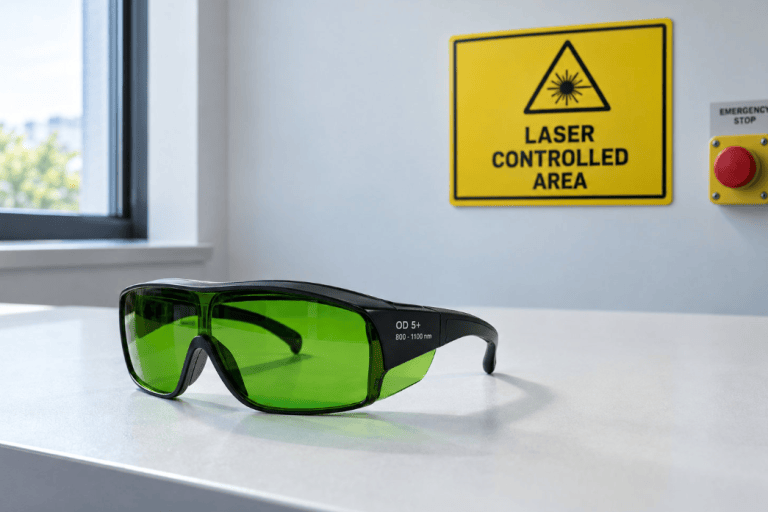
Personal protective equipment (PPE), like laser safety eyewear, acts as a final layer of defense. The LSO is responsible for verifying that PPE matches each device’s wavelength and is stored at the point of use, including checks for Laser Safety Windows in procedural areas where beam containment is required. Spot checks and maintenance logs should be included in audit cycles to ensure PPE remains effective and available. Regularly referencing laser safety standards during this process helps guarantee that the combination of engineering, administrative, and PPE measures meet current safety benchmarks. For example, an audit may reveal that eyewear lacks required optical density markings, prompting immediate updates and retraining.
Managing signage, documentation, and continuous improvement
Accurate signage and labeling throughout laser-controlled areas ensure that all personnel recognize hazards before entering. The LSO must check that each entrance displays current signs, hazard labels on devices remain clear and legible, and that device specifications are always accurately presented. When rooms rely on Laser Safety Windows, routine inspections should confirm materials, markings, and installation integrity remain appropriate for the beam parameters in use. A typical issue uncovered in audits is signage that is obscured when a door is left open or faded markings that need replacement.
Documentation is the backbone of an effective laser safety program, especially when it is used to demonstrate compliance with medical laser safety requirements. The LSO must maintain up-to-date risk assessments, NHZ evaluations, equipment service logs, SOPs, and audit checklists with version control. Assigning responsibility for corrective actions, scheduling follow-ups, and tracking improvements after each audit keeps the program dynamic and effective, including documentation that ties facility controls such as Laser Safety Windows to device inventories and room-specific hazards. This ongoing process not only supports compliance but also builds a proactive safety culture that remains adaptive to emerging risks in healthcare environments.
