


By Samantha Gilbert, FNC, CHNP
You log 45 grams of carbohydrates for lunch, but your glucose reading tells a different story. Perhaps your medication or activity influenced it. Or perhaps the serving size, sauce, or app entry hid carbohydrates you never counted. Carb counting can guide meal planning, but only when the numbers reflect what you actually ate.
Carbohydrates include sugars, starches, and fiber. Sugars and starches can raise blood glucose; fiber behaves differently. The CDC uses approximately 15 grams as one carbohydrate exchange, not as a universal meal limit. These seven common mistakes show where tracking goes wrong and what to do instead. For anyone using insulin or a medicine that can cause low blood sugar, meal changes should remain part of an agreed treatment plan.
1. Treating the Label Serving as Your Actual Portion
Nutrition labels describe a standardized serving, not necessarily the amount on your plate. The FDA illustrates this with frozen lasagna: one cup lists 34 grams of total carbohydrate, but two cups contain 68 grams. The calculation is straightforward: 34 × 2 = 68. The mistake is logging one serving while eating two.
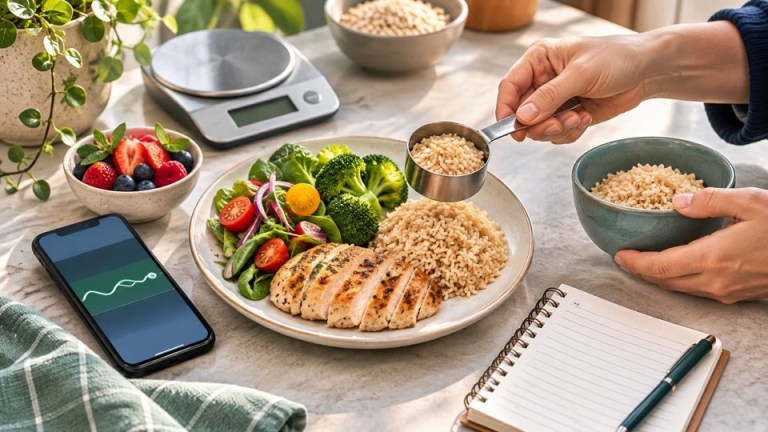
Better approach: check servings per container, compare the listed serving with what you ate, and multiply the total carbohydrate accordingly. A measuring cup or kitchen scale can help while you learn portions. FDA label guidance explains the distinction.

Example based on the FDA Nutrition Facts label. Amounts vary by product.
2. Counting Sugar but Overlooking Starch
Someone might choose crackers because their label shows very little sugar, then overlook the starch that contributes most of the carbohydrate. Rice, bread, potatoes, oats, fruit, and milk can all contribute carbohydrates, even when no sugar has been added. On US nutrition labels, use “Total Carbohydrate” rather than “Total Sugars” to estimate intake. Fiber is included within the total, but does not act like digestible starch.
Better approach: start with total carbohydrate per portion, then also evaluate fiber and overall nutritional quality. A high-fiber meal and a sugary drink are not nutritionally equivalent simply because their total carbohydrate grams match.
3. Forgetting Drinks, Sauces, and Small Additions
A carefully counted sandwich may arrive with a sweetened coffee, juice, ketchup, or a honey-based dressing. These extras can add meaningful carbohydrates. Homemade recipes are easy to underestimate, too: a pot of chili may contain beans, tomatoes, and other carbohydrate sources spread across several servings.
The CDC considers about half a cup of unsweetened fruit juice one 15-gram carbohydrate choice. A larger glass can represent several choices before you count breakfast itself. The same rule applies to milk and sweetened drinks: include them, even if you never think of them as food.
Better approach: log the entire meal, including drinks, condiments, and recipe ingredients. For shared dishes, calculate the recipe total and divide it by the actual portions served. Check product labels when restaurant or app estimates are uncertain.
4. Treating “Net Carbs” as a Precise Medical Number
Some packaging subtracts all fiber and sugar alcohols from total carbohydrate to advertise a smaller “net carbs” figure. The American Diabetes Association notes that net carbs have no standardized FDA definition and that some sugar alcohols and fibers may still affect glucose. Subtracting everything automatically can therefore mislead carbohydrate estimates, especially for insulin users.
Better approach: begin with the labeled total carbohydrate and discuss any adjusted counting method with your diabetes care team. Use your individual glucose data to understand food responses rather than trusting an advertised net-carb number.
5. Assuming Everyone Needs the Same Carb Allowance
One 15-gram carbohydrate exchange is a counting unit, not a prescription to eat only 15 grams per meal. There is no universal daily carbohydrate allowance. Age, physical activity, medications, health goals, and diabetes type all matter. A 2026 American Diabetes Association standard emphasizes individualized carbohydrate education and matching meal patterns to the treatment plan. The CDC presents an illustrative day with around 200 grams of carbohydrate, but explicitly states that no single amount suits everyone. A sample menu is not an individualized recommendation.
Better approach: establish a realistic daily or per-meal plan with your clinician or diabetes educator. People on fixed insulin doses may need consistent carbohydrate timing, while those using individualized mealtime insulin have different planning considerations. Never change insulin doses solely on the basis of an online carb target.
6. Trusting Every App Entry Without Checking
Food-tracking apps can make record-keeping easier, but database entries may use different product sizes, brands, recipes, or preparation methods. A scanned barcode can still correspond to a different package formulation. Healthcare Guys has previously covered diabetes-management apps; the useful habit is verifying the numbers, not assuming the app is always right.
Better approach: compare entries with the package label, check whether the food is weighed cooked or raw, and save verified custom meals. If an app lists rice by weight, first confirm whether that means dry rice or cooked rice; the water absorbed in cooking changes the weight without adding carbohydrate. Use apps to support judgment, not replace it.
7. Ignoring Glucose Trends and Medication Context
Accurate carb totals do not guarantee identical glucose readings. Activity, stress, illness, medication, and the rest of a meal can influence a response. For people using mealtime insulin, counting is only one part of a clinician-approved dosing plan. This also explains why mealtime insulin decisions require attention to timing, safety, and follow-up.
A 2024 randomized trial assigned 48 adults with type 2 diabetes to carbohydrate-counting education or standard dietary care. Estimation accuracy improved, but the between-group HbA1c difference after six months was not statistically significant (p = 0.554). Counting is a skill, not a guaranteed treatment outcome.
Better approach: review food logs alongside glucose readings and discuss recurring patterns with your diabetes team. Avoid adjusting medication or using a glucose-monitoring device as a substitute for medical advice.
Build a Carb-Counting Routine You Can Maintain
Start small: identify the carbohydrate foods, read total carbohydrate, match labels to portions, and log extras. Recheck foods you eat often rather than aiming for perfect arithmetic at every meal. If the process feels overwhelming, a qualified diabetes nutritionist can help turn numbers, meal preferences, and glucose trends into a workable nutrition plan alongside your medical care.
Carbohydrate counting should help you understand food, not make eating frightening. A realistic routine that fits your treatment plan is more useful than a flawless-looking log built from inaccurate portions.
References
- Centers for Disease Control and Prevention. Carb Counting
- U.S. Food and Drug Administration. How to Understand and Use the Nutrition Facts Label
- American Diabetes Association. Get to Know Carbs
- National Diabetes Services Scheme. Carbohydrate Counting Fact Sheet
- American Diabetes Association. Standards of Care in Diabetes 2026, Section 5
- The BCC Study investigators. Effects of Basic Carbohydrate Counting versus Standard Dietary Care for Glycaemic Control in Type 2 Diabetes. 2024
This article offers general education and does not replace individual diabetes assessment or treatment.
