



Age is an important factor when estimating the chances of pregnancy through intrauterine insemination (IUI). However, it does not tell the whole story. The outcome of IUI Treatment also depends on egg quality, sperm health, ovulation, and the underlying cause of infertility. Understanding these factors can help couples make sense of success rates and discuss their options with a fertility specialist.
How Does Age Affect IUI Success Rates?
A woman’s fertility gradually declines with age as the number and quality of her eggs decrease. The likelihood of chromosomal abnormalities also increases, which can affect conception and miscarriage risk.
Younger women generally have better chances of pregnancy through insemination, particularly when ovulation is regular, at least one fallopian tube is open, and sperm quality is suitable. However, age alone cannot predict an individual outcome.
IUI Success Rates in Your 20s and Early 30s
Women in their 20s and early 30s generally have more favourable fertility prospects. When other reproductive factors are healthy, insemination may be a suitable option.
However, younger age does not guarantee pregnancy. Blocked fallopian tubes, endometriosis, ovulation disorders, and sperm abnormalities can affect success. A fertility specialist can assess these factors before recommending treatment.
What Changes After Age 35?
Fertility tends to decline more noticeably after age 35. Pregnancy remains possible, but success rates per cycle may be lower than those for younger women.
The decision to proceed should consider ovarian reserve, the cause of infertility, how long the couple has been trying to conceive, and any previous treatment outcomes. Discussing how many cycles to attempt before reviewing the plan can help avoid unnecessary delays.
What Are the Chances After Age 40?
After age 40, pregnancy through insemination generally becomes less likely, while miscarriage risk increases. Some women do conceive, but individual expectations need careful assessment.
A systematic review of studies involving women aged 40 and older reported live-birth rates per cycle ranging from 0% to 8.5%, with most studies reporting rates of 4% or less. Results varied across studies, so these figures should not be treated as a personal prediction.
A fertility specialist can help couples weigh further attempts against other options based on their medical history and reproductive health.
Pregnancy Rate vs Live-Birth Rate
Fertility statistics can be confusing because studies do not always measure success in the same way.
- Pregnancy rate:The percentage of cycles resulting in pregnancy, sometimes measured through a positive pregnancy test.
- Clinical pregnancy rate:The percentage of cycles in which pregnancy is confirmed by ultrasound.
- Live-birth rate:The percentage of cycles resulting in a live birth.
These figures are not interchangeable. Not every pregnancy progresses to delivery, so check what a published statistic measures and whether it refers to each cycle, each patient, or multiple attempts combined.
Other Factors That Affect Success
Age is only one part of the picture. Several other factors can influence pregnancy chances:
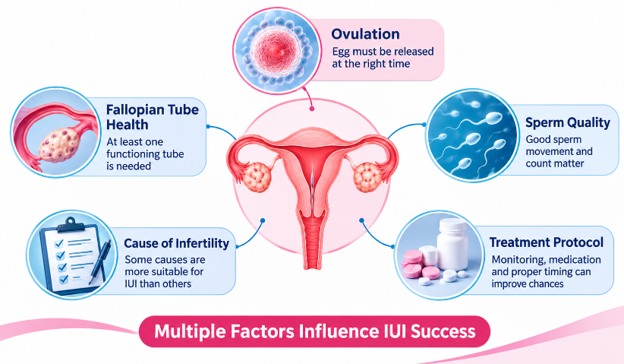
- Ovulation:The egg must be released at the appropriate time.
- Fallopian tube health:At least one functioning tube is generally needed for fertilisation.
- Sperm quality:Sperm movement, count, and the number of motile sperm after preparation can affect outcomes.
- Cause of infertility:Some fertility concerns are more suitable for insemination than others.
- Treatment protocol:Monitoring, medication when indicated, and accurate timing can influence outcomes. Fertility medicines require supervision because of risks such as multiple pregnancy.
A fertility assessment helps identify which factors matter most for an individual couple.
How Many Attempts Should You Consider?
There is no fixed number of cycles that suits everyone. The decision depends on age, fertility findings, previous results, and how long the couple has been trying to conceive.
For women over 35, particularly those approaching 40, it is worth discussing the likely benefit of each additional attempt with a fertility specialist. If pregnancy does not occur, the doctor may review the diagnosis, recommend further tests, or discuss whether IVF would be more suitable. Understanding the differences between IVF and IUI can help couples discuss their next steps with a fertility specialist. The right approach depends on individual fertility factors and treatment history
When Should You Seek Fertility Advice?
Women under 35 are generally advised to seek an infertility evaluation after 12 months of trying to conceive. Those aged 35 or older should usually seek advice after six months, while women over 40 may benefit from an earlier assessment. Seek help sooner if you have irregular periods or a known fertility condition.
A fertility specialist can explain realistic expectations and help determine which approach suits your circumstances.
Understanding the Numbers Before Making a Decision
Age-related statistics provide a useful starting point, but they cannot predict an individual’s outcome. Ask your fertility specialist about pregnancy and live-birth chances per cycle, how many attempts may be reasonable, and when the plan should be reviewed. Understanding these details can help you make informed decisions based on your individual circumstances.
