


If your doctor has referred you for a CT scan, you might assume you just book in at whichever clinic is closest and that’s that. In reality, not every provider is the same, and a bit of homework before you book can save you money, time, and a second trip if something isn’t quite right. Here’s what’s actually worth checking.
Start With Your Referral
Before anything else, look at what your referral actually says. Medicare only covers a CT scan when it’s clinically justified and the referral spells out the reason for the scan, so vague or missing details can mean paying out of pocket even at a provider that normally bulk bills. Referrals are also generally valid for 12 months, and you’re free to take that referral to any accredited provider, not just the one your GP or specialist might suggest by default.
Ask About Bulk Billing Directly, Every Time
It’s a common misconception that a referral guarantees a free scan, or that a clinic bulk billing one type of scan bulk bills everything. In reality, bulk billing is decided service by service, and a request from your doctor is not a quote from the clinic. Before you book, it’s worth asking three specific questions: is this exact scan Medicare-rebatable with your referral, will the clinic bulk bill it, and if not, what will the total out-of-pocket cost be. A five-minute phone call can avoid an unexpected bill later.
Check the Clinic Is Properly Accredited
Every diagnostic imaging provider in Australia offering CT, MRI, ultrasound, or X-ray services should hold accreditation under the national Diagnostic Imaging Accreditation Scheme (DIAS), typically issued through QIP or NATA. This isn’t just a formality: accreditation confirms the clinic meets consistent national standards for safety, equipment maintenance, and image quality, and it’s generally a requirement for a scan to attract a Medicare rebate at all. Most reputable clinics display their accreditation status clearly on their website or in the waiting room, so it’s easy to check.
Look Into the Technology Being Used
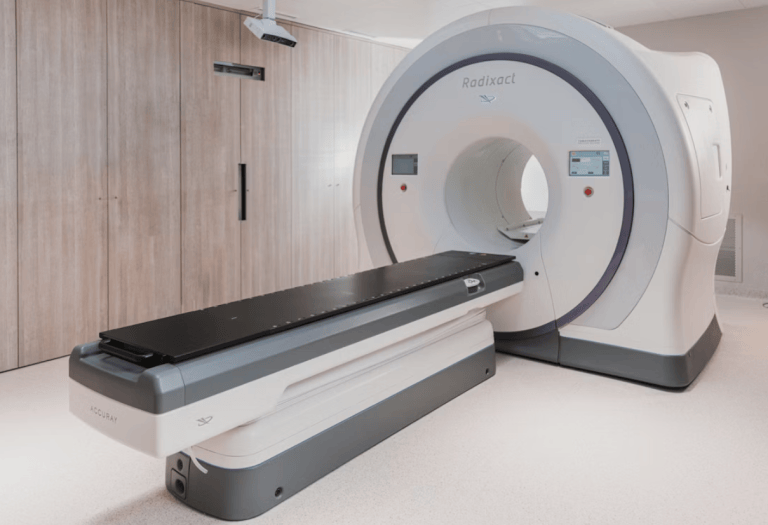
Not all CT scanners are equally modern, and newer equipment can mean a faster scan and a noticeably lower radiation dose, sometimes dramatically lower than older machines. This matters more than people realise, particularly for children or anyone likely to need repeat imaging over time. It’s a fair question to ask a clinic directly: how old is the scanner, and what’s being done to keep radiation dose as low as possible while still getting a clear result.
Consider How Fast You’ll Get Results
A CT scan is only useful once your doctor has the report in hand. Ask how results are delivered and how long that typically takes, ideally the same day for urgent cases and within a day or two otherwise. Clinics that send reports electronically straight to your GP or specialist tend to move faster than those relying on posted or faxed reports, which can add unnecessary delay to your diagnosis and treatment.
Don’t Underestimate Location and Convenience
This one matters more than people expect, especially outside major cities. In regional and rural Australia, patients have historically had to travel long distances for anything beyond a basic X-ray, which delays diagnosis and adds cost and hassle. A well-equipped On-site CT scanning imaging provider that offers a full range of scans on-site, rather than sending you elsewhere for anything beyond the basics, makes a real difference when you’re trying to get answers quickly. Xplore Radiology is a good example of this in practice: it operates five clinics across regional NSW, in Leeton, Narellan, Griffith, Leppington, and Camden, with a stated focus on bringing high-quality imaging to communities that have traditionally been underserved. Its CT scanners are designed to deliver significantly lower radiation doses than older equipment, sometimes up to 88% less, and reports are sent electronically to referring doctors to avoid unnecessary delays. For patients in these regions, that combination of accreditation, modern equipment, and multiple imaging services under one roof means fewer trips and faster answers.
A Quick Checklist Before You Book
Before locking in an appointment, it’s worth running through a short mental checklist: is my referral specific enough for a rebate, is this exact scan bulk billed here, is the clinic properly accredited, is the equipment reasonably modern, how fast will my doctor get the results, and is this actually the most convenient option available to me. Taking a few extra minutes to check these things means you’re far less likely to be caught out by a surprise bill, a delay, or a scan that has to be redone somewhere else.
