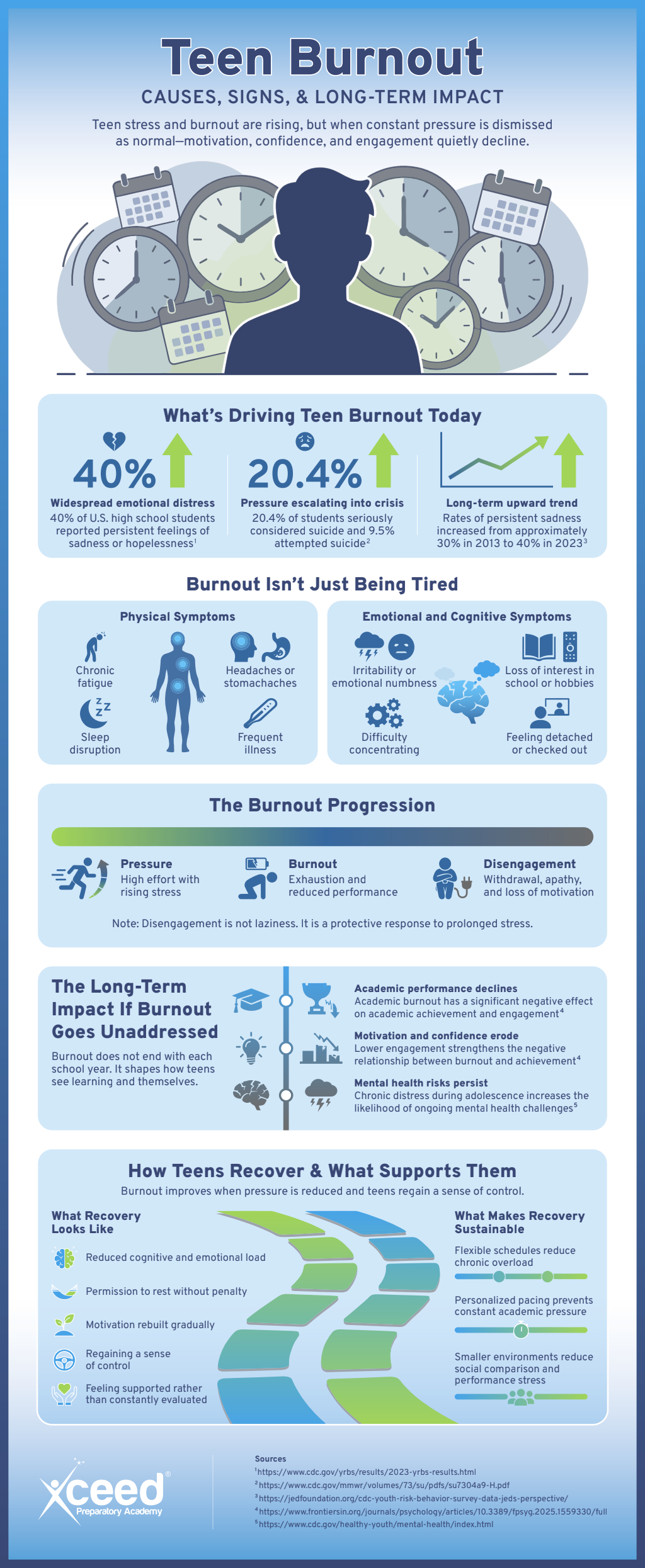
Teen burnout is a state of deep mental, emotional, and physical exhaustion caused by ongoing stress. It can affect school performance, sleep, mood, friendships, and overall health. Many teens face pressure from classes, sports, social lives, family duties, and future planning. Burnout should be taken seriously because it can lead to lasting health concerns.
Common Causes of Teen Burnout
Academic pressure is one of the leading causes of teen burnout. Heavy homework loads, exams, advanced classes, and college planning can create constant stress. Teens may feel they must perform well at all times to meet expectations from parents, teachers, coaches, or themselves.
Packed schedules also raise burnout risk. A teen may move from school to practice, work, tutoring, and late-night homework with little time to rest. Students in public and private schools can face these pressures, especially when achievement is tied to grades, awards, or future goals.
Social pressure can add another layer. Teens may compare themselves to others online, worry about fitting in, or feel pressure to stay connected at all hours. Lack of sleep, poor nutrition, and limited free time can make stress harder to manage.
Signs Parents and Caregivers Should Notice
Burnout often shows up through changes in behavior, mood, and physical health. A teen may seem tired most of the time, lose interest in activities, or become more irritable than usual. They may avoid schoolwork, miss deadlines, or show a sudden drop in grades.
Physical signs can include headaches, stomach pain, muscle tension, changes in appetite, and trouble sleeping. Some teens may sleep much more than usual but still feel exhausted. Others may have trouble falling asleep because their mind stays active at night.
Emotional signs can include sadness, anxiety, anger, low motivation, or feeling hopeless. Teens may withdraw from friends or family. They may say they feel trapped, worn out, or unable to keep up. These signs should prompt a calm, direct conversation and, when needed, support from a healthcare provider or mental health professional.
Long-Term Impact on Health and Development
Untreated burnout can affect a teen’s mental and physical health over time. Ongoing stress may increase the risk of anxiety, depression, sleep problems, and frequent illness. It can also affect memory, focus, and decision-making, which may make school feel even harder.
Burnout can shape how teens view success and self-worth. A teen who feels valued only for performance may develop unhealthy habits, such as skipping rest, hiding stress, or pushing through pain. Over time, this can lead to chronic stress patterns that continue into adulthood.
Steps That Support Recovery
Recovery starts with reducing pressure and rebuilding healthy routines. Teens need enough sleep, regular meals, movement, and time away from screens. Parents can help by setting realistic expectations, protecting downtime, and watching for signs that stress is becoming harmful.
Schools, families, and healthcare providers should work together when burnout affects daily life. Early support can help teens regain energy, improve coping skills, and return to a healthier balance. Check out the infographic below to learn more.