


By Saul Marquez, CEO & Founder, Outcomes Rocket
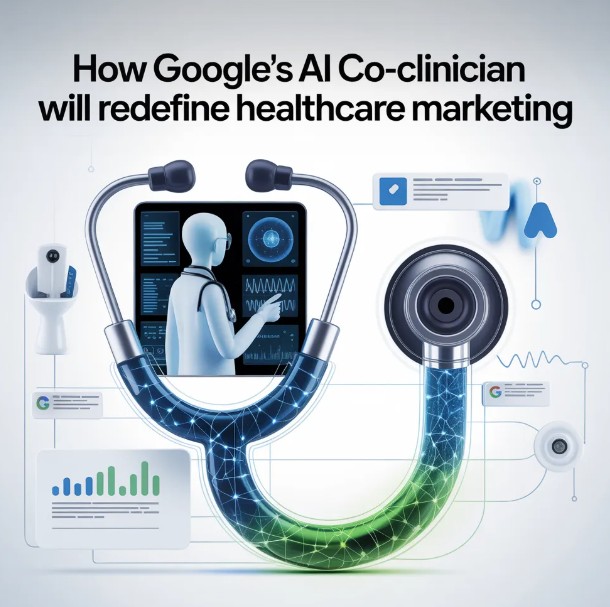
On April 30, 2026, Google DeepMind announced its AI Co-Clinician, a system designed to join physicians and patients in real-time clinical conversations. It synthesizes data, surfaces diagnoses, and shapes treatment recommendations. While most coverage focused on the clinical breakthrough, a deeper implication received far less attention.
If an AI co-clinician mediates the conversation, filtering what gets flagged, recommended, and acted upon, what happens to the healthcare brand that isn’t in that system’s awareness?
It doesn’t exist.
The Rise of the AI Gatekeeper
As artificial intelligence systems from Google DeepMind and other leading labs weave themselves deeper into everyday healthcare experiences, from symptom checkers to clinical decision support, a powerful new intermediary is emerging: the AI gatekeeper.
This shift promises to reshape not just how patients discover care, but how healthcare organizations must compete for visibility. In the coming era, brands will no longer battle primarily for clicks or search rankings. Instead, they will compete to be the one recommended by AI itself.
From SEO to Recommendation Optimization
Traditional search engine optimization, long centered on keywords, backlinks, and paid advertisements, is giving way to something more subtle and consequential. AI interfaces rarely present users with pages of blue links. They deliver synthesized answers, often accompanied by clear recommendations on which provider to visit, which treatment to pursue, or which institution to trust.
This evolution is moving the industry from search engine optimization (SEO) toward answer engine optimization and, ultimately, AI recommendation optimization. Success now depends less on being seen and more on being understood, trusted, and actively selected by intelligent systems capable of weighing credibility across vast amounts of information.
Authority Becomes the Algorithm
Unlike traditional search engines that simply rank pages, modern AI models synthesize data from countless sources, evaluate signals of authority, and draw conclusions. What matters now is not who ranks highest, spends the most on ads, or floods the internet with content.
The decisive factor is who earns consistent recognition from credible sources, who appears in authoritative contexts, and who demonstrates real expertise throughout the broader information ecosystem. In essence, authority has become the new algorithm.
PR as the New Strategic Asset
Public relations is stepping into a far more influential role. According to a global survey of 858 marketing and PR professionals conducted in March 2026, seven out of ten organizations now view PR as important to their go-to-market efforts. More than 63% say the rise of AI-driven search has already influenced their PR strategy, while 73% expect PR to become even more strategic over the next two years.
Once seen mainly as a tool for awareness, PR is now becoming the critical layer that shapes the data feeding AI systems. Every earned media story, expert quote, podcast appearance, and bylined article contributes to the narrative AI uses to judge credibility and decide which organizations to recommend. In short, if AI is the front door to healthcare decisions, PR is what determines what patients find behind it.
Trust at Scale: The New Battleground
As a result, the competitive landscape is shifting from attention to trust at scale. Many patients may soon bypass browsing multiple websites or comparing provider profiles. Instead, they will turn to AI for immediate, personalized guidance they perceive as authoritative.
For healthcare organizations, the central question becomes whether AI systems will trust them enough to offer a recommendation. Without that endorsement, they risk being invisible at the very moment a patient seeks care.
What Healthcare Leaders Should Do Now
The transformation is already in motion, and waiting is not an option. Healthcare organizations should move beyond producing high volumes of content and instead invest in building genuine authority through high-quality, expert-driven work that earns citations and recognition. They must also amplify the voices of their physicians and clinical leaders in public forums, media, and thought leadership platforms, since AI systems tend to favor demonstrated expertise.
Public relations can no longer function in isolation. It needs to integrate tightly with marketing, digital, and revenue strategies as a core driver of long-term discoverability. Leaders should also update their measurement practices, shifting focus from impressions and clicks to share of voice in respected publications, frequency of citations, and how favorably their organizations appear in AI-generated responses.
