


The most expensive patient in American healthcare is not someone with a rare disease or a catastrophic injury. It is someone with a chronic condition well-understood enough to have a standard treatment protocol, common enough to fill entire hospital floors, and stubborn enough that the standard treatment keeps not being enough. Congestive heart failure fits that description precisely. Six million Americans have it. Heart failure is the number one cause of hospital readmission in the country. The total annual cost to the US healthcare system runs to roughly $40 billion, and most of that spending is not on cures or breakthroughs. It is on managing the consequences of a disease that keeps coming back.
The readmission pattern is not a failure of compliance or patient behavior. It is built into the biology of the condition and the logic of the current treatment approach. A patient with advanced heart failure is admitted, stabilized with diuretics and adjusted medications, discharged when they are no longer in acute distress, and sent home with a regimen that will slow the progression without reversing it. When the heart decompensates again, which it will, the loop repeats. Cardiologists are not doing anything wrong. They are doing exactly what the available tools allow.
The Problem with Treating the Symptoms
Standard heart failure management targets outputs, not the underlying failure of cardiac mechanics. Diuretics reduce fluid overload. Beta-blockers slow the heart rate. ACE inhibitors lower vascular resistance. These are effective interventions. They extend life and reduce acute episodes. What they cannot do is change the fundamental dynamic: a left ventricle working at a fraction of its designed output, under constant demand from a nervous system that keeps asking for more.
The sympathetic nervous system is the hidden driver of the progression loop. When the heart fails to maintain adequate output, the body interprets this as an emergency and escalates: it increases heart rate, constricts blood vessels, retains fluid. This response is physiologically appropriate in the short term and destructive over time. The heart is forced to work harder precisely when it is least capable of delivering. The medication regimen can blunt this response, but it cannot interrupt it at the source. The nervous system keeps sending the signals. The heart keeps struggling to answer them.
Where the Harmony™ System Intervenes
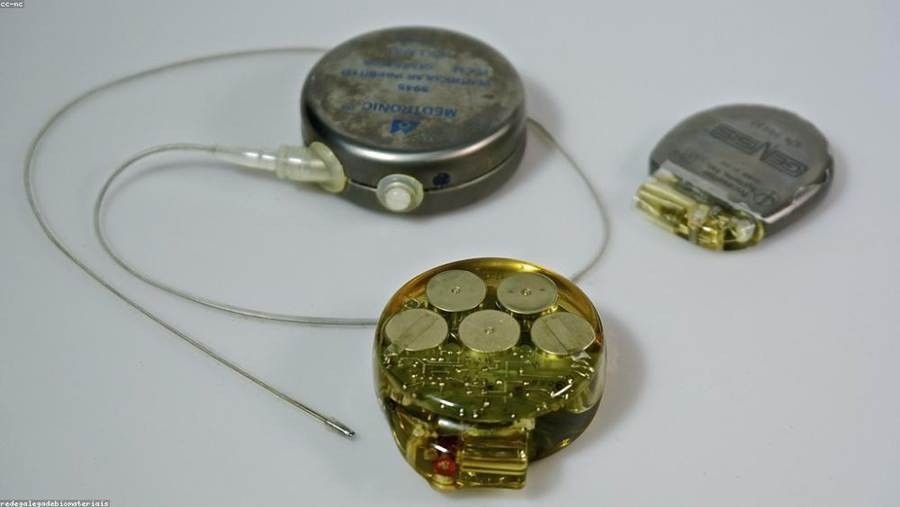
The EnoPace Harmony™ System is a catheter-implanted neurostimulator that targets the autonomic nervous system directly. The device is placed via a standard catheter procedure in a cardiac catheterization lab, taking roughly 30 minutes without open surgery. Once implanted, it delivers RF-powered stimulation that modulates the nerve signals driving the heart’s overwork. The left ventricle’s workload drops. Hemodynamics stabilize. The heart is no longer being commanded to perform at levels it cannot sustain.
This is a different intervention than anything in the standard medication protocol, because it operates on a different part of the system. Medications manage the downstream consequences of the nervous system’s excessive demands. The Harmony™ System’s neurostimulation approach addresses the demands themselves. Twelve-month follow-up data from clinical trials shows measurable improvement in left-ventricular pressure and cardiac output. TCT Congress, the premier interventional cardiovascular conference, awarded the device the #1 Medical Innovation designation in 2025. The Sorin Group, a global leader in cardiac devices, has backed the platform with strategic investment.
What Breaking the Loop Actually Means
The $40 billion annual cost of heart failure in the United States is not distributed evenly across the disease. A disproportionate share of it concentrates in the repeat-admission population: patients who have decompensated multiple times, whose medication options are largely exhausted, and who cycle through the hospital at a frequency that every cardiologist and hospital administrator recognizes and nobody has a great answer for.
A device that improves the underlying hemodynamics changes the calculus for that population in a direct way. If the left ventricle is operating more efficiently, the trigger threshold for decompensation rises. Fewer episodes. Fewer admissions. A patient who was coming back every three months has a realistic chance of going six, or twelve, before the next hospitalization. Across six million patients, even modest improvements in that rate produce significant reductions in the total cost of care.
That arithmetic is not hypothetical. It is why the Sorin Group invested, why TCT recognized the platform, and why a clinical-stage device company based in Somerville, Massachusetts is conducting trials with major cardiac centers. The readmission loop for advanced heart failure is one of the most expensive unsolved problems in American medicine. The Harmony™ System is a serious attempt to solve it at the level where it actually originates.
$40 billion a year. Most of it recycled through the same patients. A device that changes what the heart is asked to do, not just how the body copes when it fails. The math for that trade is not complicated.
