



Most people don’t think much about their retina. Vision feels stable and predictable until something goes wrong. A slight blur here, a flicker there, something you brush off because it doesn’t interrupt your day. And yet, many serious eye conditions begin quietly, without much fuss. That’s what makes them more difficult.
That’s why recognizing early warning signs can make life easy. In some cases, it’s the difference between manageable treatment and permanent vision loss. Seeking care from a trusted place like the best retina hospital isn’t about panic; it’s about timing. And timing, in eye health, matters more than we think.
Let’s understand what your eyes might be trying to tell you.
What exactly does a retina specialist do?
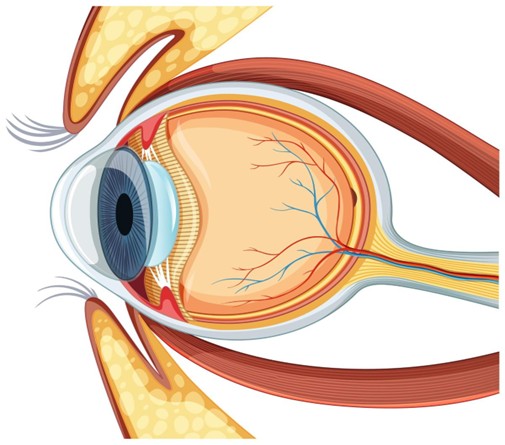
A retina specialist is not your regular eye doctor. They’re trained to handle diseases that affect the retina, the thin layer at the back of your eye that turns light into signals your brain understands.
Think of the retina like the film in an old camera. If something goes wrong there, the entire image suffers, no matter how perfect the lens is.
These specialists deal with conditions like retinal detachment, diabetic retinopathy, and macular degeneration. They use advanced tools, such as OCT scans, laser treatments, and injections, to manage problems that often need precision and speed.
It’s a focused field. And because it’s so specialized, knowing when to see one becomes crucial.
Why catching retina problems early actually matters
The true fact: many retina conditions don’t hurt. There’s no warning, no pain that forces you to act.
Instead, symptoms tend to creep in, slight distortion, a shadow that comes and goes, easy to ignore, especially when life are busy.
But retinal damage, once it progresses, is often irreversible. That’s not meant to alert you; it’s just the nature of the tissue. Unlike a muscle strain or a skin cut, the retina doesn’t repair itself easily.
Early detection doesn’t just improve outcomes, but it also simplifies treatment. A small tear caught early can be treated quickly. If left alone, it may lead to detachment, which is very serious.
So yes, paying attention early might feel unnecessary at times, but it’s really important.
The signs you shouldn’t ignore
Let’s get into the part that matters most, the actual symptoms. Some of these may seem minor at first glance. But actually they’re not.
Sudden floaters that weren’t there before
You might notice specks drifting across your vision like dust or threads. Floaters aren’t always dangerous; many people have them.
But a sudden increase? That’s different. If you go from seeing one or two occasionally to noticing a swarm overnight, it could point to a retinal tear or changes in the vitreous gel inside your eye.
It’s one of those signs that’s easy to dismiss. Still worth checking.
Flashes of light, especially in the dark
Ever seen a quick flash in your peripheral vision, almost like lightning? It can happen even when your eyes are closed.
That’s not your imagination. Flashes often indicate that the retina is being pulled or irritated. In some cases, it’s an early warning of a tear forming.
Many people do ignore this. They assume it’s fatigue or screen exposure. Sometimes it is, but sometimes it isn’t.
Blurred or distorted vision that doesn’t settle
Blurriness comes and goes. Everyone has experienced it after a long day or too much screen time.
But when straight lines start appearing wavy, or faces seem slightly distorted, it’s a different story.
This kind of visual distortion is often linked to macular problems. And the macula, by the way, is responsible for central vision, the part you rely on for reading, driving, recognizing faces.
A shadow or a curtain creeping across your vision
This one feels more obvious, but surprisingly, it’s still ignored.
People describe it as a dark shadow or a curtain moving across one side of their vision. It doesn’t blink away. It doesn’t improve with rest.
This is a classic sign of retinal detachment. At this point, time becomes critical. The longer it’s left untreated, the higher the risk of permanent vision loss.
Sudden loss of vision, partial or complete
Sometimes, the change is abrupt. Vision fades in one eye, either partially or entirely.
No pain. No warning. This could be due to a range of retinal issues, such as vascular blockages, detachment, or severe macular conditions.
And yes, this is an emergency. Not something to “wait and watch.”
Peripheral vision is slowly narrowing
You might not notice this right away. It’s subtle. Maybe you bump into things slightly more often. Or you feel like your field of view isn’t as wide as it used to be.
Peripheral vision loss can signal underlying retinal disease, especially in conditions that progress gradually.
It’s one of those symptoms that creeps up quietly, and that’s exactly why it’s missed.
Difficulty seeing at night
Night driving becomes uncomfortable. Dim environments feel harder to navigate.
While this can relate to other eye issues, it may also indicate early retinal degeneration.
Again, not something to panic over, but definitely something to check.
What could be behind these symptoms?
These signs don’t appear out of nowhere. They’re usually tied to specific conditions.
Retinal detachment is one of the more serious conditions. It often starts with floaters and flashes, then progresses.
Diabetic retinopathy is another common cause, especially in people with long-standing diabetes. It damages blood vessels in the retina.
Macular degeneration affects central vision, making detailed tasks difficult.
There are others, too, such as retinal vein occlusion, macular holes but the point is simple: symptoms are signals, not random glitches.
When should you see a specialist?
Here’s a straightforward way to think about it:
- Immediately: sudden vision loss, curtain-like shadows, rapid onset of floaters or flashes
- Soon (within days): persistent distortion, increasing blurriness, difficulty focusing
- Routine check: mild, stable symptoms or risk factors like diabetes
If something feels off and stays off, it’s worth checking. You don’t need to self-diagnose. That’s not your job.
How retina problems are diagnosed
A specialist will examine your retina using dilated eye exams. They may recommend imaging tests like OCT (Optical Coherence Tomography), which provides detailed cross-sections of the retina.
Sometimes, fundus photography is used to document changes over time. It’s fairly quick. Mostly painless. And often very revealing.
A few practical ways to take care of your retina
Nothing complicated here. Just consistent habits:
- Get regular eye checkups, especially after 40
- Manage conditions like diabetes and blood pressure
- Wear sunglasses in harsh sunlight
- Take breaks from screens (your eyes need it more than you think)
- Pay attention to changes, even small ones
It’s less about doing everything perfectly and more about not ignoring patterns.
Final thoughts
Eye health tends to stay in the background until something shifts. And when it does, the instinct is often to wait. See if it improves. Give it time.
But retina problems don’t always work that way. They’re quiet, sometimes subtle, but often serious beneath the surface. Recognizing early signs and acting on them isn’t overreacting; it’s sensible.
If your vision changes suddenly, or even gradually in a way that doesn’t feel right, it’s time to visit a retina hospital. Because once vision is affected, restoring it isn’t always simple.
And in many cases, the earlier you act, the better your chances of keeping things exactly as they are clear, stable, and easy to trust.
