



Clinicians who depend on weight alone when shaping nutrition plans are working with an incomplete picture. Body fat analysis devices for clinical nutrition and patient assessment close that gap, giving dietitians, physicians, and sports medicine teams the segmental, tissue-level data they need to track interventions, catch risk early, and tailor treatment. The devices on this list are among the most widely adopted in clinical and research settings today.
How Clinical Analyzers Measure Body Composition
The measurement technology inside a clinical body composition analyzer directly shapes where and how it can be used in patient assessment. InBody USA’s body fat analyzer is a frequently cited example of DSM-BIA (Direct Segmental Measurement Bioelectric Impedance Analysis), which runs electrical signals through each body segment individually rather than extrapolating from a single trunk reading. Air displacement plethysmography (ADP), bioimpedance spectroscopy (BIS), and whole-body DEXA round out the main approaches. Speed, cost, portability, and clinical clearance all differ across these methods, so the right fit depends heavily on patient population, how fast results are needed, and what floor space is available.
1. InBody USA
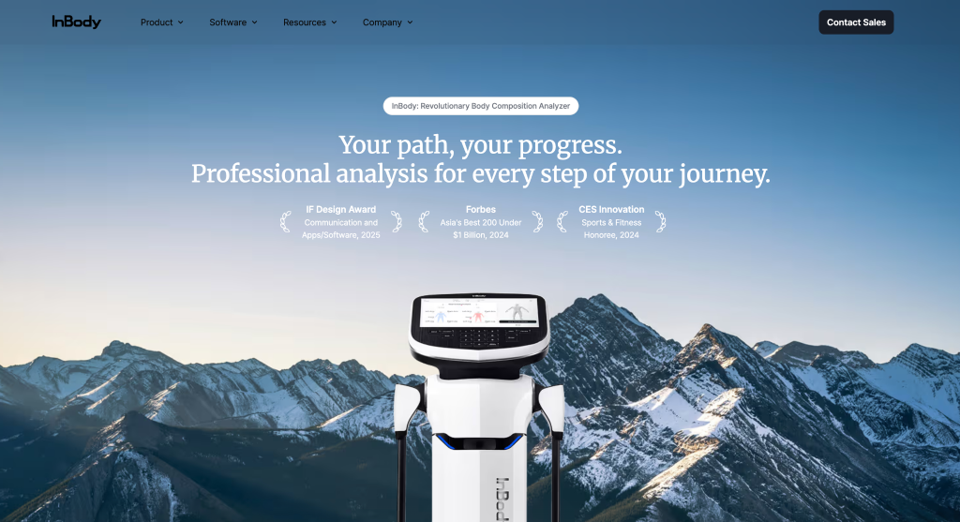
What it does: InBody USA builds body composition analyzers using DSM-BIA with an 8-Point Tactile Electrode System that measures each arm, leg, and trunk segment independently. Results arrive in under two minutes and include percent body fat, muscle mass distribution, basal metabolic rate, and muscle balance. The company also makes clinically validated blood pressure monitors and stadiometers for integrated patient assessment workflows. Device pricing isn’t listed publicly, so customers contact InBody sales for a quote. Financing is available at 1.99% APR with $120 per month payments, which lowers the barrier for smaller practices adding the technology to their assessment toolkit.
Where it shines: InBody is the only BIA device validated at 98% accuracy against DEXA by Mayo Clinic. That validation matters in clinical nutrition contexts where practitioners need confidence that body fat percentages will hold up under medical scrutiny. Uses include Cincinnati Children’s Hospital and medical weight loss programs, and the platform serves corporate wellness programs alongside top-tier medical institutions. Models cover everything from screening to advanced body water analysis.
Clinicians assessing metabolic health can obtain precise segmental body composition data using InBody USA body fat analyzer technology, which measures intracellular and extracellular water distribution to differentiate muscle from fat mass across specific body regions.
This is particularly useful during GLP-1 treatment, when tracking muscle mass alongside fat loss can help clinicians assess whether patients are preserving lean tissue.
2. ACCUNIQ

What it does: ACCUNIQ is a Korean medical device company with over 30 years of diagnostic technology development. Its BC series body composition analyzers use electrical impedance technology and pair with an IoT-based app and cloud services for data management. The BC380 model targets fitness and clinical settings with high-accuracy composition measurement.
Where it shines: The ACCUNIQ BC380 recorded a 98% correlation with DEXA in independent testing, an industry-high result that major World Gym chains across the U.S., Australia, Canada, and Europe acted on by adopting the BC series for tailored fitness prescriptions. The company also manufactures the BP850, the world’s first FDA-approved double-arm blood pressure monitor, which positions ACCUNIQ as a multi-device option for sites combining body composition and cardiovascular screening. Official pricing isn’t published on the company website. Third-party retailer listings suggest BC model pricing in the $5,695 to $7,995 range, though that doesn’t represent official ACCUNIQ pricing.
Considerations: Support infrastructure in the U.S. is more limited compared to manufacturers with domestic headquarters, which may affect service response times.
3. COSMED

What it does: Founded in 1980, COSMED designs and manufactures a full range of diagnostic medical devices from its Rome headquarters, with manufacturing plants in Italy, Denmark, and the U.S. In the body composition space, its flagship BOD POD system uses air displacement plethysmography, a method considered a gold standard alternative to underwater weighing. The PEA POD extends the same technology to infant assessment. Pricing isn’t disclosed publicly; the company is privately held. Clinical facilities typically negotiate pricing directly.
Where it shines: COSMED products are aligned with guidelines from the American Thoracic Society, European Respiratory Society, American Heart Association, and American College of Sport Medicine. The company holds FDA 510(k) clearance and ISO 13485:2016 certification. For sports science labs and pediatric clinics needing a method that doesn’t require electrical contact with the patient, ADP is a practical fit, and COSMED is the main manufacturer serving that segment.
Considerations: The BOD POD’s physical footprint is larger than BIA devices, which limits placement flexibility in space-constrained settings.
4. ImpediMed

What it does: Founded in 1999 and headquartered in Brisbane, Australia, with U.S. operations based in Carlsbad, California, ImpediMed manufactures the SOZO platform, a bioimpedance spectroscopy (BIS) device designed for clinical fluid status monitoring and body composition analysis. Applications include L-Dex analysis for lymphedema detection and HF-Dex for heart failure fluid assessment. Software updates are available at no cost under ImpediMed’s SaaS model. Hardware and full pricing isn’t listed publicly.
Where it shines: ImpediMed holds the first FDA clearance of any medical device in the U.S. supporting clinical assessment of secondary lymphedema in cancer patients, both arm and leg, in male and female patients. The PREVENT clinical trial found that BIS-guided early intervention produced a 92% reduction in progression to chronic lymphedema compared to traditional tape-measure methods. U.S. health insurers now cover SOZO assessments for over 286 million covered lives, which meaningfully reduces patient cost barriers. The company received the 2025 Medical Device Network Excellence Awards Excellence Award.
Considerations: ImpediMed’s strongest clinical case sits in oncology and lymphedema management; it’s a narrower fit for general clinical nutrition programs compared to multi-application BIA platforms.
5. Mediana Global

What it does: Founded in 1993 and headquartered in South Korea, Mediana manufactures a broad portfolio of medical devices including body composition analyzers, AEDs, patient monitoring devices, health status monitors, and veterinary monitors. The company integrates AI capabilities through its parent company Selvas AI, which acquired Mediana in November 2023. Pricing varies by device and platform. Contact vendors directly for current quotes.
Where it shines: Mediana’s reach extends across more than 2,500 client partnerships in 80 countries, making it an active presence in emerging and international markets. Its AI-connected device architecture is a genuine technical differentiator for facilities looking to build toward data-connected patient monitoring across multiple device types under one system. The company participates regularly in major international exhibitions including MEDICA and KIMES.
Considerations: Mediana’s body composition analyzer line is one segment of a much broader hardware catalog, and specific clinical nutrition use cases are less documented in publicly available material compared to composition-specialist manufacturers.
Choosing the Right Device for Patient Assessment
The best device follows the clinical question, not the budget. When lymphedema monitoring or oncology fluid tracking is the primary need, BIS technology from ImpediMed is the logical choice. COSMED’s air displacement plethysmography suits labs that need a non-contact method validated against gold-standard DEXA, particularly in pediatric and sports science contexts. DSM-BIA devices from InBody USA and ACCUNIQ deliver fast, accurate analysis across a broad range of patient populations and clinical settings without requiring dedicated lab space. And for teams building toward a multi-device connected ecosystem, Mediana’s AI-integrated platform deserves a spot on the shortlist.
Bottom Line
Request a site evaluation or demo before committing, since patient volume, software integration requirements, and staff training overhead vary more across these platforms than spec sheets usually indicate.
