


A patient calls two facilities about an outpatient MRI. The hospital quotes a discounted cash price. An independent imaging center quotes a package that includes the radiologist’s report. The second number is lower, but the patient still needs to know whether both quotes cover the same study and the same set of charges. Until someone answers that question, the referral can sit open.
For healthcare operators, getting the patient a usable price early can remove one reason for putting off a diagnostic exam. That starts with understanding why two facilities can quote very different prices and what each is actually selling.
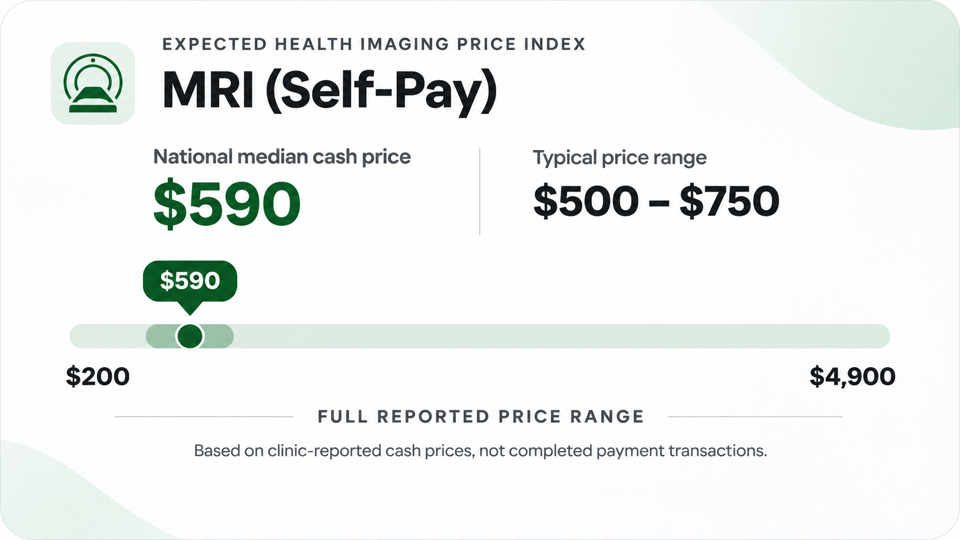
According to the Expected Health Imaging Price Index, reported self-pay MRI prices across the United States range from $200 to $4,900, with a national median of $590. This nearly 25-fold variation illustrates the importance of comparing prices and understanding what each quote includes.
A cash price is one of several prices for the same service
Under the Centers for Medicare & Medicaid Services’ hospital price transparency rules, hospitals publish several kinds of standard charges, including gross charges, discounted cash prices, and payer-specific negotiated charges. A hospital’s gross charge and its discounted cash price are different figures. The negotiated charge for a particular plan is another figure, and what the patient owes through that plan depends on their benefits. A comparison that takes the first figure from a hospital file and puts it beside an independent center’s cash package can badly misstate the difference. Source(1)
Site of care changes what goes into the quote
A hospital imaging department may operate around the clock and serve emergency, inpatient, and outpatient teams. An independent center may focus on scheduled outpatient exams. Those settings can differ in staffing, hours, and how they allocate costs. Facilities can also set their cash prices under different discount policies. The posted prices alone rarely reveal how much each factor contributed to the gap.
Research published in Clinical Orthopaedics and Related Research found substantial differences in self-pay pricing between hospital-owned and independent imaging facilities. In a 2017 study of imaging providers in Iowa, the average technical charge for a shoulder MRI without contrast was $2,062 at hospital-owned facilities, compared with $1,400 at independent imaging centers. Although the study was geographically limited and excluded radiologist interpretation fees, it demonstrates how facility ownership can be associated with significant pricing differences. Source(2)
Billing structure can change the apparent price even when the ordered exam is identical. One quote may cover the use of the scanner and the work of the technologist, with the reading radiologist billing separately. Another may include the interpretation. Contrast and related charges can also change what is included. Ownership labels tell patients little about the scope of an individual quote. The comparison gets more useful once both facilities list what they include and who sends each bill.
What imaging research tells us about price information
A study by James Robinson, Christopher Whaley, and Timothy Brown in Medical Care examined an employer’s use of reference pricing for advanced imaging. Under that design, the insurer covered care up to a specified contribution, and patients choosing higher-priced facilities could owe the difference. By the end of the second full year, the adjusted average price paid for MRI was an estimated 10.5 percent lower relative to the comparison trend. The confidence interval included no effect, so the estimate was uncertain. Source
The study examined an insurance benefit design. It did not test self-pay listings or whether patients completed scans sooner. A narrower lesson applies to referral teams: give patients price information while they still have a choice of facility, and measure whether that information actually helps them complete the referral.
Turn published prices into quotes patients can use
Start with the imaging order. Record the exact study, body part, contrast instructions, and procedure code if available. Ask each facility to quote the same exam. Confirm whether the quote includes image acquisition and the radiologist’s interpretation, whether there are separate bills, and when payment is due. Before a patient switches facilities, verify that the site can perform the exam and send the report to the ordering office.
Diagnostic imaging platforms such as Expected Health enable patients and referring providers to compare published self-pay prices across imaging facilities and submit appointment requests online. By making pricing and facility information accessible within the referral process, these platforms can help patients evaluate their options without having to contact each facility individually. Its figures are based on self-reported clinic prices and can change. Treat them as a starting point for requesting a current quote. For patients who choose to pay without using insurance, CMS says a written good faith estimate is usually available on request. Where the facility and radiologist bill separately, the patient can ask each for its estimate.
Make the quote readable without a billing specialist on the phone. Put the total and any known exclusions together. If the interpretation is separately billed and the amount is unknown, say so beside the price. If a price depends on advance payment, show that condition before asking the patient to send an appointment request.
Measure whether earlier quotes help patients complete referrals

A referral team can start by recording three dates: when the order was placed, when the patient received a usable estimate, and when the exam was completed. For referrals that stay open, ask whether price uncertainty, authorization, appointment availability, or another issue held things up. Track those reasons alongside the completion rate. A lower quote has limited value when the site cannot perform the study in the timeframe the referring team needs.
Compare similar orders and record the payment route patients chose. If scan completion improves after prices become available earlier, review other changes during the same period, such as added appointment capacity or a new reminder process, before attributing the improvement to price transparency.
Price transparency is only the first step toward making diagnostic imaging more accessible. Patients also need the ability to identify appropriate facilities, compare costs, and move from an imaging order to a confirmed appointment. Connecting these steps within a single digital workflow can help transform a fragmented referral process into a more navigable healthcare experience.
