


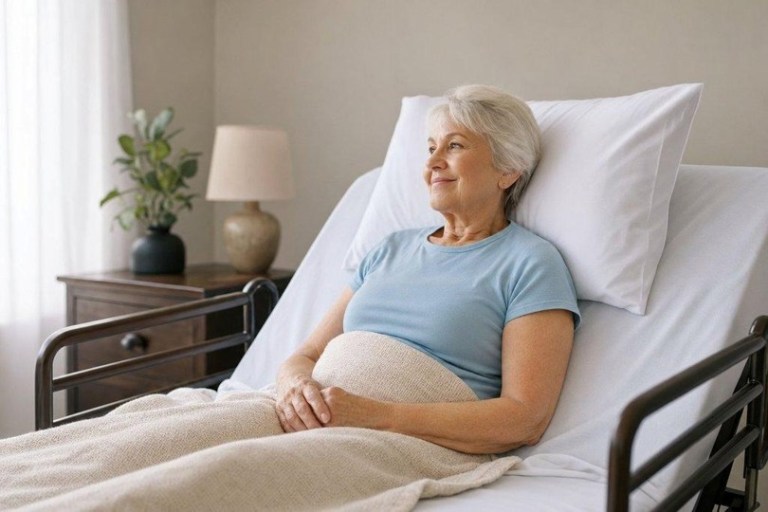
Hospital beds have a range of uses for those recovering from an operation or dealing with a medical condition at home.
Supporting Comfort and Movement
Positioning
For those who spend a lot of time in bed recovering from an illness or operation or who deal with limited mobility on an ongoing basis, hospital beds can allow for improved positioning. Rather than lying flat all the time, which can cause discomfort when it comes to breathing, reading, eating, pain management and more, the adjustable legs and headrests can help improve comfort levels. The ability to raise and lower different sections of the bed can also take the strain out of propping up on pillows all the time, while leg elevation can be beneficial for those dealing with tiredness or swelling.
Easier Access
Those recovering from operations or dealing with illness at home will likely have caregivers coming in and out of the home to check on them. For healthcare workers tasked with lifting or manoeuvring patients in and out of standard beds, having access to a hospital bed can make the job a lot easier.
Sick at Home?
For those dealing with a bout of illness, getting out of bed can be the last thing on your mind, and for good reason! Getting in and out of bed can be uncomfortable and even dangerous, especially if you’re feeling unwell. Having access to a hospital bed can make getting in and out of bed a lot easier, especially for those who struggle to get themselves into a sitting position.
Bringing a Hospital Bed Home
Hospital Beds at Home
If you or a loved one has recently had an operation or is dealing with an illness or condition that means spending a lot of time in bed, talk to your doctor about whether Beds for Surgery Recovery and Mobility Challenges will be beneficial. Your doctor will be able to advise you on whether a hospital bed would be of benefit and help to make getting home from hospital as safe and effective as possible.
Think About Space
Hospital beds are bigger than your average bed, so make sure that you have enough room around the hospital bed for you or your loved one to move around. You don’t want to have to squeeze through tiny spaces! You may also want to think about having room on both sides of the bed in case your loved one needs help getting out of bed on different sides throughout the day.
Consider Safety
Before using side rails or other safety features on your loved one’s hospital bed, it’s important to discuss with your loved one’s doctor or carer whether these features would be suitable for your loved one’s situation. For example, if your loved one is disorientated, side rails may actually increase the risk of injury as your loved one may try and climb over the rail.
Mattress Choice and Pressure Relief

Hospital bed mattress and support surface
When choosing a hospital bed, it’s important to also consider the type of mattress that you’ll be using on the bed. If you or your loved one will be spending a lot of time in the hospital bed, you’ll want to choose a mattress that offers good pressure relief to reduce the risk of pressure sores, an approach discussed by www.cochrane.org/evidence/CD001735_support-surfaces-preventing-pressure-ulcers. Other features to look for in a hospital bed mattress include:
- Firmness, making sure that the mattress that you choose offers adequate support
- Edge support, which will help make it easier for you or your loved one to get in and out of the hospital bed
- Moisture control, looking for moisture wicking features to help keep the mattress dry
A Practical Home Setup
If you’ve recently been discharged from hospital and have been provided with a hospital bed to aid your recovery at home, you may be wondering about the best way to set it up. Here are a few tips to help:
- Make sure that everything that you need such as medications, phone, water etc. are easily accessible from the hospital bed
- Make sure that there is nothing blocking access to the hospital bed so that you can easily get in and out of the hospital bed and so that carers can easily access you if required
- Try and leave at least 30 inches of space on the side of the hospital bed that your carer will be assisting you from, which will make it easier for your carer to assist you into and out of the hospital bed, will make it easier to get mobility aids such as hoists in and out of the way and will also make it easier for your carer to attend to you if required during the night
- Make sure that any rails or other safety features have been discussed with your GP or allied health professional and are suitable for your individual circumstances
- If your hospital bed has electric features, make sure that you and your carer fully understand how to operate them and aren’t afraid to ask your GP or allied health professional for more information if required.
