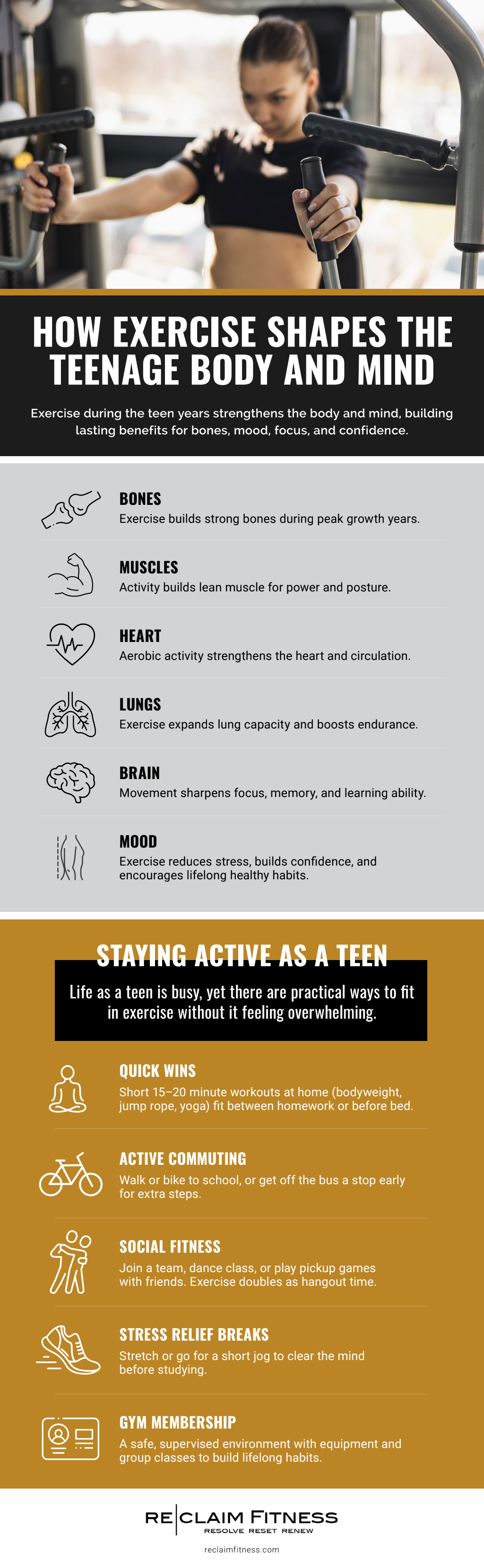
The teenage years bring significant physical, emotional, and neurological changes. During this period, regular exercise can support healthy development while helping adolescents manage stress and build confidence. Physical activity strengthens muscles and bones, supports cardiovascular health, and contributes to better sleep. Its benefits also extend to mental well-being, making it an important part of adolescent healthcare.
Building Stronger Bones and Muscles
Adolescence is a critical period for bone development. Weight-bearing activities such as running, basketball, and jumping encourage bone formation and help teenagers build strength that supports skeletal health later in life.
Resistance training can also improve muscular strength when exercises are age-appropriate and properly supervised. Teenagers should focus on correct technique and gradual progression rather than lifting the heaviest possible weights. Regular activity also supports coordination and balance as growing bodies adjust to changes in height and weight.
Supporting Brain Development and Learning
The teenage brain continues developing areas responsible for attention, decision-making, and emotional regulation. Exercise may support these functions through improved blood circulation and changes in brain activity.
Research suggests that physically active adolescents may experience benefits in concentration, memory, and academic performance. However, exercise cannot replace adequate sleep, effective study habits, or appropriate learning support. Even short activity breaks between homework sessions can help teenagers return to their work feeling more alert.
Managing Stress and Emotional Health
Academic pressure, friendships, and changing responsibilities can create considerable stress during adolescence. Physical activity provides a healthy outlet for tension and may help reduce symptoms of anxiety and depression.
Team sports can offer social connections and a sense of belonging. Individual activities such as swimming, cycling, or walking may appeal to teenagers who prefer exercising independently. Parents should avoid treating exercise as a substitute for mental healthcare. Persistent sadness, anxiety, or withdrawal deserves attention from a qualified professional.
Encouraging Healthy Sleep Patterns
Teenagers generally need eight to ten hours of sleep each night, yet school schedules and electronic devices often interfere with rest. Regular physical activity can improve sleep quality and help establish healthier daily routines. Outdoor exercise also provides exposure to natural daylight, which supports the body’s sleep-wake cycle. Intense workouts close to bedtime may interfere with sleep for some teenagers, so activity schedules should reflect individual needs.
Making Exercise Accessible and Enjoyable
The Centers for Disease Control and Prevention recommends that children and adolescents ages six through seventeen get at least 60 minutes of moderate-to-vigorous physical activity daily. This does not require organized sports or expensive equipment. Walking, dancing, biking, and recreational games all contribute to movement goals.
Families considering an affordable gym membership should check age restrictions, supervision requirements, and available youth programs. The most effective activity is one a teenager enjoys enough to continue regularly.
Exercise supports teenage development through stronger bones, improved physical fitness, better sleep, and potential mental health benefits. Encouraging enjoyable activities without excessive pressure can help adolescents establish habits that continue into adulthood. Parents and healthcare providers can support this process by promoting safe participation, adequate recovery, and realistic expectations. Look over the infographic below to learn more.