


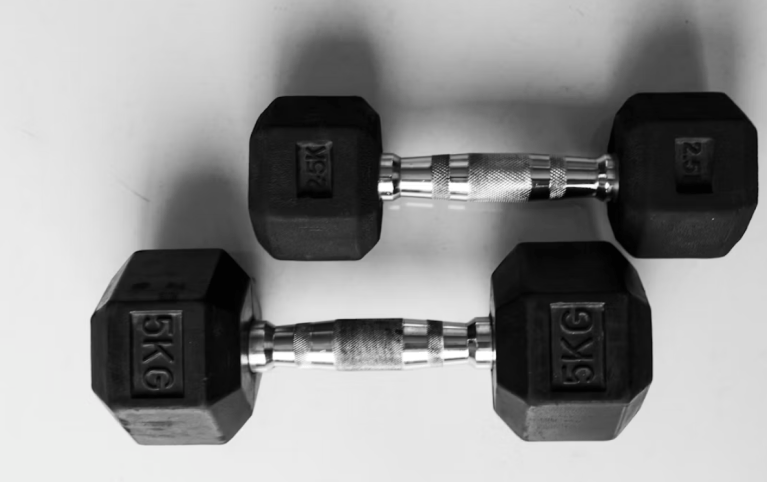
Setting up a home gym often means making the most of limited space and budget. You might have room for a workout mat and a small rack, but storing multiple pairs of dumbbells can quickly become impractical. Adjustable dumbbells offer a convenient alternative by combining several weight options into one compact set, making them popular among home fitness enthusiasts across the United States.
However, choosing the right pair involves more than comparing prices. Weight range, adjustment mechanism, grip comfort, durability, and storage all affect how well a set supports your workouts. This guide explains what to consider before buying adjustable dumbbells so you can find an option that suits your fitness goals, available space, and budget.
Why Home Strength Training Is Worth Setting Up
Strength work matters for everyone, but most people do not get enough of it. The Centers for Disease Control and Prevention’s National Center for Health Statistics reports that 31.0% of U.S. adults met the muscle-strengthening guideline of at least two days a week in 2020.
That figure comes from a national self-reported survey and is a few years old, so it describes the general picture, not your own habits. It does suggest there is room for most of us to do more, and a convenient home setup can make that easier.
Start With Your Goals and Current Strength
Before comparing models, think about how you will use the weights. A beginner building basic fitness has different needs than an experienced lifter chasing heavier presses and rows.
Ask yourself:
- What is the heaviest weight I can use for my main lifts today?
- Will I train for strength, muscle size or general fitness?
- Do I expect to get stronger over the next year?
- Who else in the household will use them?
Choosing for the person you will be in six months is usually smarter than choosing for today.
Check the Weight Range and Increments
The most important spec is how much each dumbbell can hold and how it adds weight. Look at the maximum weight per hand, the smallest jump between settings and the lowest starting weight.
Small increments help with steady progress, especially on shoulder and arm exercises. Large jumps can stall you. Remember that lower body and back exercises usually need much heavier loads than curls or lateral raises, so a set that tops out too low may only suit part of your routine.
Compare Adjustment Systems and Build Quality
Adjustable sets change weight in different ways, including dials, selector pins, and plates with locking collars. The best system for you is the one you will actually use in the middle of a workout.
Many people also compare brands that offer expandable and fixed-maximum options. PowerBlock’s expandable models suit people who want higher-weight, lower-rep training and room to progress, while its fixed-maximum models suit lighter, higher-rep work and a smaller footprint. If you are comparing adjustable dumbbells, those descriptions give you a useful starting point for thinking about which type matches your plan.
Whatever you consider, check how quickly you can change weights, how secure the locking mechanism feels, and what replacement parts are available.
Think About Size, Space and Storage
An adjustable set saves space, but it still has a footprint. Measure the area where you will train and where you will store the set.
Consider:
- The length of the dumbbell, which affects wrist and shoulder movement on presses
- The size of the stand or tray, if one is included
- Whether you will need to lift the dumbbells off a floor or a stand
- Where the set will sit between workouts
A set that is awkward to use or store tends to get ignored, so comfort matters as much as capacity.
Look at Accessories, Stands and Add-Ons
Some systems offer attachments, stands, benches or expansion kits. These can extend what a single set does, but they also add cost and storage needs.
Think about whether you really need them now. A sturdy stand can make weight changes easier and protect your back, while attachments can add exercise variety. Check compatibility carefully, since accessories often work only with specific models.
Set Up Safely and Start Smart
New equipment is exciting, but good habits come first. Before your first session:
- Check that the weight is fully locked in on both dumbbells
- Start lighter than you think you need and focus on form
- Keep a clear area around you and avoid slippery floors
- Rest between sets and increase weight gradually
- Talk with a doctor if you have a health condition or are returning after a long break
Safe, steady progress beats rushing, and it keeps you training for years.
Conclusion
The right adjustable dumbbells depend on your goals, your current strength and your space. Choose a weight range with room to grow, check how weight changes and locks, think about storage and accessories, and treat safety as part of the purchase.
Read specifications carefully, compare more than one option, and, if possible, try a set before committing. A well-chosen pair can make strength training at home easier to start and easier to keep up.
