



Picture this: Margaret is 72 and wants to stay active. Her daughter bought her a fitness tracker, thinking it would solve Margaret’s problems, but she got frustrated because the tracker has many small numbers and settings and is not user-friendly.
Margaret’s situation shows how the digital divide affects senior fitness. Many seniors are unable to benefit from available technology to support their health and fitness due to cost, digital skills, and other barriers.
With a focus on affordability, accessibility, and design to enable ease of use, the fitness industry can help facilitate seniors to enjoy independence, health, and wellness.
How Technology Supports Senior Fitness
There are numerous ways technology can support seniors to remain fit and active. For example, physically active video games help improve balance, gait, and reaction time. Also, the use of video calling for group exercise classes encourages older adults to participate in group-based exercise programs from the comfort of their homes.
Fitness Trackers and Smartwatches
Watches and trackers help wearers record their fitness progress by tracking their daily steps and overall physical activity. Some can monitor and analyze heart rate and sleep.
A user of a tracker can be reminded to take a short stroll to get up from sitting for a long time. Users of trackers to assess their activity levels can discuss their progress with a healthcare professional.
While fitness trackers and other devices can help some people stay active, they are not necessary for fitness. Many estimates for measurements can vary between different devices, and not all devices can accurately measure all health indicators. If older adults are going to purchase a fitness device, they should evaluate the features and functions of the device to help them achieve their goals.
Online Exercise Classes
Older adults can benefit from online exercise classes where they can learn and follow along to various activities from the comfort of their home. Especially for older adults who have limited or no access to public transportation and/or feel unsafe exercising in more public and/or crowded spaces, these online classes can be a way to get guided exercise classes from their home.
Some of these activities can be classes for aerobics or strength training. Many of these classes are offered by local health departments or other community organizations and can be accessed for free through online platforms.
Adults with mobility limitations and/or chronic health conditions can choose the types of exercises that they can perform and seek professional help if needed.
Health-Monitoring Apps
There are numerous health-related apps available that can assist older adults to schedule, track, and document their exercise program as well as monitor their health conditions and symptoms.
Some of these apps can assist users in sending their health-related information to families and/or health care providers. This can help to facilitate a conversation to discuss the older adult’s health and exercise program.
It is important to understand that a fitness app should not be utilized as a diagnostic or treatment app. Consumer health and fitness devices are not 100% accurate. Based on the reading, if the older adult has symptoms that concern them, they should consult a health professional.
Understanding the Digital Divide in Senior Fitness
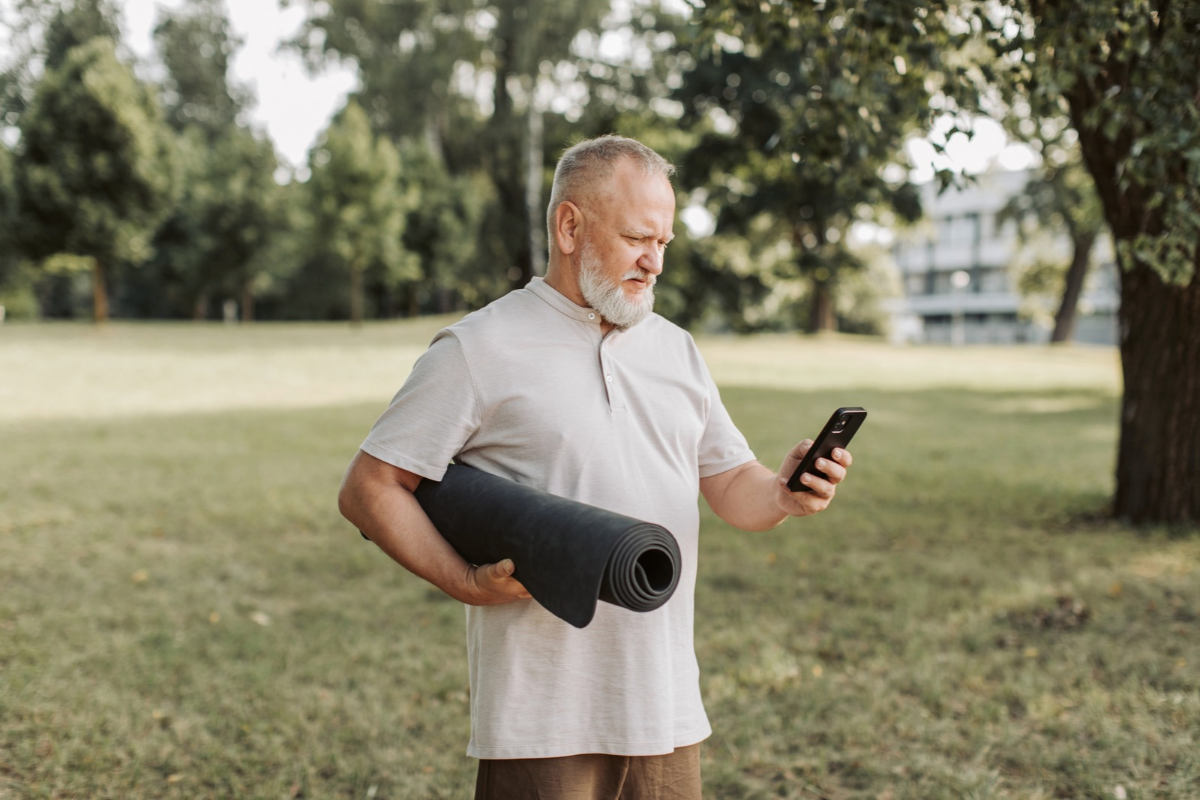
If technology is designed to make exercise more convenient and accessible, what is the rationale for older adults being left behind?
Barriers to technology go beyond the ability to operate a smartphone. Factors like cost, access, the internet, and confidence play a role in whether someone can use technology to enhance their physical fitness.
Limited Digital Confidence
Older adults may have limited experience with Bluetooth, mobile applications, account creation, and/or passwords. Technology that offers fitness is always changing and can be frustrating.
Not everyone 65 and over has low digital confidence. In reality, the tech confidence level of seniors varies widely, and many older adults can confidently use a smartphone or computer.
The best way to address the technology confidence of older adults is through patient, clear, and practical instruction.
A useful approach is to teach one task at a time. For instance, a caregiver could help an older adult learn to open an exercise video, adjust the volume, and pause it before learning other features. Large print, visual, step-by-step instructions can also be useful aids for remembering how to use the device.
Vision, Hearing, and Mobility Challenges
Low contrast, poorly designed, and complex touch controls can make fitness technology difficult for people with age-related changes in vision, hearing, and mobility.
Also, a wearable device could be uncomfortable for someone with sensitive skin and difficulty with fastening a strap.
A useful approach is to look for equipment with large, clear displays, simple controls, adjustable text sizes, and speech. Built-in accessibility features such as screen magnification and speech-to-text can also be helpful.
Technology should be designed to be easy to use by the widest audience possible. Unnecessary complexity or reliance on the user to adapt to a more complicated design should be avoided.
Unreliable Internet Access
Online fitness programs require a reliable internet connection, which may not be available in rural communities or other underserved areas.
A video that freezes repeatedly may discourage use of the program.
A useful approach is to use other resources that do not require an internet connection, for example, DVDs, audio-based programs, exercise guides, and telephone-supported fitness programs.
Internet-based programs should not be the only way for older adults to access opportunities to be physically active.
What Does the Research Say?
Some studies suggest that various methods of digital fitness intervention can help older adults increase their physical activity.
A 2024 systematic umbrella review and meta-meta-analysis, published in the International Journal of Behavioral Nutrition and Physical Activity, looked at 22 systematic reviews and meta-analyses based on 185 primary studies and 28,198 participants.
The researchers found that various digital interventions led to improvements in physical activity (PA) and daily step counts. Improvements were seen in other activities as well. The evidence for improvements in long-term activity was limited. The included reviews had low or critically low confidence, and the researchers stated that digital solutions for physical activity are not for everyone.
These findings show that digital solutions can help with senior fitness. However, they are not the solution for all.
Practical Ways to Make Fitness Technology More Accessible
Closing the digital divide requires cooperation among older adults, families, healthcare professionals, technology providers, and community organizations.
Here are several realistic ways to make progress.
Simple and Affordable Tools
Pick one goal to begin. Is the goal to walk more, improve balance, remember to complete exercises, or monitor activity after a medical appointment?
Choose a tool to help achieve that goal. Avoid adding unnecessary complexities. Check and compare features and prices. Are there additional costs to access essential features? Is there a subscription?
Keep Independence While Integrating Assistants
Caregivers can assist in downloading apps and adjusting accessibility settings. Caregivers should assist in using the devices to help achieve goals. Caregivers should not control the devices and make choices for the person.
Discuss what data is collected and who can see it. Can the data be shared?
Workshops
Many community organizations and health programs offer activities and training to the public.
Workshops can help learn how to use fitness and health trackers.
If the barriers to exercising are not being addressed (i.e., access to the internet, the equipment itself, and the cost of exercising), consider programs that provide an exercise session with equipment and access provided.
Teaching should be done in layman’s terms and with devices that are familiar and easily accessible.
Partner with Health Care Professionals
Health care professionals (doctors, physical therapists, nurses) can assist in determining if a monitoring device is beneficial and help select appropriate exercises.
An example would be a physical therapist demonstrating balance exercises and explaining how to perform them safely at home. A clinician may determine which measurements from a tracker may be helpful and which may not be considered medical findings.
Older adults, especially those with existing heart conditions and those who have fallen and are mobility-limited, should be assessed before starting a new exercise program.
Make Exercise Accessible Without Digital Tools
Although this guide focuses on the use of digital tools to promote wellness, the key to a healthy life may be found in traditional, low-tech activities. Neighbor walks, participation in educational classes, gardening, and following an exercise plan printed on paper can stimulate physical activity.
Chair exercises may serve as a first activity to stimulate movement and address mobility for older adults who are able to sit. Fitness technology may serve to reinforce a physical activity plan, a video workout, or serve no function at all.
Conclusion
The digital divide in senior fitness is more than the access and use of technology. It is an opportunity for older adults to be physically active to improve their health.
Other aids for healthy living, such as walking and group educational classes, may be combined with fitness technology. It is important that fitness technology serves its purpose for older adults to remain healthy and independent.
