



CES 2027 is shaping up to be a turning point for hearing technology. When the Consumer Technology Association announced that Digital Health would graduate from a show-floor category to a full conference track—complete with its own Health Stage—it sent a clear signal: hearing health is no longer a side conversation. It is now part of the main event.
For those of us who follow the hearing industry closely, this shift is worth pausing on. The days when hearing aids were tucked away in a quiet corner of the audio hall are ending. They are becoming a core part of the digital health story.
AI Moves from Feature to Foundation
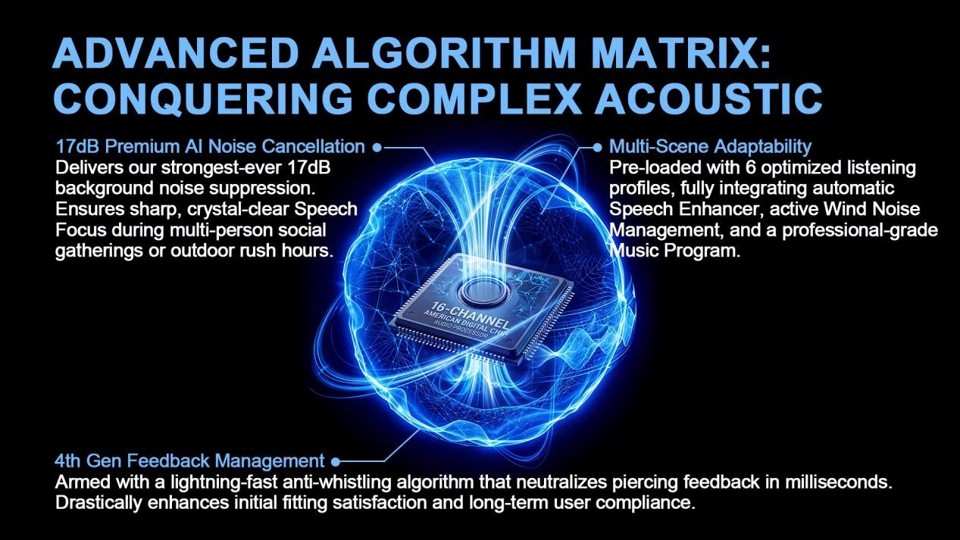
(JINGHAO A16 chipset platform for AI-powered hearing aids)
The most important trend heading into CES 2027 is the quiet revolution happening inside the device itself. On-device AI is no longer a marketing bullet point. It is becoming the baseline.
Anker recently announced its first OTC hearing aid, built around a custom “Thus AI” chip designed to separate speech from background noise in real time. The company claims up to 90% speech intelligibility in difficult environments like restaurants and meeting rooms. That a consumer electronics giant would enter the hearing space is no longer surprising. What matters is what it signals: edge computing is coming to hearing aids.
Edge computing means lower latency, better privacy, and the ability to adapt to acoustic environments without relying on a smartphone. For enterprise buyers, this is more than a technical detail. Devices with genuine on-device AI are simply more reliable across the messy, unpredictable environments where people actually live and work.
The OTC Market: Growth Meets Infrastructure Gap
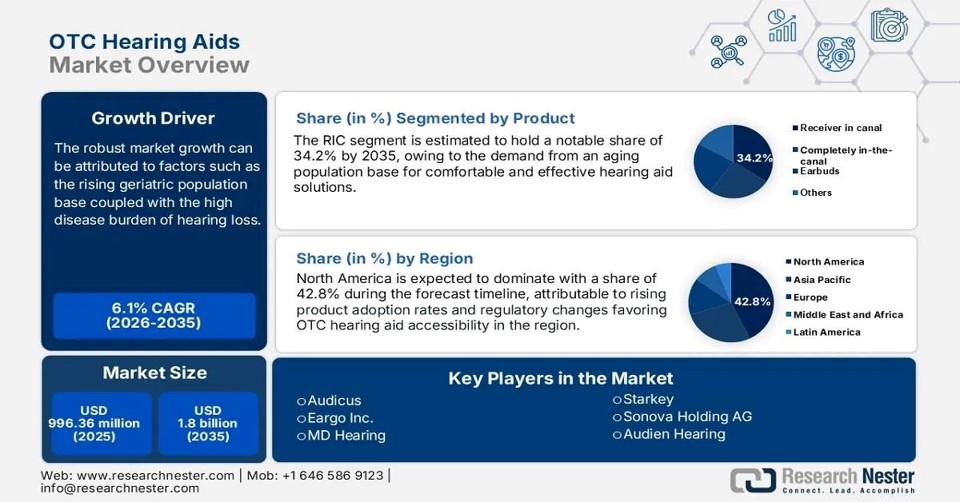
(Source: http://www.researchnester.com)
The OTC hearing aid market was valued at roughly USD 1.05 billion in 2026 and is projected to reach USD 1.95 billion by 2036, growing at a CAGR of about 6.4%. North America leads, thanks to regulatory clarity and rising consumer awareness.
But growth is not the same as access. The FDA estimates that about 30 million American adults have some degree of hearing impairment, yet most remain untreated. The OTC category was designed to close that gap. The problem is that many OTC devices still lack the clinical-grade signal processing needed to perform consistently in real-world noise.
This is where the supply chain becomes the story. As the OTC category expands, fda approved otc hearing aids are becoming the entry point for millions of adults who previously went without help. But bringing these devices to market at scale requires more than a clearance letter. It requires manufacturing infrastructure, engineering depth, and quality systems that can support mass production without cutting corners.
Manufacturing as the Hidden Competitive Layer
CES showcases prototypes. The hearing industry runs on production lines.
For global brands, retail chains, and healthcare organizations that want to offer hearing solutions under their own labels, the barrier is rarely the product concept. It is manufacturing execution. Not every organization has the engineering resources or regulatory expertise to develop hearing aids from scratch. This is where hearing aid oem partnerships become critical—connecting brand owners with established manufacturers who already hold the certifications, quality systems, and production capacity required for international distribution.
Vertically integrated manufacturers occupy a distinct position here. They control key stages of production, from chipset integration to acoustic tuning and final assembly. That control translates into consistency—the ability to deliver the same performance across thousands of units.
A Case in Point: CES 2027 Exhibitor Spotlight
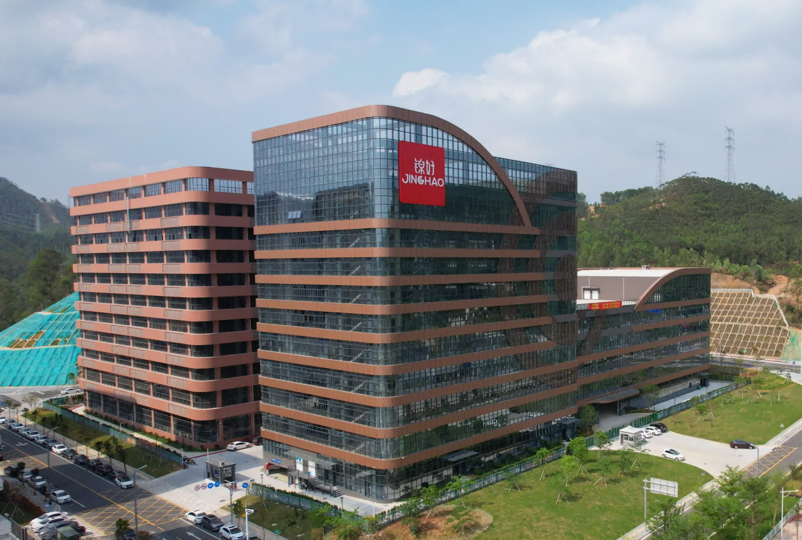
(JINGHAO hearing-aid manufacturing park panorama)
One manufacturer demonstrating this model at CES 2027 is JINGHAO Hearing Aids (Huizhou Jinghao Medical Technology Co., Ltd.), the sole listed hearing aid manufacturer in China, exhibiting at the Venetian Expo, Halls A-D, Booth 54635. The company runs a 29,213 square meter semi-automated facility under ISO 13485 quality management systems and holds FDA 510(k) clearance and EU CE MDR certification. Its product portfolio includes 16-channel processing, 3D spatial hearing, adaptive feedback suppression, and IP68 waterproofing—technologies that line up directly with the trends being showcased at CES 2027.
For international distributors and procurement teams, meeting manufacturers like JINGHAO at CES offers something a catalog cannot: the chance to evaluate regulatory documentation, production capacity, and engineering capability in person.
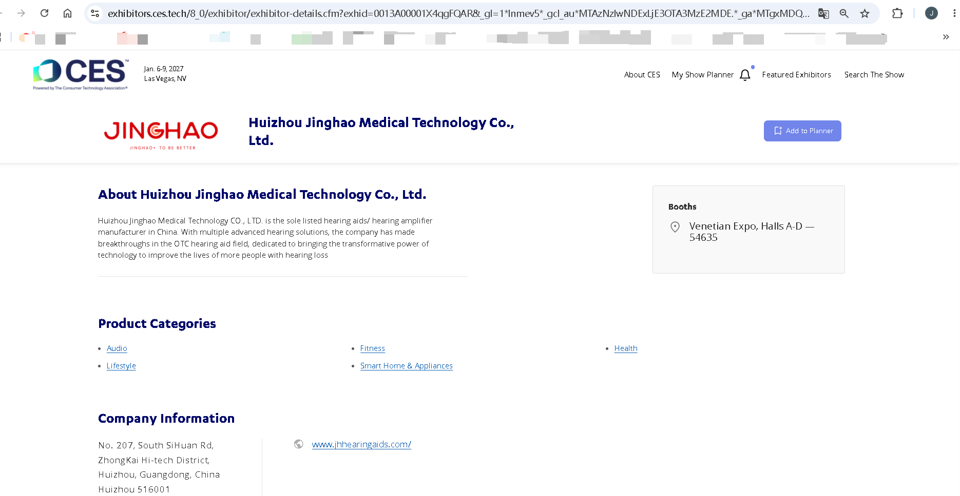
(JINGHAO Medical CES 2027 exhibitor listing at Venetian Expo Booth 54635)
What to Watch for at CES 2027
Three themes will define the hearing health conversation at CES 2027. First, on-device AI will become the baseline expectation, not a premium feature. Second, the OTC category will keep expanding, but the winners will be those who can deliver clinical-grade performance at consumer-friendly prices. Third, manufacturing capability will emerge as the quiet differentiator—the factor that determines which brands can actually scale.
Hearing health is no longer a standalone category. It is part of the broader digital health ecosystem, and CES 2027 will make that clear.
For procurement teams and healthcare organizations planning to attend, the Venetian Expo, Halls A-D, is where the hearing technology conversation will happen. Booth 54635 is worth a visit.
