



For a long time, Jan and Nina measured their lives by a single, quiet question: How far are we from an emergency room?
They hadn’t always lived that way.
Years earlier, while they were serving together on a church mission in the Netherlands, Jan had his first heart attack. After that, the heart trouble kept coming. Chest pain that arrived without warning. Trips to the emergency room. A slow narrowing of the life they used to share. Travel became complicated. Spontaneous outings grew rare. Even simple errands had to be planned around what might happen if Jan’s chest pain returned.
Little by little, the couple stopped going far from home, because home was close to help, and help was the thing they could no longer take for granted. If they couldn’t answer yes to “Could we get from here to a hospital in minutes?” they stayed put.
They kept looking for answers. One doctor’s visit led to another, and then another. Each appointment brought fresh tests, medication adjustments, and a little hope that something might change. Over time, the hope wore thin. After Jan had seen numerous health care professionals, the message had settled into something familiar and heavy: there wasn’t much left to try.
Then the conversation turned into one no family is ready for. Jan was told to put his affairs in order and begin saying goodbye.
Imagine hearing that advice. Imagine Nina watching the man she had loved for more than sixty years prepare for the possibility that his time was short. Conversations with their children and grandchildren changed. Practical questions about wills, documents, and unfinished tasks began sharing space with questions no family wants to ask.
For many families, that might have been the end of the story. For Jan and Nina, it became the beginning of a different one.
The Doctor Who Asked Something Different
Then came a cardiologist who did something the others hadn’t done. Instead of closing the door, he asked whether there might be something outside the usual list of procedures and medications that could help. During that conversation, he mentioned a therapy Jan and Nina had never heard of: Enhanced External Counter Pulsation, or EECP.
It was’t another stent or bypass. EECP is a noninvasive, FDA-approved treatment that uses inflatable cuffs wrapped around the legs to help move more blood toward the heart while the heart relaxes and fills. During each session, the cuffs inflate and deflate in time with the heartbeat.
When Jan explained it to friends, he kept it simple. “They hook you up to an EKG so the machine can read your heartbeat. Then, right when the heart relaxes between beats, the cuffs squeeze upward in sequence and send an extra surge of blood back to the heart. It works almost like a second heart, and over time that can help the arteries grow stronger and the body grow its own little detours around the blockages.”
For a man who had been told there was nothing more to do, hearing about another possibility mattered. The conversation might not be at an end after all.
A Bed, a Set of Cuffs, and a Spark of Hope
Jan and Nina decided to explore EECP further. That decision led them to ThriveXcel in Draper, Utah, where they met clinic founders LeAnn Wheeler and Lenore Taylor, and Jan began treatment.
EECP wasn’t a hospital stay or an operation. It was a series of hour-long outpatient sessions, five days a week. Jan settled onto a padded treatment bed while cuffs around his calves, thighs, and hips inflated in sequence, timed to his heartbeat. There was no incision, anesthesia, or operating room. He lay still while the therapy performed its quiet work.
The first sessions felt strange, the way a new exercise routine can feel before the body adjusts. Jan had been poked, scanned, and prodded for years. This was something different. It asked him to show up and let his body respond.
To Jan’s delight, his body did respond.
Making Plans Again
Since finishing EECP, Jan says the angina attacks have stopped. He reports no more emergency-room visits and more energy than he has had in years.
The change wasn’t only in his chest. It was in how Jan and Nina thought about time.
They started making plans again. They could take a walk without first mapping the fastest route to a hospital. They could visit family, go to the zoo with their grandchildren, and have dinner with friends without calculating how quickly they could leave if something went wrong.
Their days stopped feeling like a countdown to the next crisis.
Jan is grateful for the medical professionals and procedures that kept him alive through difficult years. The stents, medications, and hospital care all mattered. His story is not about turning away from any of that. It is about what can happen when someone keeps asking questions after the usual answers seem to run out and finds a cardiologist willing to suggest a lesser-known option.
Jan understands that EECP isn’t right for everyone. Still, he wonders how many people living with chronic angina have never heard of it. He wants others to know it may be worth discussing with a qualified medical professional.
The Blessing of More Time
When Jan and Nina were asked whether LeAnn and Lenore had made a difference in their lives, neither answered right away.
Then they both began to cry. “I can never repay LeAnn and Lenore for what they have done for me and my family,” Jan said. “They are a godsend.”
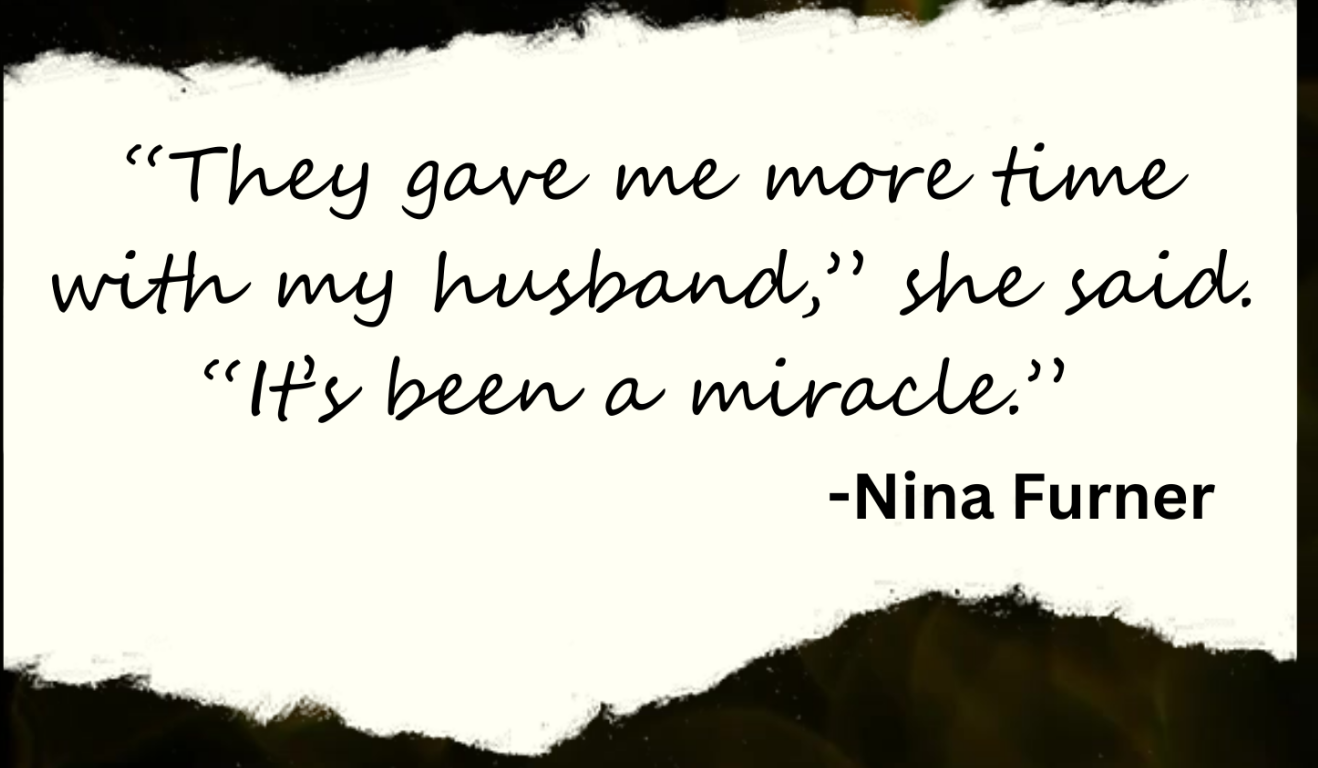
Nina reached for her husband’s hand. “They gave me more time with my husband,” she said. “It’s been a miracle.” For Jan and Nina, the improvements they describe translate into something larger than test results. Most of all, they mean more time together.
Why Thrive Xcel Exists
LeAnn’s experience was similar to Jan’s. After multiple heart attacks and a failed bypass surgery, she too had been told there was nothing more to do. A preventive cardiologist finally pointed her toward EECP. The therapy strengthened her heart and helped it grow new collateral arteries, an outcome documented by before-and-after angiograms. That experience set her on a path from patient to researcher to advocate.
Opening Thrive Xcel became a way for LeAnn to pay that opportunity forward, so patients like Jan could learn that EECP exists and explore whether it might help them, too.
Their story does not suggest that EECP works for everyone or replaces medications, procedures, or other medical care. It shows what can happen when a patient keeps asking questions after the usual options appear to have run out.
For Jan and Nina, all of it comes down to something simple: more walks, more family, and more ordinary days that no longer feel ordinary.
More time together. That is the happiest ending to their story. And it began when one cardiologist introduced them to EECP, a therapy they had never heard of and might otherwise never have found.
Discover more about EECP or Thrive Xcel, visit Thrive-Xcel.com
