


If you live in Encino, you probably know the scene of a long dinner with friends, a great story, a big laugh, and then that split-second reflex where you cover your mouth because of a gap you’d rather nobody noticed. If that sounds familiar, you’re in very good company. Missing teeth are far more common than most of us admit, and the quiet ways we adapt to them can shape how we eat, speak, and show up in photos.
The encouraging part? Modern dentistry has a solution designed to behave like the real thing. Let’s walk through how dental implants work, what they do for your face and bite, and what to expect if you’re thinking about one.
A Missing Tooth Is More Than a Gap
It’s easy to treat a missing tooth as a purely cosmetic issue, especially if it’s toward the back where nobody sees it. But teeth work as a team. When one disappears, its neighbors can slowly drift toward the empty space, and the tooth that used to bite against it may start to creep out of position. Chewing patterns shift, certain foods become awkward, and the jaw loses the stimulation it once received every time you bit down.
That last part matters more than people expect. Bone stays strong when it’s used. Without a root to transmit chewing pressure, the bone under a missing tooth gradually thins, which can make the lower part of the face look slightly more sunken over time. This is one reason dentists tend to bring up replacement options even when a gap seems harmless.
How an Implant Actually Works
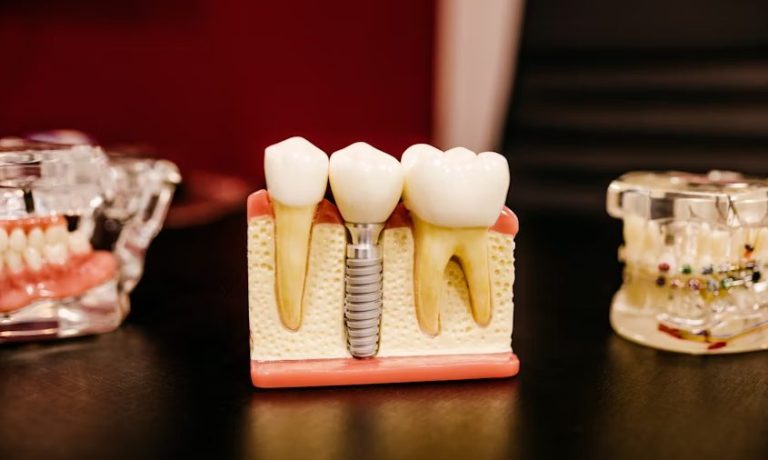
Think of an implant as a three-part system rather than a single tooth. First, a small titanium post is placed in the jawbone, where it acts as an artificial root. Over a few months, the bone bonds with the post in a process called osseointegration. Second, a connector known as an abutment sits on top of the post. Third, a custom-made crown is attached to the abutment, shaped and shaded to blend with the teeth beside it.
Because the post sits in the bone itself, an implant doesn’t lean on neighboring teeth the way a traditional bridge does. Those healthy teeth don’t need to be filed down to hold anything in place, which is a real advantage if you’d like to protect as much natural structure as possible. Implants can also anchor larger restorations, such as several teeth in a row or a full arch, when more than one tooth is missing.
There’s a practical side to this design, too. Because the replacement tooth is anchored in bone rather than resting on the gums, it doesn’t slide or click when you speak, and most people find they can return to crunchy apples, steak, and crusty bread without a second thought. Speech often feels more natural as well, since there’s no bulky plate or loose appliance getting in the way of your tongue. Those everyday comforts are easy to overlook until they’re gone, and they’re a big part of why many people describe an implant as the first replacement that stopped feeling like a replacement.
What the Numbers Say About Tooth Loss
Tooth loss isn’t a niche issue. According to the Centers for Disease Control and Prevention’s National Center for Health Statistics, about 12.9% of U.S. adults aged 65 and over had lost all of their natural teeth in 2015–2018, and the rate climbed with age. The same report found that complete tooth loss has declined significantly since 1999, which suggests that better prevention and restorative care are making a difference.
Of course, most people considering an implant aren’t missing every tooth. Many are replacing a single tooth lost to decay, injury, or gum disease. The takeaway is simple: tooth loss is common, it’s often preventable, and when it does happen, there are well-established ways to rebuild what was lost.
What the Journey Usually Looks Like
Every mouth is different, but the path to a finished implant generally follows a familiar sequence:
- An exam and imaging, so the dentist can evaluate bone density, gum health, and the position of nearby teeth and nerves.
- A bone graft first, only if the jawbone needs reinforcement.
- Placement of the titanium post, followed by a healing period while the bone bonds with it.
- Attachment of the abutment and the custom crown.
Timelines vary quite a bit, from a few months to longer for more complex cases, so it helps to ask for a written treatment plan before you start. If you’re curious about dental implants in Encino at BioDental, a consultation is a good place to bring these questions.
A local practice is one place where you can ask about timelines, materials, and what your own treatment plan might look like. Wherever you go, look for a clear explanation of each stage and what happens if healing takes longer than expected.
Caring for Your New Smile
Here’s the reassuring bit: an implant crown can’t decay, but the gum and bone around it can still become inflamed if plaque builds up. That means the habits you already know still apply:
- Brush twice a day and clean between your teeth daily.
- Keep your regular checkups on the calendar, since your dentist can spot early signs of trouble long before you feel them.
- Avoid using your teeth as tools.
- If you grind at night, ask about a protective guard.
Smoking is worth a mention, too. It can slow healing and raises the risk of complications, so many dentists suggest cutting back or quitting before and after treatment.
Is an Implant Right for You?
Many healthy adults with enough bone, or who are willing to rebuild it, can be candidates. Conditions such as uncontrolled diabetes, active gum disease, or heavy smoking don’t automatically rule out an implant, but they do need to be managed first.
A good consultation should feel like a conversation, not a sales pitch. You should come away understanding your options, including bridges and dentures, along with the pros and cons of each.
Final Thoughts
A restored smile isn’t about perfection. It’s about eating the foods you love, laughing without hesitation, and looking in the mirror and seeing yourself. Dental implants won’t be the answer for everyone, but for many people they come closer than any other option to replacing a lost tooth in both looks and function. If a gap has been quietly shaping your habits, it may be time to ask what’s possible. Your future self, mid-laugh at the next big dinner, will thank you.
If you’re weighing your options, start with a conversation and a few good questions. Ask about the full treatment plan, how long each stage takes, and how your dentist handles long-term care. Taking your time with the decision now is the best way to protect the result for years to come.
