


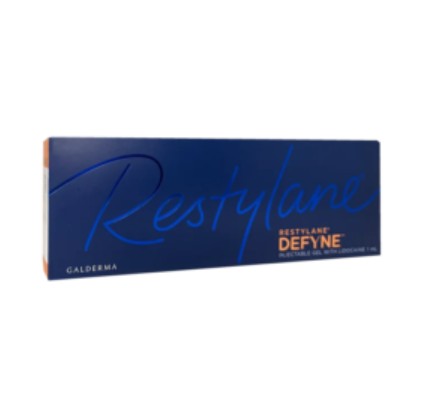
Wholesale distribution has quietly reshaped how aesthetic clinics source dermal fillers, and the clinical evidence behind proper sourcing verification is worth understanding before assuming any supplier is equal.
Medical technology innovation isn’t limited only to brand-new devices and formulations, it also shows up in how existing treatments reach the clinics that use them. Aesthetic medicine has seen exactly this kind of shift, with clinics increasingly sourcing dermal fillers through a wholesale distributor rather than through traditional single-brand manufacturer accounts, changing both the overall cost structure and the verification responsibilities clinics now carry.
From Single-Brand Accounts to Multi-Brand Wholesale Purchasing
For years, most aesthetic practices maintained a direct relationship with one manufacturer representative per brand, ordering at list price with limited flexibility. Multi-brand wholesale distribution changed that model by letting clinics stock several product lines under a single account, at meaningfully lower per-unit cost. Industry analyses of the aesthetic injectable market have repeatedly tied the expansion of treatment access to broader availability of sourcing channels for smaller and mid-sized practices, not just growing patient demand on its own.
The Real Verification Gap That Wholesale Buying Introduced
As sourcing channels multiplied, so did the burden on clinics to verify authenticity independently rather than relying on a single manufacturer relationship. A study in Clinical, Cosmetic and Investigational Dermatology documented that counterfeit or diverted filler product remains a real, if underreported, safety concern, particularly when purchasing outside authorized distribution channels to chase lower prices (Funt & Pavicic, 2013, Clin Cosmet Investig Dermatol).
A Practical Step-by-Step Verification Checklist
| Verification Step | Why It Matters |
|---|---|
| Lot number cross-check with manufacturer | Confirms the product traces to a legitimate batch |
| Distributor authorization status | Confirms the supplier can legally sell that brand |
| Cold-chain documentation | HA fillers are temperature-sensitive |
| Regional regulatory approval | A product cleared in one country isn’t automatically cleared elsewhere |
| Packaging and expiration integrity | Basic but frequently skipped once a supplier is “trusted” |
Cold Chain Handling: An Easy-to-Miss Detail
Hyaluronic acid-based fillers are formulated to remain stable within a defined temperature range, and repeated heat exposure during transit can affect consistency without leaving any visible sign on the outer packaging. A distributor’s ability to document cold-chain handling from warehouse to delivery is one of the more overlooked criteria clinics should confirm before committing to a supplier relationship.
Why Record-Keeping Matters as Much as Sourcing
Verification at the point of purchase only addresses half the picture. Clinics also need a reliable system for retaining lot numbers and sourcing documentation per patient, since that record becomes essential in the rare event of an adverse reaction or manufacturer recall. A clinic that can immediately identify which lot was used on which patient is in a materially stronger position, both clinically and administratively, than one reconstructing that information after the fact.
Regulatory Status Isn’t Always Uniform Across Markets
A product cleared for use in one country isn’t automatically cleared everywhere, and distributors sourcing internationally sometimes carry inventory that’s approved in the country of manufacture but not yet cleared for the clinic’s own jurisdiction. This is a common gap that’s easy to overlook when comparing price sheets across suppliers, since packaging and product branding often look identical across markets even when regulatory status genuinely differs from one country to the next. Confirming jurisdiction-specific approval status, rather than assuming a product’s international reputation is sufficient on its own, is a step worth building directly into procurement rather than treating as an occasional spot check.
Training Capacity as an Overlooked Constraint
Market growth in aesthetic injectables isn’t constrained purely by sourcing access or patient demand; the availability of properly trained injectors is an underappreciated bottleneck in several regions. As wholesale distribution has made product access easier for new and expanding clinics, training and certification capacity hasn’t always scaled at the same pace, which means some markets show strong demand signals but slower clinic growth simply because qualified practitioners remain scarce relative to available supply.
What This Means for Clinics Evaluating New Suppliers

A short set of direct questions tends to reveal how seriously a distributor treats verification:
- Can you provide manufacturer lot documentation on request, not just an invoice?
- What is your cold-chain protocol from receipt to delivery?
- Are you an authorized distributor for each brand you carry, and can that be confirmed independently?
- What is your return or replacement policy for shipments with compromised packaging?
Frequently Asked Questions
Does wholesale filler pricing reflect lower product quality? Not inherently. Price differences typically reflect distribution volume and efficiency rather than product quality, provided the distributor is properly authorized and verification steps are actually followed.
How can a clinic independently confirm a lot number is legitimate? Most manufacturers will verify a lot number’s authenticity directly if a clinic contacts them, offering a useful cross-check independent of the distributor’s own claims.
Is multi-brand wholesale buying inherently riskier than single-brand sourcing? Not inherently, but it does mean a clinic is relying on one distributor’s verification standards across every brand it carries, which makes distributor vetting a more central part of due diligence than it was under a single-brand model.
Should a clinic switching suppliers request a trial order before committing fully? Many practitioners recommend exactly that. A smaller initial order gives a clinic the chance to independently verify documentation, packaging, and cold-chain handling before shifting a larger share of purchasing to a new distributor relationship.
References
- Funt, D., & Pavicic, T. (2013). Dermal fillers in aesthetics: an overview of adverse events and treatment approaches. Clinical, Cosmetic and Investigational Dermatology (NIH/PMC)
- American Society for Dermatologic Surgery: Filler Safety
- U.S. Food and Drug Administration: Dermal Fillers Approved by the FDA
