


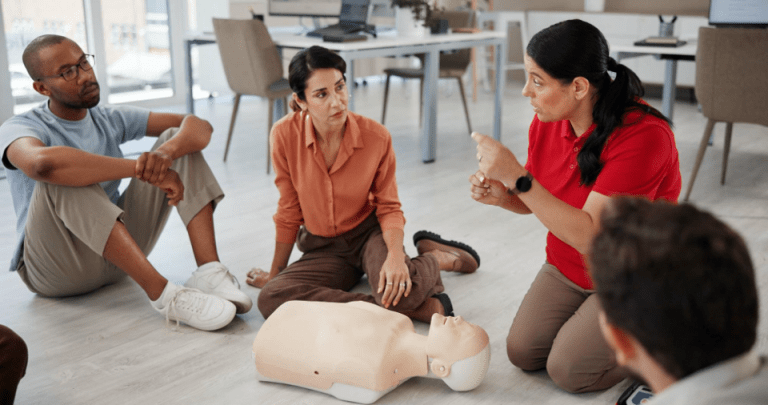
On a remote site, help may be hours away. A ute rollover on a station track, a crush injury at a drill pad, or a heat-related collapse on a tourism route unfolds on a different timeline from the same incident in a suburb. Remote first aid training helps teams manage that gap by preparing them to provide care, communicate clearly, and coordinate an evacuation. This article explains how the nationally recognised HLTAID013 remote first aid unit fits into an Australian site emergency plan.
What remote or isolated work actually means
Duty of care and distance
The Safe Work Australia model Code of Practice for first aid in the workplace says first aid arrangements should reflect the workplace’s distance from ambulance services, hospitals, and medical centres. For remote or isolated work, a person conducting a business or undertaking (PCBU) also needs a safe system of work that includes effective communication with workers. Requirements vary by jurisdiction, but every plan should answer three questions before an incident occurs: who will provide care, how will they raise the alarm, and how will the patient be evacuated?
- Complete a site-specific risk assessment that identifies likely injuries and illnesses.
- Estimate realistic response times for ambulance, aeromedical, and mutual-aid services.
- Set first aider numbers so trained cover is available on every shift, including nights and roster changes.
- Match first aid kits to the risks. For example, SafeWork NSW identifies snakebite equipment as relevant to some farms.
- Confirm that communication with isolated workers is two-way, tested, and logged.
What remote first aid adds to standard training
Standard first aid courses teach participants to stabilize a patient and arrange a prompt handover. Remote first aid assumes that handover may be delayed. HLTAID013 focuses on providing care for an extended period at a remote or isolated site until medical assistance arrives or an evacuation can take place. That assumption changes how people assess, monitor, communicate, and plan.
Triage, bleeding control, and evacuation
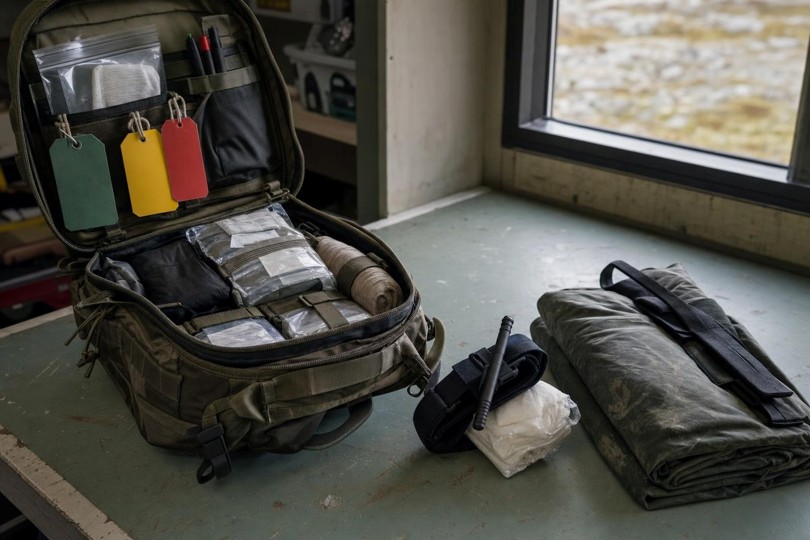
The unit’s assessment requirements include managing life-threatening bleeding with tourniquets and haemostatic dressings. It also covers basic triage when more than one person is injured. These skills are difficult to improvise under pressure. Deciding who needs attention first when there are two patients and one first aider should be practised before a real emergency. The unit also addresses evacuation coordination, including the practical steps needed to move a patient safely.
Prolonged care and handover
Extended care requires consistent records. Trainees learn to take observations over time, identify deterioration, and protect a patient who may be exposed to heat, cold, or rough ground for several hours. A written timeline of observations and treatment also gives the retrieval team reliable information at handover.
Communications that support remote care
First aid can buy time, but communication turns that time into a coordinated response. In Australia, Triple Zero can be called from fixed lines, mobile phones, and compatible internet or satellite services. The emergency number 112 can also be called from mobile phones. However, a mobile must be within coverage of at least one Australian network for the call to connect.
Advanced Mobile Location may transmit a caller’s coordinates during an emergency call, while the Emergency+ app uses a phone’s GPS to help identify a location. Neither replaces a tested communication plan. HLTAID013 covers tools such as radios, mobile and satellite phones, and personal locator beacons. Teams should understand that a beacon can alert rescuers but does not usually provide two-way communication.
If an escalation chain includes a supervisor, duty manager, and head office, keep the process simple enough for a small crew to follow under pressure. Assign roles, define when to escalate, and specify the information each person must provide.
- Decide what each crew carries, such as a radio, satellite phone, personal locator beacon, or a suitable combination.
- Test devices before every trip and record the check.
- Assign who calls for help and who remains with the patient.
- Prepare a location script with coordinates, gate or track markers, and aircraft access notes.
- Keep a backup that does not rely on the same network or power source.
Two scenarios worth drilling
Life-threatening bleeding
Begin with firm direct pressure. If life-threatening bleeding from a limb does not stop, apply a tourniquet according to current training and the manufacturer’s instructions. Record the application time and do not loosen or remove it unless directed by a qualified clinician. A HLTAID013 Remote First Aid Course can provide structured practice for these remote-response skills. For severe bleeding where a tourniquet cannot be used, a trained first aider may pack the wound with a haemostatic dressing and maintain pressure. Teams should follow current Australian resuscitation guidance and practise with the equipment carried in their vehicles or site kits.
Choosing training that matches the risk
HLTAID011 covers core first aid skills for many workplaces. HLTAID013 builds on that foundation with remote-site skills such as prolonged care, triage, evacuation coordination, serious bleeding management, and remote communications. If workers operate where emergency services cannot arrive quickly, the remote unit may be the closer fit.
Many registered training organisations use a blend of online theory and face-to-face assessment. RTS Training, for example, lists a blended format with about four hours of online learning followed by approximately six and a half hours of in-person assessment covering HLTAID009, HLTAID010, HLTAID011, and HLTAID013. That Perth-based course provides one reference point for how the units may be structured. Treat dates, durations, and prices published by RTS Training as subject to change. A nationally recognised Statement of Attainment is issued only after successful assessment.
- Check that the provider is a registered training organisation and offers the correct unit code.
- Confirm that participants are assessed using tourniquets, wound-packing materials, triage scenarios, and evacuation procedures.
- Ask how much scenario practice is included and how many participants each trainer assesses.
- Check client, workplace, and site induction requirements rather than assuming one course meets every obligation.
- Plan regular practice and formal renewal instead of relying only on the original course.
Build the training into your emergency plan
Training is most useful when it sits within a clear emergency plan. Appoint an emergency coordinator with the authority to make decisions and lead an evacuation. Name a backup in case the coordinator is absent or becomes the patient. Document these roles and test them through short drills. A quarterly exercise covering the radio, call sequence, first aid kit, and stretcher route can expose problems that paperwork misses. Regular checks of GPS location technology can help keep coordinates and access notes current.
Review the risk assessment when the work, season, crew, or site changes. Restock first aid kits after use, and verify that contact lists, access notes, and coordinates remain accurate. RTS Training can arrange assessment options around some workplace rosters, which may help employers maintain trained coverage across shifts.
Bringing it together
Remote incidents are easier to manage when a trained person can provide extended care, the alarm reaches the right service with an accurate location, and someone has authority to coordinate the evacuation. Skills, communications, equipment, and clear roles must support one another. Start with a site-specific risk assessment, estimate honestly how long outside help may take, and build the training and emergency plan around that timeframe.
FAQ
What is the difference between HLTAID011 and HLTAID013?
HLTAID011 is a general workplace first aid unit. HLTAID013 adds skills for remote or isolated sites, including prolonged care, basic triage, evacuation coordination, remote communication, and management of life-threatening bleeding.
How often should remote first aid skills be refreshed?
The model Code of Practice recommends annual CPR refreshers and renewal of first aid qualifications about every three years. HLTAID013 is commonly renewed on a similar three-year cycle. Employers should also schedule practical drills and check whether clients or individual sites require more frequent training.
Does a personal locator beacon replace a phone or radio?
No. A beacon can alert rescuers, but crews still need tested two-way communication and a clear escalation process.
What should a remote first aid kit include?
Contents should match site risks and may include trauma supplies, snakebite equipment, thermal protection, and records for observations.
