


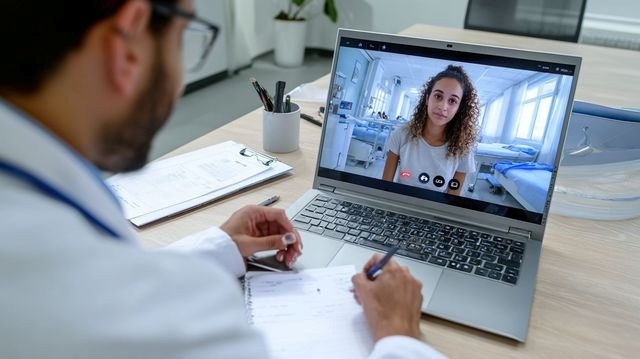
What is Telemedicine?
Telemedicine is the use of video conferencing between a patient and a health care provider or between various health care providers. Through two-way communication a patient can receive treatment from a medical provider or if multiple providers are on a single meeting they can consult on a treatment plan. This remote medical model has been used for a while in non-patient facing environments, such as radiology, but is a newer development in connections directly to patients.
Doctor to patient telemedicine began to be rolled out well before the pandemic, but the pandemic made it common in outpatient medical fields. Many patients found that seeing a doctor over video, either from a medical office or from their own home, was a much more convenient method of receiving medical services. Doctors found the ability to cover multiple clinics or patients in varied locations to be a boon especially in fields that had coverage shortages. Insurance, previously a stumbling block, began covering these appointments like in-person ones.
Not all specialties transferred directly to home care, as some patients required vitals to be taken or inpatient levels of care. Even in these situations telemedicine proved beneficial, as specialists could work directly with hospital/clinic medical providers as well as patients inside of a medical environment. As odd as it sounds, there are good cases for going to a clinic to see a doctor over video – for example, it allows a non-specialist health care provider such as a nurse or physicians assistant to take vitals and find out basic information and then let you see a specialist in a given field to get specialized care. The ability of the doctor to connect to the clinic via video generally gave them more available time to work as well as the ability to cover more locations.
What Are Some Fields Using Telemedicine?
The fields that immediately benefit most from telemedicine are those that don’t require immediate contact with patients. While it isn’t appropriate for physical emergencies, the technology is perfect for providing radiology results or providing therapy and psychiatric care. In some cases, vitals can be taken via over-the-counter devices purchased by the patient, as a margin of error is generally more acceptable in these fields.
Overall, only 16% of physicians use telemedicine in the post COVID era, but the numbers show a unique story depending on specialty. The most common fields of telemedicine are:
- Psychiatry – 86% of mental health practitioners practitioners reported using telemedicine in the prior week, and 90% use telemedicine in some capacity.
- Neurology – 32.2% of weekly visits are completed via telemedicine. These are often for reading and explanation of completed tests and test results. Similar to psychiatry, there isn’t a physical ability to reach the brain on a regular basis or in an outpatient basis.
- Endocrinology – 24.2% of weekly visits, which can again be explained by the inability to physically do many examinations in an outpatient basis and many items detected through laboratory testing.
- Gastroenterology – 20.4% of weekly visits, again due to limited immediate results barring testing or some minor procedures.
- Family/General Medicine – 20.1% of weekly visits, often in private companies that offer on demand online visits and services for common ailments that can be detected and treated from simple discussion and video presentation to a medical provider.
Psychiatry is an outlier, and telepsychiatry is here to stay, with similar outcomes to in person visits. To break down telepsychiatry numbers, it’s not just psychiatrists (MD or DO), but also Licensed Clinical Social Workers, Clinical Psychologists, Psychiatric Nurse Practitioners, and Physician Assistants. As mental health has been brought further awareness, more parties have been given the ability to treat, with medication if needed, than in some other fields in an attempt to reduce the backlog and increase availability of treatment.
Why is Telepsychiatry Unique?
Telepsychiatry has two unique features that make it specifically suited for telemedicine, which are the ability to consult and treat without the need for physical contact, and the fact that the majority of those seen require long term chronic care management. While regulations vary by state, various mental health provider types can do initial evaluations and prescriptions as needed as well as medication management and ongoing treatment via video. Licensing and DEA regulations do handle some medication scenarios, but overall many patients can have an entire relationship solely with over telemedicine.
Clinics and stand-alone clinicians, as well as Medicaid funded groups such as Community Mental Health Centers or Certified Community Behavioral Health Centers have found that the move to telemedicine is not only an improvement in treatment but necessary to keep up. Nationally psychiatrists have the oldest practicing age, and with a steady number of psychiatrists coming out of residency then even the increase in practitioner types doesn’t meet the growing need. Telepsychiatry allows patients to be treated in all sorts of environments, and Medicare/Medicaid centers can use the same provider for multiple sites without having to physically travel. ACT teams can be manned without an on-site provider, allowing greater availability. Virtual rounding can be done over a screen, limiting the on-site medical provider need at inpatient facilities, allowing a doctor to cover multiple hospitals, correctional facilities, or other locations with an inpatient population. Telepsychiatry also allows the use of specialists without hiring them full-time.
Implementation of telepsychiatry is not always as simple as it seems. If telepsychiatry is set up in house, technology barriers can often exist, as meeting HIPAA and HITECH standards isn’t as simple as just setting up a phone to run a video call. Additionally, staff on site need to be trained in new processes, and the entire appointment experience needs to be set up for both the clinician and the patient. Often outsourcing is the right answer, but the key to this is finding the best telepsychiatry company for any given scenario. Major telepsychiatry staffing companies such as FasPsych have experience in deploying all the advantages of telepsychiatry while also providing ongoing support, however there are some costs over in-house implementation.
How Does an Outsource Process Work?
If telepsychiatry is outsourced, often a vendor will engage with decision makers to figure out what the needs are for any given implementation. Most vendors have the ability to contract various types of providers at different rates, whether by block hours, specific visits, or an on-call service. They often have a pool of providers available including specialists and bilingual providers. These providers are trained in the use of telemedicine.
Many large outsource groups, such as FasPsych, can also implement scheduling and an EHR if one is not already used. Many EHR programs have appointment reminders and video calling ability built in, limiting the amount of software any providers or mental health facilities need to learn. Forms, such as consent to treat, can be sent directly to patients to be electronically signed, and the appointments can easily take place between either in-house providers or providers that are contracted directly with the third-party vendor.
Once the requirements and implementation steps are determined, mental health practices are ready to join the almost 90% of mental health professionals that have used telemedicine.
