


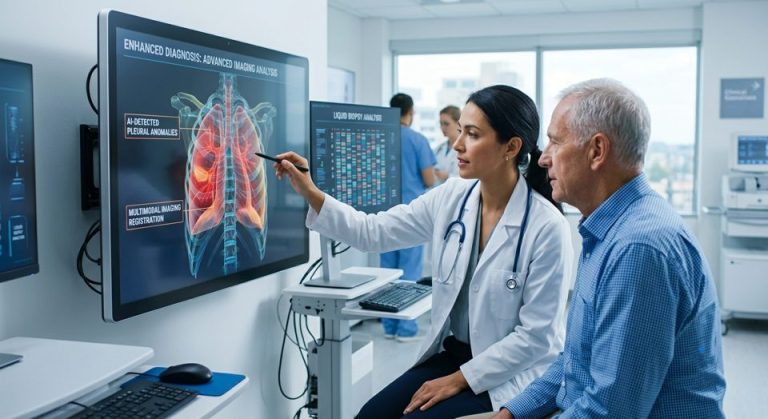
Mesothelioma is a rare cancer that can be hard to detect early. Its symptoms often resemble common illnesses, including pneumonia, asthma, or heart problems. New healthcare technology is helping doctors spot warning signs sooner and make more confident decisions.
An earlier diagnosis gives patients more time to explore treatment, meet specialists, and plan ahead. It may also help families gather work and exposure records. People exposed to asbestos in northern Alabama may also speak with a mesothelioma attorney madison to understand possible legal and financial options.
Technology does not replace an experienced doctor. Instead, advanced scans, computer-assisted image reviews, blood tests, and precise biopsy methods give medical teams better information. Together, these tools can reduce delays and help patients reach the right specialists faster.
Why Mesothelioma Is Difficult to Diagnose
Mesothelioma usually develops decades after asbestos exposure. A person may not feel sick until many years after working near asbestos-containing insulation, construction products, ship parts, brakes, or industrial equipment.
Early symptoms are also easy to mistake for other conditions. They may include:
- Shortness of breath
- Chest or abdominal pain
- A lasting cough
- Unexplained weight loss
- Fatigue
- Fluid around the lungs
Because these symptoms have many possible causes, mesothelioma may not be the first illness considered. Better diagnostic tools help doctors connect the clues more quickly.
Advanced Imaging Provides Better Detail
High-Resolution CT Scans
Computed tomography, or CT, creates detailed cross-sectional images using X-rays. Newer scanners can show thickening or unusual growth along the pleura, the thin lining around the lungs.
A CT scan cannot confirm mesothelioma by itself. However, it can help a doctor decide where a biopsy should be taken and whether other tests are necessary.
PET Scans
A PET scan highlights areas with increased cell activity. Cancer cells often use more energy than healthy cells, causing suspicious areas to appear brighter.
Doctors may use PET imaging to investigate whether abnormal tissue is active or cancer has spread. The results can also support treatment planning.
MRI Scans
MRI technology uses magnets and radio waves to produce detailed soft-tissue images. It may help doctors determine whether a tumor has reached the chest wall, diaphragm, or nearby organs.
Computer-Assisted Image Review
Computer-assisted systems can examine large numbers of medical images and highlight areas that deserve closer attention. They may also compare a new scan with older scans and measure tissue changes more consistently.
This support can be helpful because early mesothelioma changes may be subtle. Faster review may also shorten the time between the scan and a specialist appointment.
Blood Tests Add More Information
Researchers are studying blood-based biomarkers connected with mesothelioma. Biomarkers are substances that may appear at unusual levels when a disease is present.
Mesothelin-related proteins and fibulin-3 are among the markers researchers have examined. A blood test usually cannot confirm mesothelioma alone, but it may support findings from imaging, medical history, and tissue testing.
Improved Biopsy Methods Increase Accuracy
A biopsy is generally required to confirm mesothelioma.
Image-Guided Needle Biopsy
Doctors can use CT or ultrasound images to guide a needle into suspicious tissue. This approach helps target the correct area while limiting harm to nearby structures.
Thoracoscopy
Thoracoscopy uses a small camera inserted through a small chest incision. The doctor can inspect the pleura directly and collect samples from areas that look unusual.
Digital Pathology Improves Collaboration
Biopsy samples are traditionally placed on glass slides and examined under a microscope. Digital pathology allows those slides to be scanned into high-resolution images.
Specialists can securely review and share the images, even when they work in different locations. This matters because mesothelioma can resemble lung cancer or other diseases.
Electronic Records Connect the Clues
Doctors must consider symptoms, scans, biopsy findings, previous jobs, military service, and possible asbestos contact. Electronic health records help organize that information in one location.
How Patients Can Help
Technology works best when patients provide a complete history. Tell the doctor about work involving construction, factories, ships, boilers, insulation, automotive parts, or older buildings.
Patients can also ask:
- What did my scan show?
- Do I need a biopsy?
- Should a mesothelioma specialist review my case?
- Would a second pathology opinion help?
- What testing comes next?
Conclusion
Healthcare technology is making mesothelioma diagnosis more detailed, connected, and efficient. Advanced imaging, computer-assisted reviews, biomarker tests, guided biopsies, and digital pathology provide medical teams with stronger evidence.
No technology removes every challenge. Still, earlier warning signs and faster expert collaboration may help patients receive answers and reach appropriate care sooner. For patients, this can mean fewer delays, clearer next steps, and more confidence when discussing care with their specialist medical team.
Frequently Asked Questions
Can a CT scan confirm mesothelioma?
No. It can reveal suspicious tissue or fluid, but a biopsy is usually necessary for confirmation.
Can a blood test detect mesothelioma?
A blood test may identify useful biomarkers, but doctors normally combine it with scans, exposure history, and biopsy results.
Is a biopsy always needed?
Most patients need a tissue biopsy. It allows a pathologist to identify the cancer and rule out similar conditions.
Can technology find mesothelioma earlier?
It may help doctors notice small changes sooner, especially when a patient has known asbestos exposure.
Is a second opinion worthwhile?
Yes. Because mesothelioma is rare, review by an experienced specialist can improve diagnostic confidence.
