



For decades, progress in oncology has largely been measured by a single standard: the ability to develop a new therapy that improves upon existing treatments. Each scientific breakthrough has been evaluated by how effectively it could extend survival, improve response rates, or address cancers that had previously resisted treatment. That pursuit continues to drive much of today’s cancer research, but another form of innovation is beginning to receive greater attention.
Rather than asking how to replace today’s therapies, researchers are increasingly exploring how to make them work better together.
This shift reflects a deeper understanding of cancer biology. Tumors rarely rely on a single biological pathway to survive, which helps explain why even highly effective therapies may not benefit every patient. Checkpoint inhibitors, for example, have transformed cancer treatment by enabling the immune system to recognize and attack tumors more effectively. Yet many patients experience limited responses, while others eventually develop resistance that reduces long-term treatment effectiveness.
These challenges have encouraged researchers to look beyond standalone therapies and investigate combination strategies that target multiple aspects of the disease simultaneously. Instead of viewing a single therapy as the complete solution, the focus is increasingly shifting toward complementary approaches that may improve immune recognition, overcome resistance, or enhance the effectiveness of existing treatments.
That evolution is beginning to reshape how oncology innovation itself is evaluated.
Traditionally, success has been measured by discovering a novel drug or identifying a new therapeutic mechanism. Increasingly, however, researchers are also asking whether emerging therapies can strengthen existing standards of care. A treatment that helps more patients respond to established immunotherapies may prove just as meaningful as one that introduces an entirely new approach.
Among the companies exploring this evolving strategy is Oncolytics Biotech (NASDAQ: ONCY), whose lead immunotherapy candidate, pelareorep, is being studied for its potential to enhance anti-tumor immune responses when combined with existing cancer treatments. Rather than positioning pelareorep solely as a standalone therapy, the company’s research has increasingly focused on its potential role within combination treatment strategies.
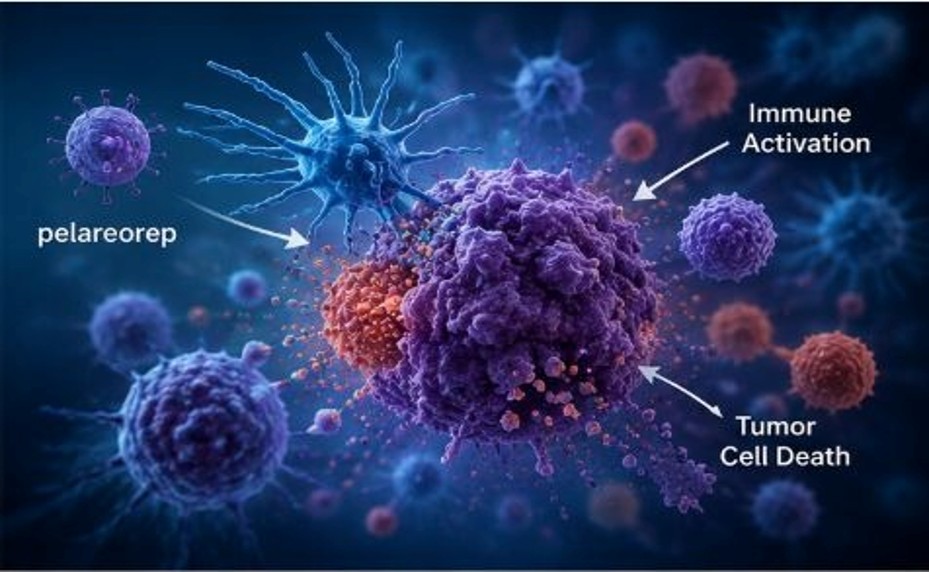
Recent clinical and translational data have helped illustrate why this approach is attracting attention. In the REO 022 study involving patients with metastatic colorectal cancer, pelareorep combined with FOLFIRI and bevacizumab achieved a median progression-free survival of 16.6 months among KRAS-mutant patients, compared with approximately 5.7 months historically associated with standard treatment. Median overall survival reached 27.0 months compared with approximately 11.2 months under current standards of care. While additional clinical development remains necessary, the findings have contributed to growing interest in immune-priming strategies that may enhance the effectiveness of existing therapies rather than replace them.
The implications extend well beyond a single company or a single investigational therapy.
If combination approaches continue demonstrating meaningful clinical benefit, they may influence how future clinical trials are designed, how pharmaceutical partnerships are structured, and how physicians integrate new therapies into established treatment protocols. Drug developers may increasingly evaluate therapies not only for their standalone performance, but also for their ability to improve outcomes alongside existing standards of care.
This broader perspective also reflects a more collaborative view of innovation. Instead of competing to replace every existing therapy, researchers are increasingly exploring how complementary mechanisms can work together to address the complexity of cancer. That philosophy recognizes that durable progress may come from integrating multiple scientific advances rather than relying on a single breakthrough to solve every challenge.
For healthcare professionals, this shift may ultimately change how innovation is measured. Success will continue to depend on discovering novel therapies, but it may increasingly be defined by how effectively new treatments complement the growing ecosystem of cancer care. As combination strategies continue to evolve, some of oncology’s most important advances may come not from replacing today’s therapies, but from helping them deliver better outcomes for more patients.
