


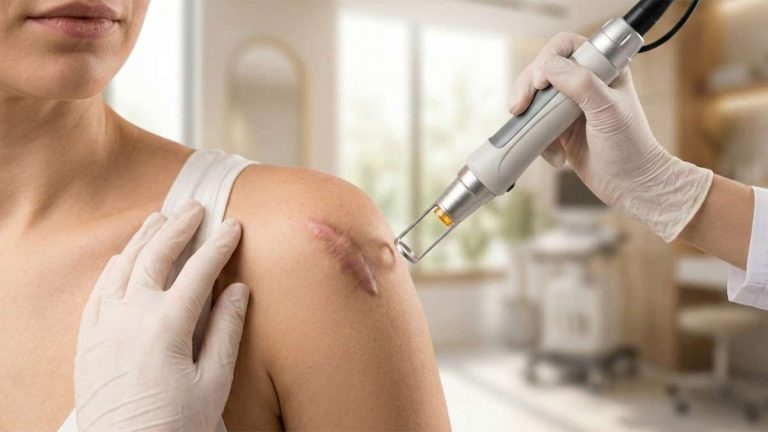
Keloids are stubborn, unpredictable, and notoriously prone to returning — sometimes larger than before. Unlike standard scars, they form when the skin produces excess collagen during healing, extending beyond the boundary of the original wound. This is why the doctor you choose matters just as much as the treatment they recommend. A skilled keloid specialist understands that keloids aren’t ordinary scars; they’re abnormal tissue responses that require a multi-modal, long-term approach rather than a one-time fix.
Many patients spend months or even years trying over-the-counter solutions, including silicone gels, pressure therapy, and various forms of keloid removal cream, before realizing that advanced keloids rarely respond to topical treatments alone. By the time they seek professional help, they want quick results — but rushing into the wrong clinic can leave them with a larger keloid, pigmentation issues, or repeated recurrences.
Before booking your first appointment, asking the right questions can save you time, money, and unnecessary frustration. Here are seven questions every patient should ask a keloid specialist before committing to treatment.
1. How Many Keloid Cases Do You Treat Each Year?
Experience matters because keloid management is highly specialized.
- Ask specifically about keloid cases, not general dermatology or cosmetic procedures.
- High-volume specialists tend to recognize patterns, predict recurrence risk, and adjust protocols accordingly.
- A clinic that handles dozens of keloid cases each year is likely better equipped than one that treats them occasionally.
2. What Treatment Options Do You Offer Beyond Surgery?
A reliable specialist should offer a range of treatments, not rely on a single solution.
- Common options include corticosteroid injections, cryotherapy, laser therapy, radiation therapy, pressure therapy, and silicone-based maintenance.
- Some advanced cases require combination therapy for the best long-term outcome.
- If a clinic recommends surgery as the first and only option, treat it as a red flag — surgical excision alone has one of the highest recurrence rates in keloid management.
3. What Is Your Typical Recurrence Rate?
Recurrence is the single biggest issue in keloid treatment, and honest specialists discuss it openly.
- Reputable doctors will share approximate recurrence statistics for the treatments they perform.
- Be cautious of clinics that promise “permanent removal” or “100% success” — keloids cannot be cured outright, only managed.
- The best specialists focus on reducing recurrence risk through layered, long-term protocols.
4. Will My Treatment Plan Be Customized to My Skin Type and History?
Personalization is critical because no two keloids behave the same way.
- Skin tone, keloid location, age, hormonal factors, and family history all influence treatment choice.
- Patients with darker skin tones face higher recurrence risks and need specialists familiar with treating melanin-rich skin without causing hypopigmentation.
- A thorough specialist will review your full medical history and prior treatment attempts before recommending anything.
5. What Does Follow-Up Care Look Like?
Keloid treatment isn’t a single procedure — it’s a long-term plan that depends heavily on follow-up.
- Ask how many follow-up sessions are typically required and what they involve.
- Inquire about home-care recommendations, such as silicone sheets, pressure garments, or maintenance topicals.
- Specialists who emphasize aftercare tend to deliver more durable results than those who treat the procedure as the endpoint.
6. Can I See Real Before-and-After Photos of Your Patients?
Documented results help you assess whether a specialist can handle your specific case.
- Look for photos that match your keloid size, location, and skin tone.
- Pay attention to time stamps — genuine keloid results should be shown at 6, 12, and even 18 months post-treatment, not just immediately after.
- Be wary of clinics that only display short-term results, since recurrence often appears months later.
7. What Are the Risks, Side Effects, and Worst-Case Scenarios?
Every keloid procedure carries potential downsides, and a trustworthy specialist will discuss them upfront.
- Possible risks include pigmentation changes, infection, thinning of surrounding skin, and recurrence.
- A specialist who downplays risks or avoids difficult questions is a warning sign.
- Informed consent is a marker of a clinic that prioritizes patient outcomes over revenue.
Conclusion
Choosing the right keloid specialist requires more research than scheduling a typical dermatology appointment. Keloids are biologically unpredictable, and the wrong approach can leave you with a larger scar, pigmentation problems, or recurring growths that are harder to treat than the original lesion. The seven questions above are designed to filter out clinics chasing quick procedures from doctors who genuinely understand the science of abnormal scarring.
Take your time during the consultation phase. Verify credentials, ask about case volume, review long-term photo evidence, and seek out scar revision Experts who specialize specifically in keloid management rather than general aesthetic procedures. The strongest outcomes come from doctors who treat keloids as a chronic, multi-factorial condition requiring layered therapy — not a single-session fix.
Ultimately, the goal isn’t just removing a keloid; it’s preventing it from coming back. A well-chosen specialist gives you the best chance of long-term improvement, fewer follow-up procedures, and a treatment plan built around your skin, your history, and your healing patterns rather than a one-size-fits-all template. Asking the right questions upfront is one of the simplest, most underrated ways to protect both your appearance and your long-term skin health.
