


Most of us breathe around 20,000 times a day without thinking about it. Yet how you breathe quietly shapes how calm, focused or frazzled you feel.
That is the appeal of breathwork. It is free, it travels with you everywhere, and the effects can show up in seconds.
Better still, the basics are backed by real physiology rather than wishful thinking. Slow, controlled breathing taps directly into the nervous system that governs your stress response.
Here is what is actually happening when you breathe with intention, the techniques worth learning, and when it makes sense to get proper coaching.
Key Takeaways
- How you breathe directly influences your nervous system, heart rate and stress levels.
- Slow breathing of about five to six breaths per minute helps activate the body’s “rest and digest” response.
- Simple methods like belly breathing, box breathing and a longer exhale are easy to learn and supported by research.
- Breathwork is a helpful tool, not a cure, and intense breath-holding should never be done in water or while driving.
- For high-pressure situations, structured training can help you apply these skills when you need them most.
Why Breathing Changes How You Feel
Your breath is one of the few automatic body functions you can also control on purpose. That makes it a direct line to your autonomic nervous system.
It helps to say up front that breathing is one tool among many. It works best alongside the basics of managing everyday stress like decent sleep, regular movement and real downtime.
Fast, shallow chest breathing tends to signal the “fight or flight” branch, nudging your heart rate and tension upward. Slow, deep breathing does the opposite, leaning on the “rest and digest” branch that calms you down.
A big part of this runs through the vagus nerve, which helps regulate heart rate and relaxation. Slowing your breath, especially the exhale, gently stimulates it.
Research also links slow breathing to higher heart rate variability, a marker generally associated with better stress resilience and recovery.
Techniques Worth Trying
The good news is that you do not need anything fancy to start. A few minutes is enough to feel a shift.
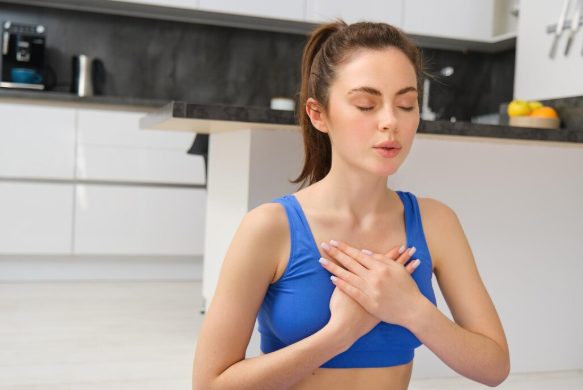
Belly breathing is the foundation. Place a hand on your stomach, breathe in slowly through your nose so your belly rises, then exhale gently. This engages the diaphragm and is linked to lower stress and blood pressure.
Coherent breathing takes it further by slowing your pace to about five or six breaths per minute. Inhale for a count of five, exhale for five, and repeat for a few minutes.
Box breathing is a favorite among athletes and first responders. Inhale for four, hold for four, exhale for four, hold for four, then repeat the cycle.
A longer exhale is the quickest reset of all. Try breathing in for four and out for six or more, since a longer out-breath leans hardest on that calming response.
The 4-7-8 pattern is a popular wind-down before sleep. Breathe in through your nose for four, hold for seven, then exhale slowly through your mouth for eight.
Where you can, breathe through your nose rather than your mouth. Nasal breathing filters and warms the air and supports a slower, steadier rhythm.
One more worth knowing is the physiological sigh. A 2023 Stanford study found that a few minutes of cyclic sighing each day, a double inhale followed by a long exhale, improved mood and lowered breathing rate.
You do not need all of these in your rotation. Pick the one that feels most natural, practice it until it is second nature, then add others if you want. The best technique is simply the one you will actually use, and even a single minute counts.
When Structured Training Makes Sense
Practicing on your own is great for daily calm. But applying breathwork in genuinely high-pressure moments is a different skill, and that is where guided training shines.
This is the niche filled by specialists like the Deep Breath Institute, a Brisbane-based provider founded by a registered paramedic. Their coaching draws on real experience from emergency response, elite sport and tactical environments.
Structured programs help in a few ways. You learn proper technique, you practice under realistic stress, and you build the habit until it becomes automatic when adrenaline hits.
This kind of training suits healthcare workers, first responders, athletes and corporate teams who perform under pressure. For them, a reliable breathing toolkit is a genuine performance asset.
A good coach can also tailor the approach to your goals, whether that is steadier nerves before a big moment or faster recovery afterward.
A Quick Word on Safety
Breathwork is a complement to good healthcare, not a replacement for it. If you have a heart or respiratory condition, are pregnant, or have a history of panic attacks, check with your doctor before trying intense techniques.
Some advanced practices involve breath-holds or rapid breathing. Never do these in or near water or while driving, because they can cause you to black out without warning.
If you ever feel dizzy or lightheaded, simply return to normal, easy breathing. Gentle techniques like belly breathing and a longer exhale are very low risk for most healthy people.
Building a Daily Habit
The benefits of breathwork compound with practice, so consistency beats intensity. A few minutes once or twice a day is plenty to start.
Anchor it to something you already do, like your morning coffee or the moment you sit down to work. This kind of habit stacking makes it far easier to stick with.
Practice when you are calm, too, not only when you are stressed. That way the technique feels familiar and ready when a tense moment actually arrives.
The Bottom Line
Your breath is one of the simplest, most portable health tools you have. Learning to steer it gives you a reliable way to settle your nervous system on demand.
Start with the basics, stay consistent, and respect the safety limits. If you want to perform under real pressure, structured coaching can turn a casual habit into a dependable skill.
Either way, the next calm moment really is just a few slow breaths away.
Frequently Asked Questions
Does breathwork actually reduce stress, or is it a placebo?
There is real physiology behind it. Slow, controlled breathing activates the parasympathetic nervous system, which lowers heart rate and helps reduce the body’s stress response.
How long until I notice a difference?
Many people feel calmer within a few minutes of slow breathing. Longer-term benefits like better stress resilience tend to build with regular daily practice.
What is the best breathing technique for anxiety?
There is no single best one, but slow methods with a longer exhale, such as coherent breathing or a four-in and six-out pattern, are gentle and effective starting points.
Can breathwork replace therapy or medication?
No. It is a useful self-care tool that works alongside professional care, not a substitute for treatment. Always follow the advice of your healthcare provider.
Is breathwork safe for everyone?
The gentle techniques are low risk for most people. Intense breath-holding or rapid breathing carries more risk and should be learned carefully, never in water, and with medical clearance if you have health concerns.
