


Motor neurone disease (MND) is a progressive neurodegenerative condition that affects the nerve cells responsible for voluntary movement. It leads to increasing weakness in the limbs, problems with speech and swallowing, and, over time, respiratory failure. There is currently no cure. In the United States, the most common form of MND is known as amyotrophic lateral sclerosis (ALS), and the two terms are often used interchangeably in clinical settings. In the UK and Australia, MND is the broader umbrella term, with ALS as its most common subtype.
For health IT professionals and clinical operations teams working with neurology services, a basic understanding of MND is useful. The disease touches many parts of a multidisciplinary care workflow, from early referral triage to respiratory monitoring, nutritional support, assistive communication, and palliative planning. Digital support for MND care is also shaping how clinics coordinate and measure care across the patient journey.
This article provides a practical primer on MND for non-neurologist healthcare technologists, then maps the care pathway to digital tools and implementation considerations.
Key Takeaways
- MND, known as ALS in the U.S., is a progressive motor neuron disorder that can cause limb weakness, speech and swallowing difficulties, and respiratory decline. There is no cure, but disease-modifying therapies exist for some patients.
- Multidisciplinary ALS clinic care is associated with improved survival compared with general neurology follow-up, according to systematic review evidence.
- Digital tools can support MND care delivery through tele-neurology visits, remote functional assessments, home spirometry, augmentative communication devices, and coordinated EHR workflows.
- Digital supports complement in-person care rather than replacing hands-on multidisciplinary assessment. Hybrid models can help reach patients with mobility or geographic barriers.
What Is MND, and How Does It Differ from ALS?
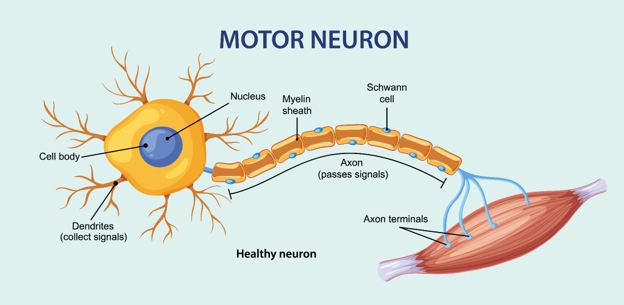
MND describes a group of disorders in which motor neurons in the brain and spinal cord progressively degenerate. As these neurons fail, the muscles they control weaken and waste. The clinical course varies, but the overall pattern is a gradual loss of motor function affecting movement, speech, swallowing, and breathing.
Under UK and Australian clinical guidance, including NHS guidance, MND is an umbrella term. Its main variants include ALS, progressive bulbar palsy, progressive muscular atrophy, and primary lateral sclerosis. In U.S. practice, ALS is the term most clinicians and patients encounter, though the underlying disease process is closely related.
For a patient- and carer-friendly overview of the condition, MND Victoria in Australia maintains a plain-language resource explaining what is MND, including regional support services.
Early Signs and Symptoms Clinicians Watch For
MND can present in different ways depending on which motor neurons are affected first. Limb-onset disease often begins with focal weakness, cramps, or fasciculations in a hand or foot. Bulbar-onset disease starts with slurred speech, known as dysarthria, or swallowing difficulty, known as dysphagia. Respiratory symptoms, such as breathlessness on exertion or while lying flat, may appear early or later in the disease course.
Cognitive and behavioral changes can also occur in some people with MND and may overlap with frontotemporal spectrum disorders. These presentations should prompt referral to a specialist neurology team rather than reliance on symptom checklists alone. For clinic operations, EHR-based triage prompts and templated referral criteria can help primary care teams recognize patterns and route patients efficiently.
Causes and Risk at a Glance
Approximately 10% of ALS cases are familial, linked to identifiable genetic mutations in genes such as C9orf72, SOD1, TARDBP, and FUS, according to NINDS/NIH. The remaining roughly 90% are sporadic, with no single confirmed cause. Suspected environmental risk factors have been studied, but evidence remains inconclusive. Claims about causation should be conservative and clearly sourced.
How MND Is Diagnosed
There is no single definitive test for MND. Diagnosis is clinical, based on the pattern of progressive motor impairment and supported by investigations such as electromyography, nerve conduction studies, and MRI to exclude conditions that can mimic MND.
The 2019 Gold Coast criteria have streamlined ALS diagnosis for specialists. They require progressive motor impairment with upper and lower motor neuron signs in at least one body region, or lower motor neuron signs in at least two regions, after other causes have been excluded. For health IT teams, understanding these criteria helps set realistic expectations around referral documentation and structured data capture. However, the criteria are tools for specialist neurologists, not screening instruments for non-specialist settings.
Treatment and Multidisciplinary Care
While there is no cure for MND, several interventions can modify the disease course or manage symptoms. FDA-approved disease-modifying therapies for ALS include riluzole and edaravone, available in IV and oral formulations. Tofersen is available for people with confirmed SOD1-mutation ALS.
Sodium phenylbutyrate/taurursodiol, marketed as Relyvrio and also known as AMX0035, received U.S. approval in 2022. In April 2024, the manufacturer announced that it would voluntarily remove the drug from U.S. and Canadian markets and discontinue new patient starts, while allowing limited continuation access for some people already taking it.
Supportive care is central to MND management. Noninvasive ventilation can prolong survival and improve quality of life, particularly for people without severe bulbar dysfunction. Nutritional support, including gastrostomy placement when swallowing becomes unsafe, helps maintain weight and hydration. Secretion management, spasticity treatment, pain control, mental health support, and advance care planning are also standard parts of care.
Multidisciplinary ALS clinic care is associated with improved survival compared with follow-up through general neurology alone, according to a systematic review and meta-analysis. This finding reinforces the value of coordinated team-based models, where digital infrastructure can play a practical supporting role.
Where Digital Support for MND Care Helps Most
Digital tools are not a replacement for the hands-on, relationship-centered work of multidisciplinary MND clinics. They can, however, extend the reach of those clinics, reduce travel burden for people with limited mobility, and capture useful data between visits.
Tele-neurology and virtual multidisciplinary clinics. Telehealth for ALS, delivered by individual providers or full multidisciplinary teams, has been shown to be feasible and acceptable. In some settings, outcomes are comparable to in-person care. Virtual visits can supplement, though not fully replace, periodic in-person assessments.
Remote functional monitoring. Self-reporting of the ALS Functional Rating Scale-Revised, or ALSFRS-R, is feasible in routine care and can supplement clinic-based assessments. Home spirometry can also support telemedicine workflows when patients receive clear coaching and results are reviewed by the clinical team.
Augmentative and alternative communication. As speech declines, communication devices become essential. Options range from low-tech letter boards through text-to-speech applications to eye-gaze systems. Voice banking, ideally started early while speech remains clear, preserves a person’s own voice for later use. Medicare or insurance may cover some augmentative and alternative communication devices depending on local policy. Clinic teams should build early referral pathways and track device needs in the EHR.

Structured electronic patient-reported outcomes. Collecting standardized data on dyspnea, nutrition status, mood, and caregiver burden between visits helps clinical teams identify needs earlier. Secure messaging and caregiver portals can keep families connected to the care team without requiring a formal visit for every update.
Implementation Tips for Health IT and Clinic Operations
Effective digital workflows for MND care require attention to interoperability, accessibility, and governance.
- Interoperability. Use standards-based integrations, such as HL7 FHIR where appropriate, to bring remote monitoring data, spirometry readings, and ALSFRS-R scores into the EHR so clinicians see a unified record.
- Review and escalation protocols. Define who reviews incoming remote data, how alerts are triggered, and what thresholds prompt clinical action.
- Consent and data sharing. Establish clear consent workflows for remote data collection and caregiver portal access.
- Accessibility. People with MND may have limited dexterity, speech, or vision. Interfaces need larger touch targets, dwell and scan controls, and compatibility with switch-access and eye-gaze input.
- Durable medical equipment ordering. Streamline augmentative communication and noninvasive ventilation ordering pathways within the EHR to reduce administrative delays.
- Hybrid models. Maintain in-person options for patients who face digital access barriers or need physical assessments that telehealth cannot replicate.
Measuring Impact
Track both operational and patient-centered metrics to assess digital workflow performance. Useful indicators include portal activation rates, remote assessment completion, time from symptom flag to respiratory or nutrition intervention, telehealth show rates, and emergency department visits per patient cohort. Review these metrics regularly and use plan-do-study-act cycles to refine workflows over time.
Closing Perspective
MND remains one of the most challenging conditions in neurology. For health IT and clinical operations teams, the opportunity is to build infrastructure that helps multidisciplinary clinics work more effectively, reach patients earlier, and coordinate care across specialties. Digital tools are a practical part of that effort when they are designed with accessibility, equity, and clinical integration in mind. Clinicians can reference NINDS, NIH, and NHS overviews for detailed clinical guidance, along with local policies for coverage and reimbursement specifics.
