


Addiction treatment looks very different today than it did even ten years ago. Programs no longer rely on a one size fits all approach, and that shift matters. People enter treatment with different mental health needs, physical health concerns, family responsibilities, financial situations, and histories with substance use. A treatment plan that works well for one person may not work at all for someone else.
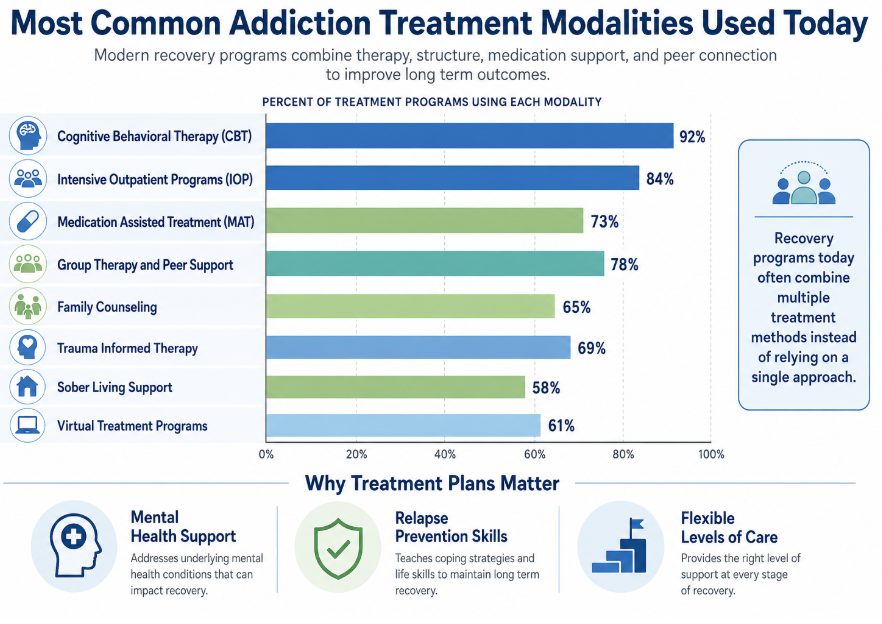
Modern recovery programs now combine evidence based therapies, medication support, peer connection, family counseling, and flexible care models to improve long term outcomes. Some people need intensive inpatient care and medical supervision. Others respond better to outpatient treatment that allows them to continue working or caring for children while attending therapy several days a week. The goal is not simply to stop substance use for a short period of time. The goal is to help people build stability that lasts.
Behavioral Therapy
Behavioral therapy remains one of the most widely used treatment modalities in addiction recovery today. Cognitive behavioral therapy, often called CBT, helps people recognize unhealthy thought patterns and understand how those thoughts influence behavior. Therapists work with clients to identify triggers, improve coping skills, and build healthier routines that support recovery outside treatment settings.
Dialectical behavior therapy, known as DBT, has also become increasingly common, especially for people dealing with emotional regulation issues, trauma, anxiety, or self destructive behavior patterns. DBT focuses heavily on distress tolerance, mindfulness, and communication skills. Many treatment centers now blend CBT and DBT into the same recovery plan because the approaches complement each other well.
Therapy today also tends to be more trauma informed than it once was. Treatment providers understand that unresolved trauma often sits underneath addiction. Instead of focusing only on substance use itself, many programs now help clients process grief, abuse, chronic stress, or major life events that may contribute to harmful coping behaviors.
Flexible Outpatient Care
Outpatient treatment has expanded rapidly over the last several years because it gives people more flexibility while still providing structure and accountability. Intensive outpatient programs, commonly called IOPs, typically involve multiple therapy sessions per week while allowing participants to live at home.
Many people choose outpatient care because they cannot step away from work, parenting, or other responsibilities for a full residential stay. Others transition into outpatient treatment after completing inpatient rehab. In many cases, outpatient care serves as the bridge between early recovery and independent living.
Some programs also offer virtual sessions, evening schedules, and specialized support groups tailored toward parents, professionals, veterans, or young adults. Accessibility has improved dramatically, which has helped more people seek treatment earlier rather than waiting until problems become severe.
The best IOP in Texas, Kentucky or D.C. may look different depending on the person seeking care, but strong programs usually provide licensed therapists, relapse prevention planning, family support, mental health services, and individualized treatment plans rather than generic programming.
Medication Assisted Treatment
Medication assisted treatment, often shortened to MAT, has become one of the most important developments in modern addiction care. Medications such as buprenorphine, methadone, and naltrexone help reduce cravings and lower the risk of relapse for people recovering from opioid or alcohol use disorders.
There is still public misunderstanding surrounding MAT, largely because some people incorrectly assume medication replaces one addiction with another. In reality, these medications are carefully monitored and supported by clinical research. They can significantly reduce overdose risk and improve long term recovery outcomes when combined with counseling and behavioral therapy.
Doctors now recognize addiction as a medical condition that often requires both psychological and physical treatment. MAT reflects that broader understanding. Instead of forcing people through intense cravings and withdrawal symptoms without support, treatment providers can stabilize patients so they are physically and emotionally capable of engaging in therapy and rebuilding their lives.
This approach has helped reduce stigma in many healthcare settings. More hospitals, primary care clinics, and behavioral health providers now integrate addiction treatment into regular healthcare systems instead of treating it as something separate.
Levels of Treatment
One of the biggest changes in addiction care involves the range of treatment levels now available. Recovery is rarely linear, and people often move between different levels of support depending on their progress and needs.
Medical detox programs help manage withdrawal symptoms safely under clinical supervision. Residential treatment provides structured living environments with daily therapy and monitoring. Partial hospitalization programs offer intensive daytime care while allowing clients to return home at night. Intensive outpatient programs and standard outpatient care provide continued support with increasing independence over time.
Sober living homes also play a major role for many people after rehab. These homes create accountability and structure during the difficult transition back into everyday life. Residents often participate in house meetings, drug testing, employment expectations, and peer support activities.
For example, TPRN in Tyler, Texas is known for its various levels of care from medical detox, inpatient rehab, sober living resources and every step in between. Other treatment centers like Betty Ford in California or Wellbridge in New York may be known for privacy but they don’t offer all the same resources. It’s always worth researching different facilities to find the right fit for what you’re looking for and what you need.
Research matters because treatment centers vary widely in philosophy, staffing, specialties, and follow up care. Some focus heavily on dual diagnosis treatment for people with mental health conditions. Others emphasize holistic therapies, faith based recovery, or long term residential support.
Peer Support Systems
Peer support remains one of the strongest predictors of long term recovery success. Twelve step programs still help many people maintain accountability and connection, but they are no longer the only option available. SMART Recovery, Refuge Recovery, LifeRing, and other peer led groups now offer alternatives for people seeking different recovery models.
Connection matters because isolation often fuels addiction. Recovery communities help people rebuild social support systems and reduce feelings of shame. They also create spaces where people can speak honestly with others who understand the realities of recovery without judgment.
Family involvement has also become a larger part of treatment planning. Addiction affects entire households, not just individuals. Family therapy sessions can improve communication, rebuild trust, and help loved ones understand recovery challenges without enabling harmful behaviors.
Modern addiction treatment gives people more choices, more flexibility, and more individualized care than ever before. That does not mean recovery is easy, but it does mean treatment can better reflect real life needs. The most effective programs focus on long term stability, mental health support, healthy relationships, and sustainable coping skills instead of short term fixes alone.
