


A Practical Guide for Patients and Caregivers
For many patients, getting to a medical appointment is not as simple as calling a taxi or asking a family member for a ride.
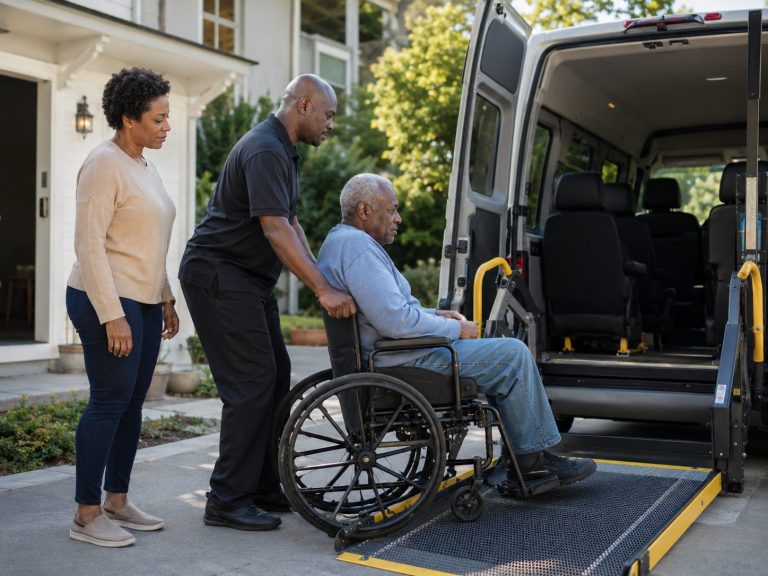
A person may use a wheelchair. Someone leaving the hospital may not be able to sit upright safely. A dialysis patient may need recurring transportation several times a week. An older adult may need help getting from the front door to the vehicle. A patient recovering from surgery may need more support than a regular car can provide.
In these situations, transportation becomes part of the care plan.
When the right ride is not available, medical care can be delayed, appointments can be missed, and families may be left scrambling at the last minute. Transportation barriers are a well-known access-to-care issue, especially for people with disabilities, older adults, and patients with chronic medical needs.
The challenge is that families often do not know what type of ride they need until they begin calling providers. One company may offer wheelchair transportation but not stretcher transportation. Another may provide curb-to-curb service but not door-through-door assistance. Some providers may handle local medical appointments but not hospital discharge or long-distance travel. Pricing can also vary widely depending on distance, vehicle type, assistance level, timing, and local availability.
That is why choosing the right medical ride matters.
Medical transportation is not one-size-fits-all
Non-emergency medical transportation can include many different service levels. The correct option depends on the patient’s mobility, medical condition, transfer ability, and the pickup and drop-off environment.
A regular sedan may be enough for someone who can walk independently and safely enter a vehicle. A wheelchair-accessible vehicle may be needed if the person uses a wheelchair and cannot transfer into a regular seat. A stretcher vehicle may be required if the patient must remain lying down. Some situations require additional assistance, especially when stairs, apartment buildings, hospital discharges, or bariatric needs are involved.
Families can run into problems when they book the wrong level of service. A provider may arrive and discover that the patient cannot transfer safely. A vehicle may not be equipped for a wheelchair. A ride may be delayed because the provider was not told about stairs. In some cases, the ride may need to be cancelled and rearranged, creating stress and additional cost.
Before booking, it helps to slow down and ask the right questions.
Questions patients and caregivers should ask before booking
The first question is simple: Can the patient sit safely in a regular vehicle?
If the answer is no, the family should determine whether wheelchair or stretcher transportation is needed. If the patient uses a wheelchair, ask whether they can transfer into a regular car seat or need to remain in the wheelchair during the ride.
The second question is: How much assistance is needed?
Some rides are curb-to-curb, meaning the provider picks up and drops off at the curb. Others may be door-to-door, where the driver helps the person between the vehicle and the entrance. Door-through-door or bedside-to-bedside service may involve more hands-on support. These terms can vary by provider, so families should ask exactly what is included.
The third question is: Are there stairs, narrow hallways, elevators, or building access issues?
These details matter. A provider may need extra staff or special equipment if the patient must be moved down stairs or from a facility bed. Giving this information early can prevent confusion later.
The fourth question is: Is the ride one-way, round-trip, or recurring?
Dialysis, physical therapy, radiation, wound care, and rehabilitation appointments often require recurring rides. Some providers may offer better availability or pricing for repeated transportation if the schedule is known in advance.
The fifth question is: What is included in the price?
Families should ask whether the quote includes mileage, wait time, after-hours service, stairs, bariatric assistance, same-day booking, return transportation, or extra attendants. A quote that looks cheaper at first may not include everything the patient needs.
A more detailed checklist is available here:
https://medicalride.org/medical-transport/choose-the-right-ride
Why comparison matters
Medical transportation pricing is often not standardized. Two providers may quote very different prices for the same trip. Sometimes this is because one provider is closer, has the right vehicle available, or can schedule the ride more efficiently. Other times, the difference may come from urgency, staffing, distance, or the level of assistance required.
For families, the important point is that the first quote is not always the only option.
Comparing providers can help families understand whether a price is reasonable and whether the provider can actually meet the patient’s needs. This is especially important for private-pay rides, hospital discharge, long-distance medical transportation, and specialized services such as wheelchair or stretcher transport.
However, comparison is not easy when families have to call many companies one by one. They may need to repeat the same information several times: pickup address, destination, appointment time, wheelchair or stretcher need, stairs, patient weight, oxygen, return trip, and preferred timing.
This is where booking and coordination tools can help.
MedicalRide.org, a non-emergency medical transport, is one example of a platform designed to reduce that burden. Instead of forcing a patient or caregiver to call multiple transportation companies separately, MedicalRide.org allows families to submit one request and helps coordinate available options from appropriate providers in the requested area.
The broader goal is simple: make it easier for families to find the right ride without unnecessary stress, confusion, or repeated phone calls.
Hospital discharge needs special attention
Hospital discharge is one of the most stressful transportation situations.
Families may learn that a patient is ready to leave the hospital with very little notice. If the patient cannot sit in a regular vehicle, the family may suddenly need wheelchair or stretcher transportation. The timing may be uncertain, and the hospital may be waiting for the patient to leave.
In these cases, families should confirm:
- whether the patient needs a wheelchair, stretcher, or assisted transportation;
- whether the pickup is from the room, hospital entrance, or discharge area;
- whether the patient needs help getting into the home;
- whether stairs or building access issues exist;
- whether the provider can handle same-day or next-day discharge timing.
A safe discharge plan should include a realistic transportation plan. If the patient cannot safely get home, the discharge process becomes incomplete.
Older adults can use digital tools when the process is simple
There is a common assumption that older adults do not want to use online forms. In reality, many older adults are comfortable using digital tools when the process is clear, respectful, and not overly complicated.
The issue is often not age. The issue is design.
A simple request form can be easier than making 10 phone calls, especially if it asks the right questions in plain language. At the same time, phone support still matters for people who prefer to speak with someone or need help completing the request.
The best systems should support both: simple online intake and human help when needed.
Practical tips before scheduling a medical ride
Patients and caregivers can reduce stress by preparing a few details before contacting transportation providers:
Have the full pickup and drop-off addresses ready, including apartment numbers, facility names, and entrance instructions.
Know the appointment time and whether the patient needs to arrive early.
Be clear about the patient’s mobility: walking, wheelchair, power chair, stretcher, bariatric, or assisted transfer.
Mention stairs, elevators, ramps, narrow hallways, or any building access issues.
Ask whether the provider can support the full trip, not just the drive.
Confirm the total expected cost before accepting the ride.
For recurring appointments, ask whether the same schedule can be reserved in advance.
For hospital discharge, ask the facility what level of transportation is medically appropriate before booking.
These steps can help avoid surprises and improve the chance that the ride is safe, timely, and appropriate.
Transportation is part of access to care
A medical appointment only helps if the patient can get there. A hospital discharge only works if the patient can get home safely. A recurring treatment plan only succeeds if transportation is reliable enough to support it.
For people with disabilities, older adults, and families managing serious health needs, medical transportation is not a small detail. It can be the difference between care that exists on paper and care that actually happens.
Families should not have to call provider after provider while under pressure. They should not have to guess whether they need a wheelchair van, stretcher vehicle, or additional assistance. They should not have to accept the first quote without knowing whether other options may exist.
Better information, clearer pricing, and simpler coordination can make medical transportation less stressful for the people who need it most.
The ride is not separate from care. For many patients, the ride is what makes care possible.
References
- CDC / NCHS: Lack of Reliable Transportation for Daily Living Among Adults: United States, 2022
- CMS Innovation Center: Addressing Transportation Barriers
- American Hospital Association: Transportation and the Role of Hospitals
- JAMA Network Open: Interventions for Non-Emergency Medical Transportation Barriers
