


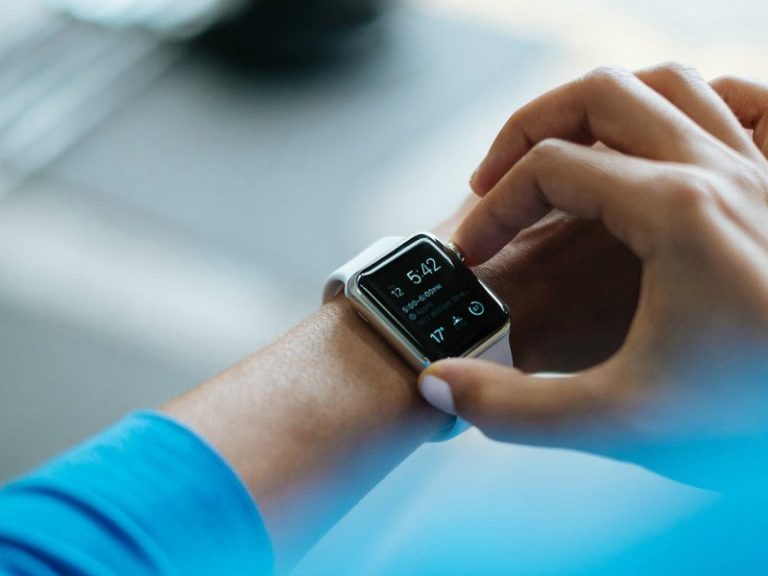
Over the past couple of years, we have seen wearables take a significant turn in the consumer market. Despite their appeal to users, wearables are still underused by many healthcare organizations. And to be fair, integrating wearable technology in daily life is not as complicated a process as integrating into the complex data chains. Many IT executives, clinical engineers, and healthcare executives have a straightforward question:
In practical healthcare settings, how can wearable data be used?
We have summarized the most effective and convenient practices that can be implemented by any digital health organization without completely redesigning their infrastructure.
1. Start with Remote Patient Monitoring (RPM)
One of the most immediate and scalable use cases for wearable data is remote patient monitoring (RPM).
Wearables can continuously track:
- Heart rate
- Activity levels
- Sleep patterns
RPM programs that monitor patients with long-term conditions like diabetes, cardiovascular disease, or post-operative recuperation can incorporate this data (Tegegne et al., 2026).
Small tip:
Start small by incorporating wearable data into your current RPM workflows for a single patient group, such as cardiac rehab patients.
Focus on:
- Alerts for abnormal patterns
- Trend analysis rather than raw data
- Clear escalation protocols
2. Integrate Wearable Data into Existing IT Systems (EHR/EMR)
A common challenge is that wearable data lives outside traditional healthcare systems.
To make it usable, organizations need to bridge the gap between consumer-generated data and clinical systems like EHRs or EMRs (Reisman, 2017).
Key considerations:
- Data normalization: Different devices produce different formats
- Data quality: Not all consumer data meets clinical standards
- Interoperability: APIs are essential for integration
Honest Mistake:
Instead of attempting full integration upfront, start by:
- Feeding summarized insights (not raw data) into your EHR
- Using middleware or APIs to standardize incoming data
- Defining which metrics are clinically relevant
3. Use Wearable Data to Improve Patient Engagement
Wearable data is not only valuable for clinicians, but it is also a powerful tool for patient engagement.
Patients who can see and understand their own data are more likely to:
- Adhere to treatment plans
- Increase physical activity
- Participate in preventive care programs
Practical tips:
Use wearable data to create:
- Simple dashboards for patients
- Personalized nudges (e.g., activity reminders)
- Progress tracking during treatment or recovery
This is particularly effective in telemedicine and hybrid care models, where patient interaction is limited. (Del-Valle-Soto et al., 2024).
4. Address Security and Compliance Early
Cybersecurity and compliance must be taken into account from the start of any wearable data integration.
Healthcare organizations need to ensure:
- Secure data transmission
- GDPR/HIPAA compliance (depending on region)
- Clear patient consent mechanisms
Smart Moments:
Work with vendors or platforms that:
- Provide end-to-end encryption
- Offer audit trails and data access controls
- Support compliance frameworks out of the box
5. Focus on Use Cases, Not Data Volume
Attempting to gather as much data as possible is one of the biggest mistakes organisations make. Better results are not always the result of having more data.
Key Opportunities:
Define:
- A clear clinical or operational goal
- The specific data points needed to support it
- How will that data drive decisions
For example:
Instead of collecting all wearable metrics, focus on resting heart rate and activity trends for a cardiovascular program.
What Are the Key Challenges to Consider
Despite the obvious advantages, there are a number of real-world issues with wearable data implementation in healthcare that businesses must deal with right away:
- Data fragmentation: Standardisation is challenging because wearable data originates from several platforms and devices, each of which has its own format and structure (Google Research, 2025).
- Data quality and clinical reliability: There are issues with accuracy and consistency because many consumer-grade devices are not suited for clinical use. (Martinko et al., 2022)
- Complexity of integration: Linking wearable data to current EHR/EMR systems can be difficult technically and, if done incorrectly, could interfere with established workflows (Reisman, 2017).
- Data overload: If continuous data streams are not filtered, summarised, and converted into useful insights, they may overwhelm doctors.
- Privacy and compliance requirements: Strict access restrictions, transparent consent management, and safe data handling are mandated by laws like GDPR and HIPAA.
Powering Healthcare with Wearables
Healthcare could be revolutionised by wearable data, but only if it is used in a sensible, organised manner. Successful organisations will not be those that gather the most data, but rather those that:
- Start with focused use cases
- Integrate data into existing workflows
- Prioritize usability for both clinicians and patients
Healthcare providers can transition from experimentation to practical impact without needless complexity by adopting a methodical approach.
Sources
- Del-Valle-Soto, C., López-Pimentel, J. C., Vázquez-Castillo, J., Nolazco-Flores, J. A., Velázquez, R., Varela-Aldás, J., & Visconti, P. (2024). A comprehensive review of behavior change techniques in wearables and IoT: Implications for health and well-being. Sensors, 24(8), 2429. https://pmc.ncbi.nlm.nih.gov/articles/PMC11054424/
- Martinko, A., Karuc, J., Jurić, P., Podnar, H., & Sorić, M. (2022). Accuracy and precision of consumer-grade wearable activity monitors for assessing time spent in sedentary behavior in children and adolescents: Systematic review. JMIR mHealth and uHealth, 10(8), e37547. https://pmc.ncbi.nlm.nih.gov/articles/PMC9399884/
- Reisman, M. (2017). EHRs: The challenge of making electronic data usable and interoperable. P & T: A peer-reviewed journal for formulary management, 42(9), 572–575. https://pmc.ncbi.nlm.nih.gov/articles/PMC5565131/
- Tegegne, M., Niakan Kalhori, S., Haas, P., Sobotta, V., Warnecke, J., & Deserno, T. (2026). Wearable devices for remote monitoring of chronic diseases: Systematic review. JMIR mHealth and uHealth, 14, e74071. https://mhealth.jmir.org/2026/1/e74071
- Xu, M. A., Narayanswamy, G., Ayush, K., Spathis, D., Liao, S., Tailor, S. A., Metwally, A., Heydari, A. A., Zhang, Y., Garrison, J., Abdel-Ghaffar, S., Xu, X., Gu, K., Sunshine, J., Poh, M.-Z., Liu, Y., Althoff, T., Narayanan, S., Kohli, P., Malhotra, M., Patel, S., Yang, Y., Rehg, J. M., Liu, X., & McDuff, D. (2025). LSM-2: Learning from incomplete wearable sensor data. https://arxiv.org/html/2603.19564
