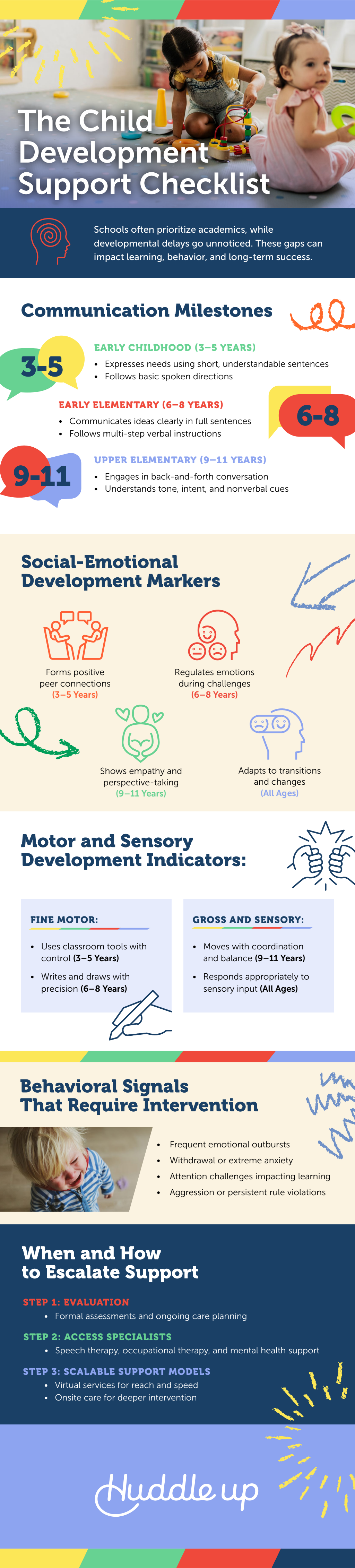
Children grow and change quickly, especially in the early years. Physical, emotional, and social skills develop at different speeds, and each stage brings new needs. A clear checklist can help caregivers and professionals track progress and provide the right support at the right time.
Physical Growth and Motor Skills
Physical development includes both large and small movements. Gross motor skills involve actions like running, jumping, and climbing. Fine motor skills include tasks such as holding a pencil or buttoning clothing.
Caregivers should look for steady progress in coordination and strength. Regular playtime supports these skills. Activities like drawing, building, and outdoor play help children naturally practice movement.
Routine health checkups also play a role. Pediatric visits allow providers to track growth and identify any delays early.
Communication and Language Development
Language skills are a key part of development. Children begin by recognizing sounds and simple words. Over time, they learn to form sentences and express ideas clearly.
Talking with children throughout the day supports language growth. Reading together also helps build vocabulary and comprehension. Caregivers should watch for signs such as difficulty forming words or limited responses to conversation. If concerns arise, early support can help address delays and improve communication skills. Early action often leads to better outcomes.
Emotional and Social Development
Children learn how to manage feelings and interact with others through daily experiences. This includes sharing, taking turns, and responding to social cues.
Consistent routines help children feel secure. Positive reinforcement encourages healthy behavior. Caregivers should also model calm responses during stressful situations.
Some children may need additional support with emotional regulation. In certain cases, an IEP for mental health can provide structured guidance within school settings to help children manage their emotions and build coping skills.
Cognitive and Learning Skills
Cognitive development includes problem-solving, memory, and attention. Children begin to explore their environment and learn through play. Simple tasks such as sorting objects or completing puzzles support these skills.
Curiosity is a strong indicator of learning. Asking questions, exploring new activities, and engaging with others all support cognitive growth.
Caregivers can support learning by offering age-appropriate challenges and encouraging independent thinking. This builds confidence and supports long-term development.
Daily Routines and Healthy Habits
Daily habits shape long-term development. Sleep, nutrition, and physical activity all play a role in overall growth. Children need consistent sleep schedules to support brain development and behavior.
Balanced meals provide the nutrients needed for both physical and cognitive health. Regular activity supports energy levels and coordination.
Limiting screen time can also help children stay engaged with their surroundings and develop stronger social skills. Encouraging active play and face-to-face interaction supports healthy growth.
A child development checklist helps caregivers stay aware of key milestones and areas of growth. Each child develops at their own pace, but consistent support can help them build strong skills over time. With attention to physical, emotional, and cognitive needs, children are better prepared for future learning and everyday challenges. For more information, feel free to look over the infographic below.