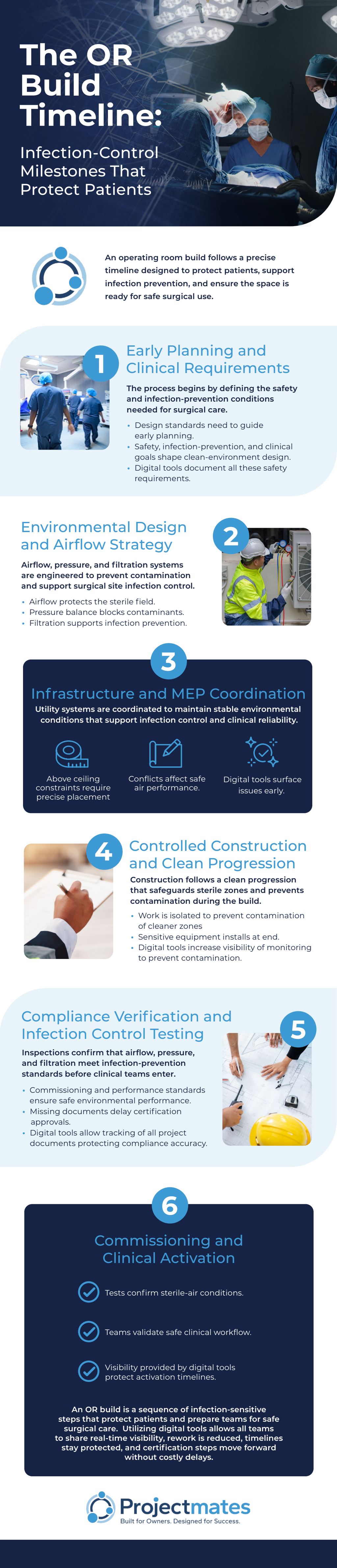
Building or renovating an operating room is one of the most demanding projects within a healthcare facility. These spaces must support precision medicine, strict infection control, and uninterrupted clinical workflows. Managing the operating room build timeline requires careful coordination, clear milestones, and an informed approach to critical environment projects where errors carry serious consequences.
Early Planning and Stakeholder Alignment
The timeline begins well before construction. Early planning focuses on defining clinical needs, regulatory requirements, and long-term capacity goals. Surgeons, nurses, infection prevention teams, facilities staff, and administrators all contribute input at this stage.
Clear alignment early helps prevent scope changes later, which are a common cause of delays. Decisions around room size, equipment integration, and workflow patterns shape every phase that follows.
Design and Engineering Phases
Once requirements are set, architectural and engineering teams translate clinical goals into technical plans. This phase includes layout design, structural considerations, and detailed planning for mechanical, electrical, and plumbing systems.
Operating rooms require precise control of airflow, pressure relationships, temperature, and humidity. Design coordination is critical to ensure these systems work together without conflict. Reviews with clinical and facilities teams help identify issues before construction begins.
Construction and Installation
Construction timelines depend on whether the project involves new construction or renovation within an active hospital. Phased construction is common to minimize disruption to patient care.
During this stage, coordination becomes more complex. Equipment vendors, contractors, and hospital teams must align schedules closely. Delays in one area can ripple across the project, affecting downstream tasks such as equipment installation or system testing.
Commissioning and Validation
Before an operating room can be used, all systems must be tested and verified. Commissioning confirms that airflow, filtration, lighting, power, and medical gas systems perform as designed.
This phase also includes cleaning protocols, infection control validation, and staff training. Any issues discovered here must be corrected before the room is approved for clinical use. Allocating adequate time for commissioning reduces the risk of post-occupancy problems.
Managing Risk and Schedule Control
Critical environment projects benefit from structured oversight. Clear documentation, progress tracking, and issue management help teams respond quickly to changes. Many organizations rely on capital program management software to coordinate schedules, budgets, and communication across multiple stakeholders.
These tools improve visibility into dependencies and support informed decision-making throughout the project lifecycle.
Regulatory Review and Final Approvals
Operating rooms must meet local, state, and federal regulations before opening. Inspections and approvals are built into the timeline and should be planned early to avoid last-minute delays.
Preparation includes documentation of testing results, safety systems, and compliance with healthcare codes. Smooth regulatory review depends on consistent records and proactive communication.
Operating room projects demand precision, coordination, and patience. A well-managed build timeline balances clinical priorities with technical requirements and operational realities. By investing in early planning, structured oversight, and thorough validation, healthcare organizations deliver surgical environments that support safety, efficiency, and long-term performance.