


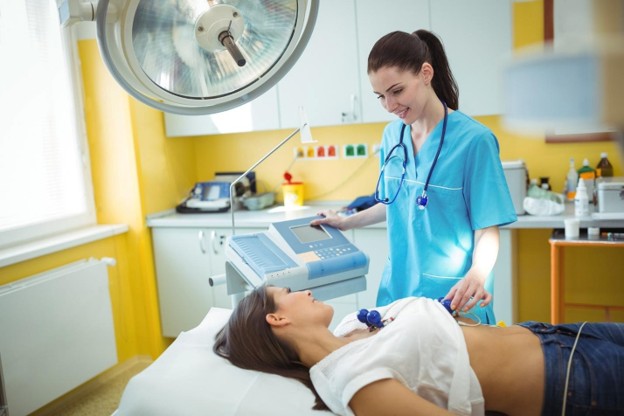
For clinics that have limited scopes of detection, where they rely on traditional methods like standard eye charts, they may miss other visual problems like subtle refractive errors that their patients may be experiencing.
Inconsistencies can also be common where the results are often dependent on trained personnel, and there are resource constraints that are going to limit the number of patients that can be served at a time, resulting in longer wait times.
With the evolving healthcare, clinics should keep up with the pace as it defines how the patients are going to receive the fast care that they deserve. This is where breakthroughs in diagnostic technology in the medical field become important.
What Can Modern Devices Help You With?
There are new tools in the industry that are engineered in such a way that they can capture real-time data, and this is going to be beneficial for those who are running a clinic. A spirometer can measure the patients’ breathing, and this is going to provide important information about what the physicians will need to determine if the lungs are functioning correctly. See more about a spirometer when you click here.
Hyperopia tests are now available with devices that add a diopter, and this is helpful for opticians, as they can complete their screening for eye disorders in just minutes. With the updated equipment, the results will be faster, and more patients can be catered to on time.
On the other hand, older devices may need lengthy calibration and multiple test repetitions in order to make sure that the results are accurate. Also, some will often need constant maintenance, and this can be a hassle for busy clinicians. What they need is equipment with enhanced sensors, and they should be easy to operate so patient visits can become smoother. Examinations can also feel less invasive for everyone involved.
How Do Modern Devices Improve Workflow?
Busy medical environments will often need to save time because they’re catering to a lot of patients. This is where efficiency is needed, and instead of complex controls, the modern equipment is often intuitive and takes less training time. They can also significantly reduce human error, and the staff will be able to perform assessments, and patient queues can move faster.
Other devices have automated processes where tech-driven features are going to make the entire procedure smoother. They can also provide instant data so the staff can review the findings with their colleagues in real-time, and this can speed up clinical operations.
Enhanced Patient Confidence with Innovation
Many people enter a clinical facility feeling nervous about the entire experience, and when they see outdated equipment that’s inconsistent, it can deepen their anxieties. On the other hand, modern diagnostic tools can create a reassuring environment for those who see them because they have sleeker designs with high accuracy. Patients can feel that they’re receiving top-tier services, and they realize that everything has been handled professionally.
This Technology is Built to Support Specialists

Many clinicians will need to have up-to-date tools that should match the complexity of their work, and with these general wellness screenings and vision assessments, they’re able to perform the tests with enhanced precision. These devices have calibrated measurements, and they can be adjusted by the practitioners according to the case at hand.
It’s adaptable in general, and some of the devices can check for various disorders in multiple scenarios. This reduces the need to buy more bulky equipment in a clinic, so there will be more room to deliver focused care.
Why Design Matters in Medical Equipment?
Diagnostic devices can influence how smoothly a practitioner will be able to operate them. There are ergonomic considerations, such as whether the buttons are easy to reach and whether there are clear visual indicators.
When everything feels natural, the clinicians can maintain their consistency across patients. This is often the case with the equipment on sites like https://depisteo.com where you can get the right device for you by reading their features online. With the minimalistic displays, the devices offer a clutter-free interface that’s often ideal in fast-paced environments.
About the Devices’ Digital Integration
Since healthcare is continuing to shift towards digital records, it’s just right that the diagnostic tools should also keep up. With their integration, they allow the devices to plug seamlessly into software systems that can retrieve data with just a click of a button. These pieces of equipment are compatible with online storage solutions, so practitioners can trace their patients’ history and make an accurate diagnosis. They can provide consistent output that makes sure each piece of information can support patient care in the best way possible.
Durability and Maintenance Improvements
Many clinicians often want durable devices, and fortunately, this is often the case with the screeners. They’re made with tough materials, and they can withstand frequent use. They also have warranties that can help with more sustainable screening. Maintenance procedures are also less complicated with these devices, and you can call the manufacturers for help, so everything moves seamlessly.
