


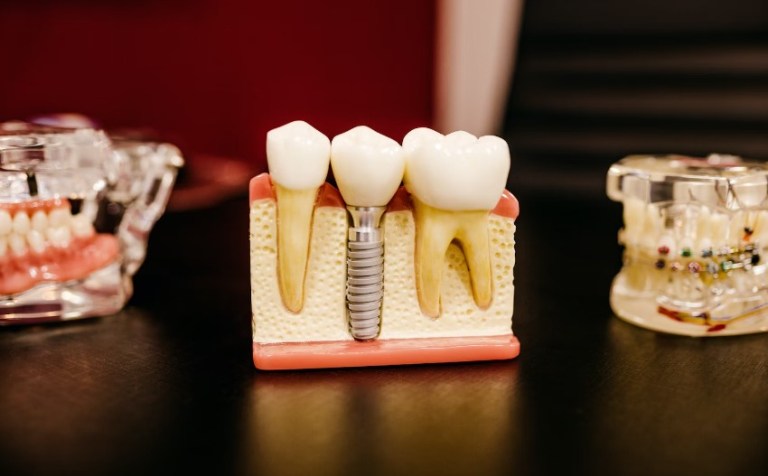
Immediate loading has changed how clinicians and patients think about implant treatment timelines. In the right case, delivering a provisional restoration within hours or days can preserve esthetics, maintain soft-tissue architecture, and improve patient satisfaction. But immediate loading is not “just faster implant dentistry.” It’s a biological and mechanical balancing act where speed is purchased with tighter risk margins.
The success of immediate loading depends less on enthusiasm and more on disciplined case selection, stability management, and load control. When those elements are respected, immediate loading can be highly predictable. When they’re not, early failures and complications become more likely, often without warning until the implant is already compromised.
What immediate loading really demands
Immediate loading means a restoration is placed into function (or near-function) soon after implant placement, typically within 48 hours. The core clinical problem is simple:
Bone healing wants immobility. Function creates movement.
Osseointegration is sensitive to micromotion, particularly in the early phase of healing. If an implant experiences excessive movement under load, the healing environment can shift toward fibrous encapsulation rather than stable bone integration. That’s why immediate loading is never purely restorative; it is fundamentally biological.
The hidden risk: micromotion during early healing
The most common reason immediate loading fails isn’t infection or “bad luck.” It’s uncontrolled movement.
Micromotion can come from:
- insufficient primary stability at placement
- poor bone density (especially softer posterior maxilla)
- occlusal overload from a provisional in function
- cantilevers and non-axial loading vectors
- parafunction (bruxism/clenching)
- lack of splinting in multi-implant cases
Immediate loading often succeeds when clinicians reduce micromotion through primary stability + controlled occlusion + intelligent provisional design. When even one of those breaks down, the biologic risk increases sharply.
Primary stability is not optional; it’s the price of admission
Immediate loading protocols rely on high primary stability because the implant must remain stable long enough for bone to form and mature around it.
Primary stability is influenced by:
- bone quality and cortical engagement
- implant macro-design and thread geometry
- osteotomy preparation protocol
- insertion torque and/or implant stability measurements (ISQ)
- implant length/diameter choices relative to site anatomy
The key point is that immediate loading is site-dependent. A protocol that works predictably in dense anterior mandible does not automatically translate to soft posterior maxillary bone. “Fast” has to be earned by anatomy.
Provisional design: the difference between speed and failure
Immediate loading is often less about what you place and more about how you design it.
A predictable immediate provisional tends to be:
- out of occlusion or minimally loaded in excursive movements
- shaped to support soft tissue without overcontouring
- designed to avoid cantilever forces
- easy to clean and monitor
- stable and passive to reduce strain on the interface
The goal is not cosmetic perfection on day one. The goal is creating a temporary restoration that protects the biology while shaping tissue and maintaining patient comfort.
The full-arch exception: splinting can reduce risk
Immediate loading in full-arch cases can be surprisingly predictable, when implants are splinted and the provisional is rigid and passively fitting.
Why? Splinting spreads forces across multiple fixtures and reduces movement at any single implant during the critical early healing phase. But this also raises the technical stakes: passive fit, bite control, and cantilever discipline become non-negotiable.
When immediate loading is often a poor idea
Even experienced clinicians tend to avoid immediate loading (or modify it heavily) in situations like:
- very soft bone with low stability potential
- active parafunction without protective strategy
- long cantilever requirements
- uncontrolled occlusion or unstable opposing dentition
- poor compliance and hygiene limitations
- high inflammation risk or unresolved periodontal issues
- complex grafted sites where stability is less predictable
Immediate loading is not “wrong” in these cases, it just becomes high risk, and a staged approach may be biologically smarter.
A clinician’s checklist for safer immediate loading
If you want speed without unnecessary risk, these fundamentals matter most:
- Confirm stability metrics: don’t load if primary stability is borderline
- Control occlusion aggressively: keep provisionals out of heavy contact
- Minimize cantilevers: eliminate leverage wherever possible
- Splint when indicated: especially for multi-unit and full-arch provisionals
- Choose a maintenance-friendly provisional: hygiene access is part of biology
- Screen for parafunction and use protective strategies when needed
- Plan follow-ups early: monitor tissue response and provisional wear patterns
For clinicians building a structured workflow around immediate restorations, it can help to review compatible temporary solutions and provisional components in one place, such as temporary abutments for implant provisionalization.
The bottom line
Immediate loading can be an excellent tool, but only when it’s approached as a biologic protocol, not a scheduling shortcut. The speed patients love is real, but so is the risk: early loading compresses the margin for error and demands strict control over stability and force.
When immediate loading is done well, it delivers faster esthetics and function while protecting tissue. When it’s done poorly, it can quietly undermine osseointegration before the case even has a chance to succeed.
In implant dentistry, “fast” isn’t a feature; it’s a clinical decision. And the best immediate-loading outcomes come from clinicians who treat speed as something to earn, not something to assume.
