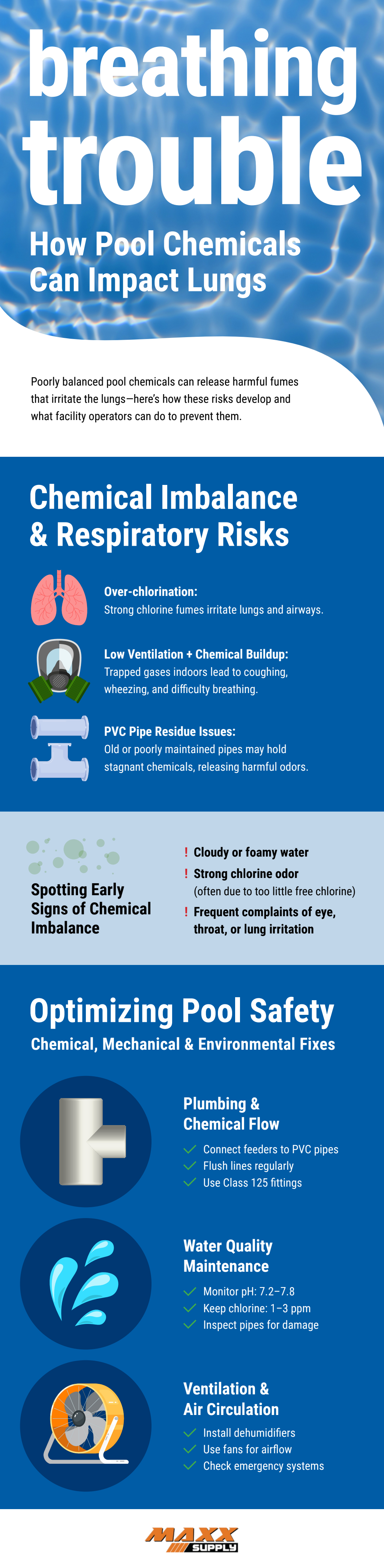
Swimming pools provide recreation and exercise, but exposure to pool chemicals can pose risks to the lungs. Chlorine and other disinfectants are essential for maintaining water safety, yet inhaling fumes or aerosols can irritate the respiratory system. Understanding how these chemicals interact with the air and body helps swimmers and pool operators minimize potential health effects.
Chlorine and Respiratory Irritation
Chlorine is the most common chemical used in pools to control bacteria and algae. While effective at sanitizing water, chlorine reacts with organic matter such as sweat, urine, and skin cells to form byproducts called chloramines. Chloramines are responsible for the strong “pool smell” and can be irritating when inhaled. Exposure to high levels of chloramines may trigger coughing, wheezing, or shortness of breath, especially in sensitive individuals or those with preexisting respiratory conditions such as asthma.
Volatile Chemicals and Aerosols
Pool chemicals can become airborne through splashing, water agitation, and heating systems. Volatile compounds like chlorine gas and trichloramine can accumulate just above the water surface. Swimmers and lifeguards who spend extended periods near the water may inhale these chemicals, leading to inflammation of the airways. Proper ventilation and water circulation are crucial to dispersing these compounds and reducing respiratory exposure.
Long-Term Effects of Repeated Exposure
Frequent exposure to pool chemicals may contribute to chronic respiratory issues. Studies of competitive swimmers have shown higher rates of asthma and airway hyperresponsiveness compared to non-swimmers. These effects are thought to result from repeated inhalation of chloramines and other chemical byproducts over time. Children may be particularly vulnerable due to their developing lungs and higher breathing rates relative to body size. Monitoring chemical levels and limiting exposure duration are important strategies for reducing long-term risks.
Safety Practices to Protect Lungs
Preventive measures can reduce chemical-related respiratory irritation. Showering before entering the pool reduces the organic matter that forms chloramines. Maintaining proper pool chemistry and ensuring that ventilation systems are functional helps keep chemical concentrations low in the air. Swimmers should avoid areas with high splashing or where chemical fumes accumulate. Pool operators can schedule regular monitoring and balance treatments with aeration to maintain a safe environment. Properly installed Schedule 80 couplings in pool plumbing also support consistent chemical flow and minimize accidental chemical releases that could increase airborne exposure.
Awareness and Informed Choices
Awareness of how pool chemicals affect the lungs allows both swimmers and pool managers to make informed choices. Limiting time in indoor pools with poor ventilation, maintaining personal hygiene, and monitoring water chemistry can all reduce respiratory risks. Using protective equipment when handling chemicals and encouraging regular breaks from heavily chlorinated areas further help minimize exposure. Understanding these factors helps preserve the health benefits of swimming while mitigating potential harm.
Chemical exposure in pools does not have to be dangerous if managed correctly. Following safety practices, ensuring proper ventilation, and maintaining balanced water chemistry all contribute to a safer swimming environment. Taking these steps allows swimmers to enjoy exercise and recreation without compromising lung health. To learn more, look over the resource below.