



Your body makes thousands of micro-adjustments while you sleep. You shift your weight, change positions, and redistribute pressure without thinking about it. These movements happen automatically to keep blood flowing and prevent tissue damage.

But patients recovering from spinal cord injuries, strokes, or major surgery lose this ability. Their bodies can’t make those crucial adjustments, which means pressure builds up until blood flow stops. That’s how pressure injuries develop—sometimes within hours.
Why Two-Hour Turning Schedules Don’t Always Work
The standard hospital protocol calls for repositioning immobile patients every two hours. On paper, it sounds simple. In practice, it’s hard to maintain consistently.
Night shifts run with skeleton crews. Emergencies pull staff away from scheduled tasks. One patient codes, and suddenly the two-hour window stretches to three or four hours for everyone else on the unit. It’s not negligence—it’s the reality of healthcare delivery when resources are stretched thin.

Manual repositioning also requires two to three people for safe patient handling. That’s six to nine staff hours per patient per day, just for basic positioning. In a 20-bed unit, you’re looking at 120 to 180 staff hours daily spent on manual turns alone.
How Automated Lateral Turning Actually Works
The multiTURN® 6 handles patient repositioning automatically. The mattress turns patients 30° to each side at intervals you can set—30, 60, or 90 minutes depending on the patient’s risk level and medical condition.
It’s not just one system doing one thing. Three different technologies work simultaneously. Automatic lateral turning repositions the patient side to side. Alternating pressure cycles inflate and deflate 18 air cells in patterns of 12, 18, or 24 minutes, constantly shifting where pressure hits the body. Continuous Low Pressure management maintains a baseline comfort level across the entire surface.
Getting these three systems to work together without interference took ABeWER years to engineer. Early versions either moved too abruptly or made too much noise. The current system operates below 20 decibels—quieter than a whisper—so patients actually sleep while it’s working.
The Engineering Behind Quiet Operation
Twenty decibels might not sound impressive until you understand what it means for patient recovery. Sleep deprivation slows healing, weakens immune response, and increases pain sensitivity. A noisy mattress that wakes patients every few minutes defeats the purpose of preventing pressure injuries if it’s compromising recovery in other ways.
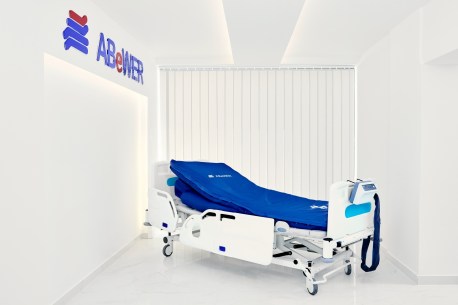
The materials had to be breathable while housing mechanical systems. They needed to withstand repeated sterilization with harsh hospital disinfectants. And they had to dampen vibration and sound from internal mechanisms while maintaining pressure redistribution effectiveness.
The mattress uses TPU material with laser-cut air holes that keep air flowing constantly over the patient’s skin. This addresses moisture buildup, which matters because damp skin breaks down faster under pressure.
Built for Different Patient Populations
Spinal cord injury patients face lifelong pressure injury risk. Surgical recovery patients need protection during their most vulnerable weeks. ICU patients with multiple medical conditions can’t tolerate additional complications. Nursing home residents with limited mobility require ongoing prevention.
The multiTURN® 6 accommodates patients up to 180kg across all these populations. It includes head elevation up to 45° and leg elevation options, supporting clinical positioning needs without compromising pressure management.
For patients with existing pressure injuries up to Stage 4, the system provides treatment alongside prevention. The adjustable 30-minute turning interval option specifically addresses deep tissue pressure injuries and difficult wounds that need maximum pressure relief.
What Remote Control Means for Patient Independence
Patients who can use their hands get a remote control for making small positioning adjustments between automated cycles. This isn’t just about comfort—it’s about maintaining some autonomy when everything else feels out of your control.
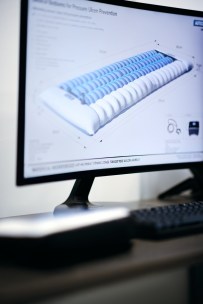
For someone with paraplegia, being able to adjust their position without calling for help matters psychologically. You’re already dealing with major medical challenges. Small acts of independence help preserve dignity during recovery.
The Certification and Warranty Details
The multiTURN® 6 holds CE certification under EU MDR 2017/745. This means it’s passed testing for electrical safety, material biocompatibility, and long-term reliability under continuous operation. The certification process covers how all three pressure management systems work together safely.
ABeWER offers a 24-month warranty on the pump system. When patients depend on this equipment for pressure injury prevention, reliability isn’t optional. Equipment failure affects patient care immediately, which is why the support infrastructure includes rapid response for maintenance issues.
The system runs on 220-240V power with adapters for different international configurations. It works in hospitals, rehab centers, nursing homes, and home care settings without requiring special electrical systems or facility modifications.
Why Thirty Years of Development Matters
ABeWER started working on automated pressure management in the early 1990s when these systems were loud, clunky, and often created more problems than they solved. Three decades of refinement shows in details like the sub-20-decibel operation, the coordinated three-system approach, and the ability to handle both prevention and Stage 4 treatment.
That experience base also shows in practical features like the separate airbag design. If one air tube develops a leak, you can replace just that component instead of the entire mattress. The heat-sealed construction makes the tubes durable enough for long-term use.
What This Means for Healthcare Delivery
Automated turning doesn’t eliminate the need for nursing care—it frees up nursing time for tasks that actually require human expertise. Medication administration, wound assessment, family communication, and complex clinical decision-making all demand professional judgment. Repositioning doesn’t.
The technology handles pressure management consistently across all shifts and care circumstances. No gaps during shift changes. No missed turns during emergencies. No variation in implementation between different staff members.
Documentation becomes simpler too. Instead of charting each manual repositioning event, healthcare providers focus on assessing patient response and adjusting care plans. The basic positioning protocol runs automatically.
Prevention Before Treatment
The core advantage of automated lateral turning is stopping problems before they start. Treating a Stage 4 pressure injury takes weeks or months. Preventing that same injury from developing in the first place takes consistent pressure management from day one.
For patients who can’t reposition themselves, that prevention needs to work 24/7 without depending on staffing levels, shift changes, or competing clinical priorities. Automation makes that possible.
The multiTURN® 6 represents what three decades of focused engineering can achieve when the goal stays consistent: give immobile patients the same protection that healthy bodies provide automatically through natural movement during sleep.
