


For many adult children, supporting aging parents is a meaningful responsibility — one that often comes with emotional weight and practical complexity. As older adults lose autonomy, families are faced with complex questions: How can we ensure safety, dignity, and quality of life for our loved ones — without compromising our own well-being?
Surveys consistently show that adult children often feel guilty about turning to professional caregivers. But in many cases, choosing help isn’t abandonment — it’s a responsible decision, grounded in safety, realism, and long-term sustainability.
This article explores the roots of guilt in caregiving decisions, explores real-life family scenarios, and highlights modern care strategies — including technology like BeWell Medical Alert — that allow older adults to age safely and with dignity.

Understanding Caregiver Guilt
Over 60% of adult children caring for aging parents say they feel guilty. Not because they don’t care — but because they believe love means doing it all alone.
But elder care today is rarely simple. It can involve managing medications, coping with memory loss, responding to falls, and staying emotionally present — often all at once. Without help, even the most devoted children risk burnout, exhaustion, and unintended distance in the very relationships they’re trying to protect.
Accepting professional support isn’t giving up. It’s drawing a boundary that makes care sustainable. It’s saying: I love you enough to share this responsibility — so I can keep showing up, fully present.
Experts in caregiving agree: the most lasting, loving care is rarely a solo act.
Real-World Family Decision: Choosing Memory Care
Anna, 42, attempted to care for her mother, who had been diagnosed with early-stage Alzheimer’s, while also working full-time and raising two children.
“At first, it was manageable — reminders, meal prep, phone calls,” she explains. “But over time, my mother began wandering at night and forgetting where she lived.”
Eventually, Anna made the decision to move her mother to a local memory care facility offering structured programming and round-the-clock supervision: “It was one of the hardest decisions I’ve made,” she says. “But within weeks, I saw an improvement. My mother had daily cognitive activities, professional care, and a safe, calm environment. I could finally return to being her daughter — not her crisis manager.”
Anna’s experience reflects a reality many families face: love and responsibility are not diminished by asking for help. In many cases, the transition to professional care results in better outcomes — for both the older adult and the caregiver.
Expert Consensus: Professional Care Is Not a Failure
Professionals in elder care often question the idea that family members must provide all care themselves. Attempting to do so — especially without training or respite — can be harmful to both the caregiver and the older adult.
“Professional care is not a replacement for love,” one long-time elder care advocate notes. “It’s reinforcement. It ensures continuity, safety, and dignity — while allowing family members to focus on emotional connection rather than logistical exhaustion.”
Instead of asking, “Am I doing enough?”, families might ask, “Is my parent safe and truly cared for — even if part of that care comes from someone else’s hands?”
Aging in Place: Maintaining Independence with Safety
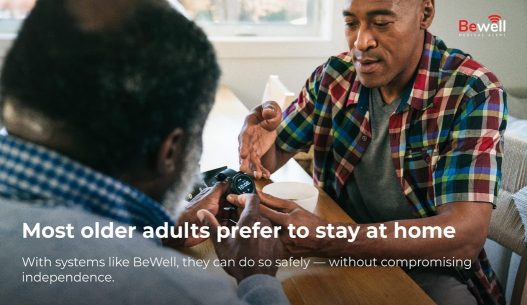
Many older adults say the same thing: “I just want to stay in my own home.”
Staying in a familiar space can bring comfort, dignity, and a sense of control. But living alone also has its risks — from falls and health emergencies to long waits for help when something goes wrong.
In some cases, the right technology can help older adults stay safe — without giving up their independence. The BeWell Medical Alert system, for example, offers discreet, button-free wearables with automatic fall detection and emergency communication. Many older adults resist wearing pendants or forget to press them in a crisis. BeWell’s devices work automatically, detecting problems without needing someone to ask for help.
This allows older adults to live independently while giving families confidence that help is always available when needed — without being intrusive or stigmatizing.
Modern Care is Flexible — and Personal
For most people, caring for an aging parent doesn’t feel like a clear choice between two options. It’s not “do everything yourself” or “put them in a facility.” More often, it’s a confusing middle ground — full of uncertainty, emotion, and hard questions.
But there are in-between solutions. Support that respects your parent’s dignity while protecting your own well-being. You don’t have to do it all. And you don’t have to do it alone.
In practice, many families are turning to hybrid models of support, which can be customized to meet the medical, emotional, and logistical realities of each situation.
Available components may include:
- In-home care — part-time or full-time assistance with daily living activities
- Adult day programs — structured environments offering supervision, meals, and cognitive engagement during the day
- Respite care — temporary relief for family caregivers through short-term professional services
- Technology-based solutions — such as wearable medical alert systems that ensure safety without intruding on independence
- Community services — including transportation assistance, meal delivery, or local peer support groups
By combining these resources thoughtfully, families can build a care plan that maintains dignity and safety for the older adult while supporting the capacity and well-being of those providing care. This flexible, person-centered approach not only improves health outcomes — it also helps prevent caregiver burnout and strengthens emotional bonds within the family.
From Guilt to Informed Action
Caring for aging parents is a profound responsibility — but it should not come at the expense of your own health, stability, or identity. If you’ve felt guilt, you’re not alone. That feeling often comes from outdated beliefs about what “good” caregiving looks like. Reframing care as a collaborative process, rather than a solitary burden, opens the door to safer, more humane solutions.
Choosing professional care is not stepping back. It’s stepping forward with clarity.
At BeWell Medical Alert, we believe that safety and independence are not mutually exclusive. Our technology supports older adults who wish to live at home — while offering their families the reassurance that help is always close at hand.
Let go of guilt. Choose informed, compassionate care — and let your love speak not through sacrifice, but through sustainable support.
