



Health-care financing management issues a success in today’s date for any practice. It is due to all the claim coding and reimbursement complexities that health-care providers could use a little help, and trustworthy tools come in to facilitate and simplify their processes. The billing software provides an efficient solution through many automations that reduce human error and improve efficiency. This guide will serve to the health-care physician in selecting appropriate practice software.
What Is Medical Billing Software?
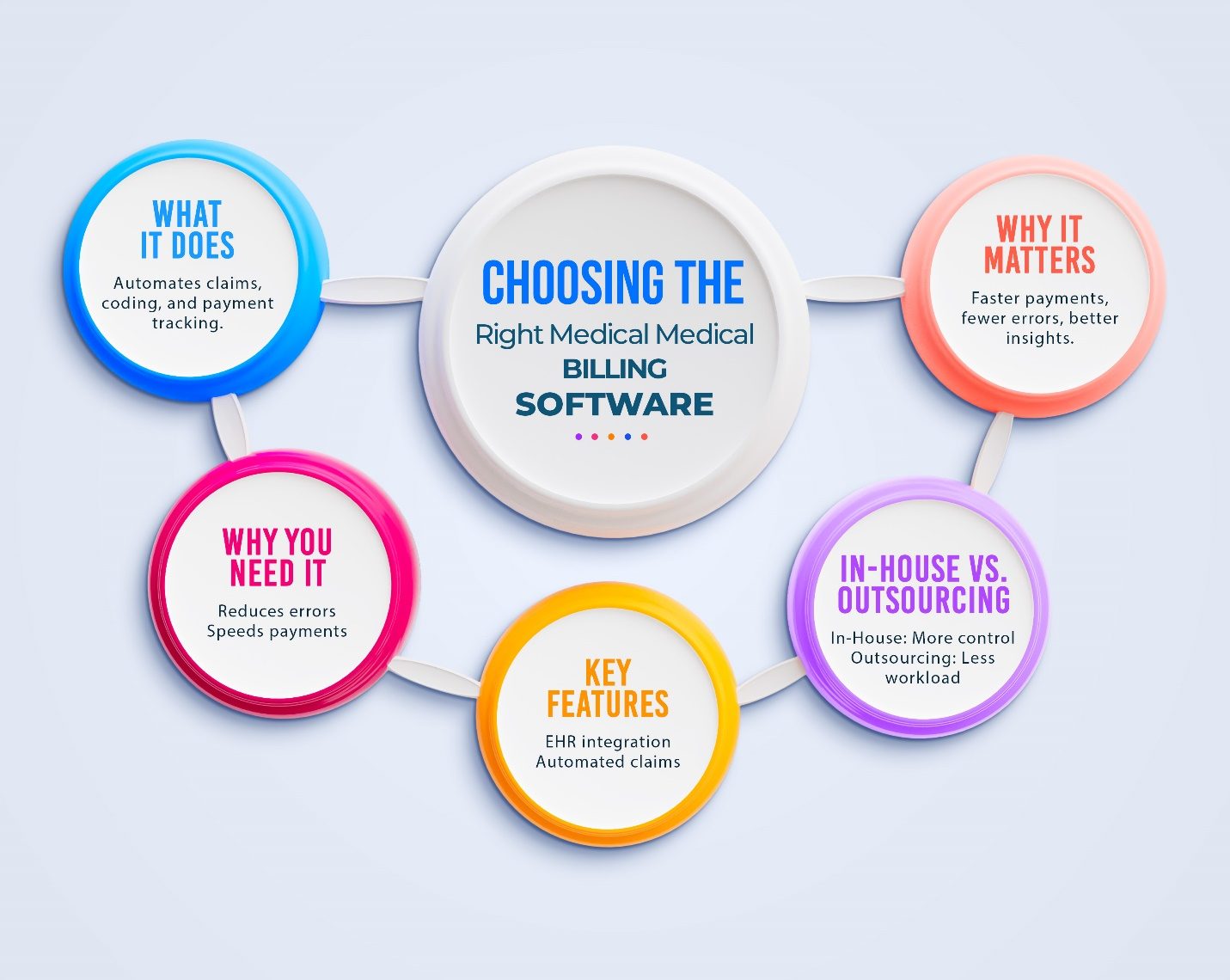
Medical billing software is a program that is used to submit claims, code services, and track payment. It is meant to enhance the operational efficiency of a healthcare provider and lessen errors in the system while ensuring timely payments from insurance companies. As the healthcare system becomes increasingly complicated, the right medical billing software ensures that a seamless financial operation continues.
Why Healthcare Physicians Need Medical Billing Software
These complications can result in errors in billing, delayed billings, inefficient work processing, claim denials, and later payments for health care services; and this, in the long run, would bring financial burdens to the practice. Use of billing software is a time-saver that automates functions such as generating diagnosis codes, electronically submitting claims to insurance companies, and tracking payments. Reduced administrative workload, better cash flow, and improved accuracy in coding along with claims submission. Thus, the physicians can focus on patient care, while the billing software takes care of all these complicated obstacles of financial management.
Key Features to Look for in Medical Billing Software
When considering Billing Software, several specific features should be evaluated that are an exact fit for your practice needs. Integration with other systems, including Electronic Health Records and Practice Management Software, is one such feature. Integration allows patient information to flow seamlessly from one system to another, thus reducing the chances for data entry errors. Automated coding and claims submission are two important components.
The software assigns ICD-10 and CPT codes, thus ensuring the speed and accuracy of electronic claims submission, thereby minimizing any chances of latency or rejection of claims due to coding errors. More extensive reporting and good analytics tools would also be very much desirable. Such tools will allow practices to follow their revenue cycle, find bottlenecks, and see performance across the entire practice. Such information eases the way through which physicians come to know the amounts of claims, accounts receivable, and payer performance so as to make decisions based on data about improvement in financial operations.
Last but not least, security indeed seems to be an important one. The Medical Billing Software has to comply with such regulations as HIPAA above providing its very high encryption for the data which would contain the most sensitive patient information.
The Role of Medical Billing Services
Some practices prefer outsourcing their billing processes to medical billing services, while others have opted for in-house management of billing processes with medical billing software. These specialized service providers manage the complete billing process, including coding, claim submission, and payment tracking.
Billing services can be cost-effective for medical practices with limited administrative resources, or those wishing to free their personnel to concentrate on patient care. By outsourcing billing duties, physicians reduce administrative hassle, increase accuracy, and improve efficiency. Additionally, with in-depth knowledge of insurance requirements and coding regulations, medical billing services can be expected to minimize claim denials and delays.
Partnering with Medical Billing Companies
When outsourcing, the selection of a perfect medical billing company is very vital.” In the selection of a billing company, consider one that has experience in your specialty and one that understands the unique billing needs of your practice. An accountable billing company would help smoothen your revenue cycle, reducing time spent on administration, and ensure adherence to the current rules and regulations affecting the healthcare industry.
Billing companies use technology to automate claim submissions and payment tracking for fast reimbursements, and provide regular reports to track claims and identify revenue cycle issues. Thus, this level of transparency and proactivity can help curb the time spent chasing unpaid claims.
On the other hand, working with a medical billing company means that you have dedicated support. Questions about claims, coding, or payment issues help when you have an income source; a billing company stands firmly behind you with their insight and assistance.
Why Medical Billing Software Matters for Your Practice
There are many benefits offered by the right medical billing software which can, in turn, influence the financial aspect of any healthcare practice in positive terms. One such benefit is the reduced chance of an error occurring. Manual processes are predisposed to mistakes that often lead to claim denials, reworking, and delayed reimbursements. Medical billing software automates most of the task, ensuring accurate coding and submission of claims, thereby eliminating chances of errors.
Another significant benefit is the speed at which claims can be processed. Automating most tasks makes submission simpler, since claims are electronically submitted and no longer need to be followed up with paper forms. Quicker processing means the practices receive faster reimbursement, improving cash flow while reducing the time spent chasing after payments.
Finally, medical billing software gives you insight into the financial standing of your practice. Hospitals and other healthcare facilities can learn about the claims’ status, find problems and solutions, and improve the billing process through features such as real-time tracking, reporting, and analytics.
In-House vs. Outsourcing Billing
Physicians will have to weigh the advantages and disadvantages of handling in-house billing software against those of outsourcing medical billing services or companies.
In-house medical billing software has its advantages for larger practices with dedicated billing staff. The advantage is much-needed control over the billing process and claims flexibility. In contrast, smaller practices and those with limited resources can afford to be more efficient by outsourcing a billing service or company. Time-saving, overhead-cost-cutting billing tasks can be better left to specialists.
Additionally, if billing gets outsourced, companies provide access to specialized technology and experienced billing personnel who can help in revenue cycle optimization. Medical billing companies operate with the latest software, minimizing the risk of error and speeding up reimbursements.
Conclusion: Making the Right Choice for Your Practice
Selecting the proper solution for your practice will depend on a number of factors: the size of your practice, your administrative infrastructure, and your particular billing needs. The goal is to either provide maximum in-house automation through coding and billing software or to contract with an outside medical billing service for maximum streamlining of operations, minimum errors, and maximum cash flow.
Your medical billing software should offer all essential features, among them automated coding capabilities, real-time claim tracking, and high security. Conversely, if you are looking to outsource the service, then the medical billing company you partner with must have satisfactory credentials and quality technology to adequately optimize your practice’s revenue cycle.
Making the right choice will improve existing medical financial operations, reduce the burden on the administration, and allow physicians to spend time doing what they do best: offering quality care to their patients.
